


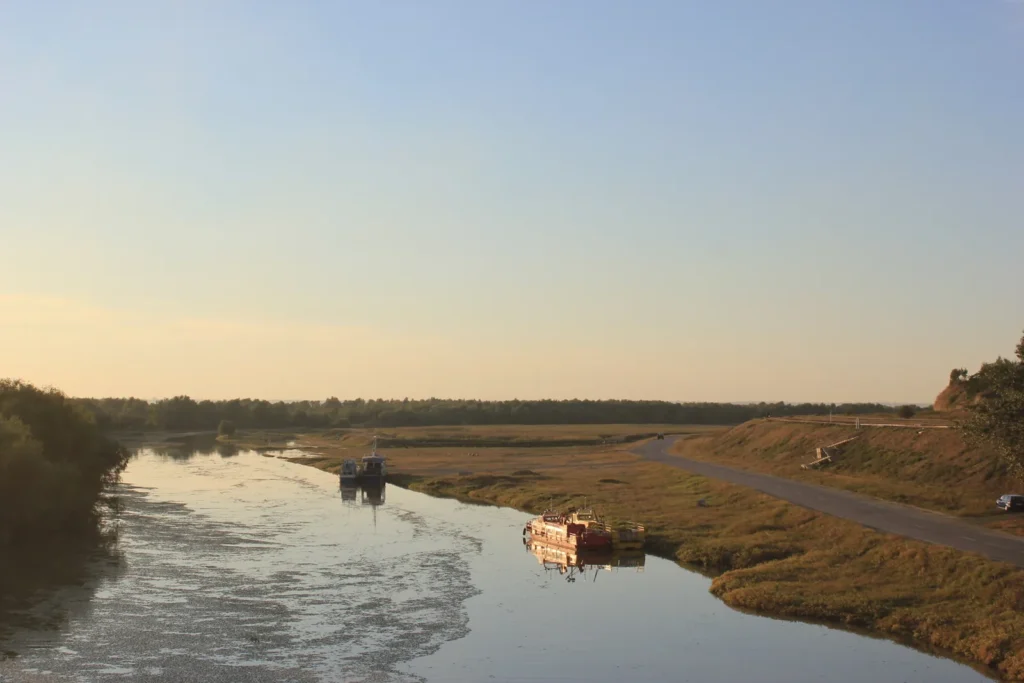
In short: The Moldova–Romania border follows the Prut River and is an external EU and Schengen border, so expect full checks. The main crossings are Leușeni–Albița, Sculeni, Giurgiulești–Galați and Cahul–Oancea. Since 2026 the EES biometric system runs at all of them. Check waiting times, documents and customs allowances before you travel.
The border between Moldova and Romania runs almost entirely along the Prut River, from the far north, where Moldova, Romania and Ukraine meet, to Giurgiulești in the south, where the Prut flows into the Danube. For people who live here it is a border many cross all the time: to study in Iași, to work in Romania, to visit family on the other bank, to shop or to go on holiday. For travellers it is usually one leg of a longer trip, such as our Chișinău–Iași–Bukovina itinerary or a drive into Moldova from Bucharest.
The key thing to understand is this: Romania is an EU member and, since 2025, a full member of the Schengen Area, while Moldova is not. That makes the Prut an external border of both the EU and Schengen. There are full passport and customs checks, the EU Entry/Exit System (EES) has been in operation since 2026, and EU customs rules apply on the Romanian side. None of this is daunting, and a crossing usually takes anything from a few minutes to an hour. But if you are not prepared, you can lose half a day in a queue or watch a customs officer confiscate a bottle of homemade brandy.
This guide covers everything you need to know before you go: the checkpoints and how they differ, what documents each kind of traveller needs, how the EES works and what is coming with ETIAS, what you can and cannot bring, how to cross by car, bus or train, how to dodge the queues and which mistakes to avoid.
A caveat: border rules change, and checkpoint hours can be adjusted temporarily. Everything below was accurate at the time of writing; before you travel, check the official sources listed at the end.
This guide is for anyone travelling between Moldova and Romania for the first time: tourists combining both countries in one trip, drivers in their own or a hire car, bus and train passengers, families with children and people travelling with pets. If you cross the Prut regularly, skip to the sections on the EES, customs allowances and alternative checkpoints, which is where most of the recent changes are.
The border at a glance
| Item | What to know |
|---|---|
| Where it runs | mostly along the Prut River, north to south |
| Type of border | external border of the EU and the Schengen Area |
| Road checkpoints | 7 (Leușeni, Sculeni, Costești, Lipcani, Leova, Cahul, Giurgiulești) |
| Rail crossings | Ungheni–Iași, Giurgiulești–Galați |
| EES | in operation at every crossing on the Romania–Moldova border since 2 March 2026 |
| ETIAS | not yet operational; launch expected in the last quarter of 2026 |
| Currency | Moldova: Moldovan leu (MDL); Romania: Romanian leu (RON) |
| Time zone | the same in both countries |
| Emergency number | 112 in both countries |
| Official sources | border.gov.md, politiadefrontiera.ro, customs.gov.md, customs.ro |
How the Prut border works
The Prut is a modest lowland river with marshy floodplains, side channels and riverside woodland. There are few bridges across it, so every checkpoint doubles as a river crossing. Almost all the road checkpoints sit at bridges, and one of them, Costești–Stânca, runs across the dam of the Costești–Stânca reservoir.
Every crossing involves two sets of checks: first you exit the country you are leaving, then you enter the country you are arriving in. At some checkpoints the two countries carry out joint controls, which can speed things up because everything happens at one point. Which crossings use this format changes over time, so ask the border officers.
A typical sequence when entering Romania:
- Moldovan Border Police: passport check and exit from Moldova.
- Moldovan customs: usually a quick look or a question about what you are taking out.
- The bridge over the Prut.
- Romanian Border Police: document check and, for non-EU nationals, EES registration.
- Romanian customs: questions about what you are bringing in, sometimes a search of your luggage or car.
Going the other way, the order is reversed. Larger checkpoints have separate lanes for EU citizens and everyone else, and for cars, buses and lorries.
The checkpoints from north to south
Lipcani–Rădăuți-Prut
The northernmost road checkpoint on the Romania–Moldova border. It is handy if you are coming from northern Moldova (Briceni, Edineț, Ocnița) and heading for Botoșani, Suceava and Bukovina without going through Iași. It is about 250 km from Chișinău via Bălți and Edineț. It is a small, usually quiet crossing, but in the past it did not operate around the clock, so check the current hours before you go.
Costești–Stânca
This crossing runs along the dam of the Costești–Stânca reservoir on the Prut, one of the most unusual crossings in the region. On the Moldovan side it is closest to Rîșcani and Bălți; on the Romanian side, to Botoșani and Iași. It is a good alternative to Sculeni when there is a queue there, and convenient for a trip from Bălți to Bukovina.
Sculeni–Sculeni
The closest checkpoint to Iași: the city centre is about 20–25 km from the border. The village on both banks is called Sculeni; it was once a single settlement. On the Moldovan side the road comes via Ungheni or via Pîrlița. The crossing is popular with people from Iași and Ungheni, so queues build up at weekends and on public holidays.
Leușeni–Albița
The main road corridor between the two countries and the best-equipped crossing. From Chișinău it is about 100–110 km via Hîncești on a good road. On the Romanian side the road continues to Huși and Vaslui and then on to Bucharest or Iași. It is a detour for Iași, but the obvious choice for Bucharest and southern Romania. It is also the busiest crossing, especially on public holidays and at the start of summer, when Moldovans working abroad drive home.
Leova–Bumbăta
A relatively new checkpoint on the middle Prut, between Leova and the Romanian village of Bumbăta. The Moldovan Border Police recommends it as an alternative to Leușeni and Giurgiulești at busy times. On the Romanian side it is convenient for Bârlad and Vaslui.
Cahul–Oancea
A crossing in the south, near the town of Cahul. It suits trips from southern Moldova and Gagauzia to Galați, Bârlad and Bucharest. Cahul is about 170–180 km from Chișinău. It is also recommended as an alternative to Leușeni and Giurgiulești.
Giurgiulești–Galați
The southernmost crossing, near the confluence of the Prut and the Danube and next to Moldova’s only port. There are road, rail and port crossings here. On the Romanian side you arrive almost straight into Galați, a large city on the Danube. It is the natural choice for the Danube Delta, the Black Sea coast or Bucharest via Brăila. The border with Ukraine is very close, so watch the signs at the junction.
Rail crossings
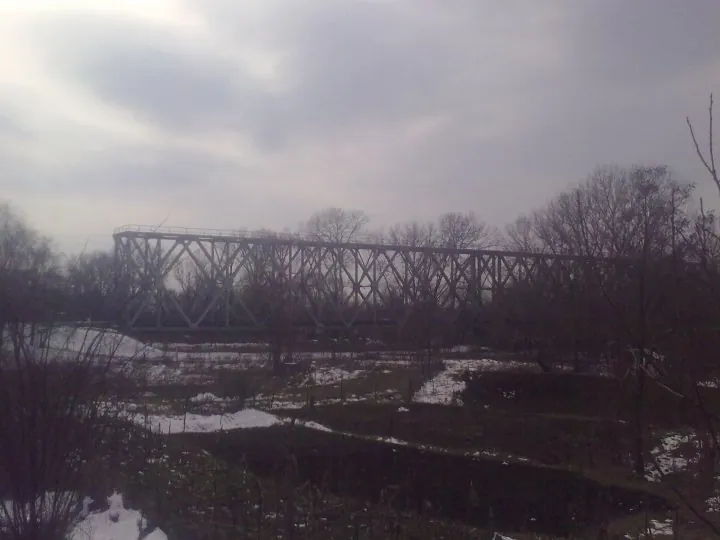
- Ungheni–Iași. Trains from Chișinău to Iași and on into Romania run via Ungheni and the railway bridge over the Prut. The rolling stock, timetable and the service format itself (direct train or a change) have changed in recent years, so check with Moldovan Railways (CFM) and CFR Călători in Romania.
- Giurgiulești–Galați. The southern rail crossing is used mainly for freight; check passenger services separately.
Comparison table
| Checkpoint | Distance from Chișinău (approx.) | Best for in Romania | Notes |
|---|---|---|---|
| Lipcani–Rădăuți-Prut | about 250 km | Botoșani, Suceava, Bukovina | northern, small; check hours |
| Costești–Stânca | about 200 km | Botoșani, Iași, Bukovina | runs across a reservoir dam |
| Sculeni–Sculeni | about 130 km | Iași | closest to Iași, weekend queues |
| Leușeni–Albița | about 100–110 km | Huși, Vaslui, Bucharest | main corridor, busiest |
| Leova–Bumbăta | about 100 km | Bârlad, Vaslui | alternative to Leușeni |
| Cahul–Oancea | about 170–180 km | Galați, Bârlad, Bucharest | south, alternative to Leușeni and Giurgiulești |
| Giurgiulești–Galați | about 200–210 km | Galați, Brăila, Danube Delta | road, rail and port |
Distances are approximate and depend on your route.
Getting to the checkpoints from Chișinău
To Leușeni
The simplest route: head west out of Chișinău towards Hîncești, then on to Leușeni. The road is good and signposted for Romania, with petrol stations and cafés along the way. Allow about an hour and a half without traffic, though leaving Chișinău at rush hour can add time.
To Sculeni
There are two main options. The first follows the road to Ungheni via Strășeni and Călărași, then runs north along the Prut to Sculeni. The second goes via Pîrlița, which works if you are coming from the north or want to avoid Ungheni. Ungheni makes an easy stop if you want a look around. Allow about two hours.
To Leova–Bumbăta
Head south-west from Chișinău via Hîncești to Leova, through the hills and villages of central Moldova. It is a handy option when Leușeni is busy, but bear in mind that from Bumbăta you continue on secondary roads to Bârlad and Vaslui.
To Cahul and Giurgiulești
Go south via Cimișlia to Cahul, then along the Prut to Giurgiulești. You can stop at wine villages in the south on the way. Cahul is about 2.5–3 hours away and Giurgiulești a bit more. Unless you are going to Galați, Cahul–Oancea is often the better option.
To Costești and Lipcani
Head north via Bălți. From Bălți, take the road via Rîșcani for Costești, or via Edineț or Briceni for Lipcani. These crossings make sense if you are already in the north of Moldova, for example after visiting Soroca or the northern monasteries.
Approximate driving times
| Route | Time without traffic or queues (approx.) |
|---|---|
| Chișinău–Leușeni | about 1.5 hours |
| Chișinău–Sculeni | about 2 hours |
| Chișinău–Leova | about 1.5–2 hours |
| Chișinău–Cahul | about 2.5–3 hours |
| Chișinău–Giurgiulești | about 3–3.5 hours |
| Chișinău–Costești | about 3 hours |
| Chișinău–Lipcani | about 3.5–4 hours |
Times depend heavily on roadworks and traffic, and you need to add the time spent at the border.
Which checkpoint for which route in Romania
- To Iași: Sculeni (closest), Leușeni (longer, but on the main road) or Costești–Stânca.
- To Bucharest: Leușeni–Albița (via Vaslui, then Bacău or Bârlad and Focșani), Leova–Bumbăta or Cahul–Oancea.
- To Bukovina and Suceava: Sculeni, Costești–Stânca or Lipcani–Rădăuți-Prut.
- To the Danube and the Delta: Giurgiulești–Galați or Cahul–Oancea.
- To Transylvania: Leușeni, then on via Bacău and the passes of the Eastern Carpathians.
Documents: who needs what
The requirements depend on your nationality. What follows is a general guide; check the exact rules for your country on the official websites of foreign ministries and border agencies.
EU citizens, including Moldovans with a Romanian passport
To enter Romania, a valid passport or national ID card from an EU country is enough. EU citizens use a separate lane, and the EES does not apply to them. EU citizens do not need a visa for Moldova either and can usually stay up to 90 days in any 180-day period. Romanian citizens have traditionally been able to enter Moldova with an ID card, but check which documents are accepted in advance, especially if your ID card is new or temporary.
Many people in Moldova hold dual citizenship, Moldovan and Romanian. Use your documents consistently: when leaving Moldova you normally show your Moldovan passport, and when entering Romania your Romanian one. If you use one passport in one direction and the other on the way back, questions may arise about the length of your stay. If in doubt, ask the officer; it is a perfectly normal question.
Moldovan citizens
Holders of a Moldovan biometric passport do not need a visa for short trips to the Schengen Area: up to 90 days in any 180-day period. On entry, officers may ask about the purpose of your trip, where you are staying, whether you have enough funds and whether you have a return ticket. Since 2026 Moldovan citizens have been registered in the EES. Once ETIAS starts, Moldovan citizens will also need an online travel authorisation, so watch for the official announcement of the launch date.
If you are going to work, study or stay longer than 90 days, different rules apply: you need a visa or a residence permit. Visa-free travel does not give you the right to work.
Ukrainian citizens
Ukrainian citizens with a biometric passport can also travel visa-free for short stays. Many Ukrainians are in Romania or other EU countries under temporary protection, which comes with its own status and documents. Men of conscription age should check Ukraine’s exit rules in force at the time of travel; transiting through Moldova does not change Ukrainian rules. If you hold temporary protection in the EU, carry the document that proves it.
Other nationalities
Citizens of many countries, such as the United States, the United Kingdom, Canada, Israel and Japan, can enter both Romania and Moldova visa-free for short stays, but the conditions differ by country. Citizens of some countries need a Schengen visa for Romania and a separate visa or e-visa for Moldova. Always check both directions, especially if you plan to pop into Moldova from Romania and come back: re-entering Schengen may require a multiple-entry visa.
Remember that the 90/180 rule applies to the Schengen Area as a whole, not to each country separately. If you have already been travelling around Europe for a while, check how many days you have left with the calculator on the European Commission website.
Children
Children need their own passports. If a child is travelling with only one parent, with relatives or without parents, you may need notarised consent from the other parent or legal guardians, as well as a birth certificate. Moldovan and Romanian requirements differ and change from time to time, so check with the border police of both countries in advance. Better to carry one document too many than to be turned back at the border.
Document checklist
- [ ] A valid, undamaged passport (or EU ID card) with enough validity left.
- [ ] A visa if your nationality requires one, for Romania and/or Moldova.
- [ ] Proof of accommodation and an onward or return ticket (you may be asked).
- [ ] Travel medical insurance.
- [ ] For children: birth certificate and parental consent if required.
- [ ] For drivers: licence, vehicle registration, insurance (Green Card) and a power of attorney if the car is not yours.
- [ ] For pets: veterinary documents (see below).
The EES: what has changed at the border
The EES (Entry/Exit System) is the EU’s entry and exit register. It has replaced passport stamps for non-EU nationals visiting the Schengen Area for short stays. The system records the date and place of entry and exit, collects biometric data and automatically calculates how many days you have spent in Schengen.
How the EES was rolled out on the Romania–Moldova border
Romania introduced the system in stages from 12 October 2025. On the Moldovan border, Costești–Stânca came first (12 October 2025), followed by Giurgiulești–Galați and Cahul–Oancea (24 November 2025) and Lipcani–Rădăuți-Prut (9 January 2026). From 2 March 2026 the EES went live at the remaining crossings: Leușeni–Albița, Sculeni, Leova–Bumbăta, Giurgiulești–Galați (port and rail) and Ungheni–Iași (rail). Since 10 April 2026 the system has been fully operational at all of Schengen’s external borders.
Who the EES applies to
- non-EU nationals entering for a short stay (up to 90 days in any 180-day period), whether visa-exempt or with a visa;
- this includes citizens of Moldova and Ukraine;
- family members of EU citizens who do not hold a residence card.
The EES does not apply to citizens of EU and Schengen countries, or to people holding a residence permit or a long-stay visa issued by an EU country.
What happens at your first registration
- The officer scans your passport.
- A facial image is taken.
- Adults have four fingerprints scanned (children under 12 are exempt from fingerprinting).
- The officer may ask standard questions about the purpose and length of your trip.
- The system creates your electronic record.
On later trips, checks are carried out against your stored biometrics, which is usually quicker. The record is kept for several years, so you do not have to register again every time.
How to prepare for the EES
- Allow extra time on your first trip after the system went live, especially by bus, as every passenger is registered.
- Remove glasses and hats, and keep your face uncovered for the photo.
- Keep your passport within reach, not in the boot.
- On a bus, listen to the driver: at larger crossings all passengers may be asked to get off and go through checks inside the building.
- Ignore websites offering paid advance “EES registration”: no such thing exists.
ETIAS: what to expect
ETIAS (European Travel Information and Authorisation System) is a future online travel authorisation for nationals of countries that can visit Schengen without a visa. These include Moldova, Ukraine, the US, the UK and many others. You will need to get it in advance online, through the official website or app.
At the time of writing ETIAS is not yet running and no applications are being accepted. The European Commission has said the launch is expected in the last quarter of 2026, with the exact date announced officially in advance. Keep an eye on travel-europe.europa.eu and stay away from intermediary sites, which often overcharge or harvest personal data.
What is known about ETIAS in broad terms:
- the authorisation will be issued online and linked to your passport;
- it will cost a fee for most adults, with the amount set officially;
- it does not replace a visa for those who need one;
- there is likely to be a transition period after launch.
Check the exact terms, including the fee, validity and transition period, once they are officially announced.
Customs: what you can bring
On the Romanian side, EU customs rules for imports from non-EU countries apply. On the Moldovan side, Moldova’s national rules apply. The key difference for travellers is that you cannot bring much tobacco or alcohol into the EU from Moldova, and you cannot bring animal products at all.
From Moldova into Romania (the EU)
Adults (17 and over) can bring the following free of duty, VAT and excise, for personal use, as long as the import is occasional:
| Item | Duty-free allowance |
|---|---|
| Cigarettes | 40 (two packs) |
| Cigarillos | 100 |
| Cigars | 50 |
| Smoking tobacco | 250 g |
| Spirits (over 22%) | 1 litre |
| Or drinks under 22% (fortified wine, sparkling wine, etc.) | 2 litres |
| Still wine | 4 litres |
| Beer | 16 litres |
| Other goods | up to €300 in value when travelling overland |
| Fuel | in the vehicle’s standard tank, plus up to 10 litres in a portable can |
Tobacco allowances can be combined, as long as the total does not exceed 100% of one category. The same applies to spirits and drinks under 22%. The wine and beer allowances are separate. Travellers under 17 get no tobacco or alcohol allowance.
Note the cigarette figure: 40 is the allowance at the EU’s land border with Moldova, lower than when flying in from many countries. Tobacco is cheaper in Moldova, and it is the item customs officers confiscate most often. Anything over the limit must be declared and duty paid on it; if you do not declare it, expect a fine and confiscation.
Repeatedly bringing in the same goods, even within the limits, may be treated as commercial. If you cross often, do not bring the maximum every time.
Food: no meat or dairy
You cannot bring meat or meat products (sausages, salo, home-cured ham), milk or dairy products (cheese, brânză, curd cheese) from Moldova into the EU in your luggage. This is an EU veterinary rule for non-EU countries. There are narrow exceptions, for example for infant formula and special medical food in factory packaging. There are also restrictions on other animal products, as well as on plants, fruit and seeds; check the EU rules.
Border and customs officers know very well that people carry homemade brânză and sausages from relatives, and they check for them. Confiscated food is destroyed. Eat it before the border or leave it at home.
Wine from Moldova
The most common question is how much wine you can take home after a winery tour, for example to Mileștii Mici, Cricova or Castel Mimi. The duty-free allowance is 4 litres of still wine per adult plus 1 litre of spirits or 2 litres of drinks under 22% (sparkling wine, for example). If you have bought more, you have two honest options:
- declare the excess at Romanian customs and pay the duty and excise;
- ship the wine through an official delivery service, if the winery offers one.
Keep the winery receipts, as they help prove the value. Unlabelled homemade wine in large bottles raises more questions than a factory-sealed bottle in a gift box.
Cash
Cash of €10,000 or more (or the equivalent in other currencies) must be declared when crossing the EU’s external border. Moldova also has currency declaration rules; check the thresholds and procedure on the Moldovan Customs Service website. Declaring does not mean paying: it is simply a statement. Failing to declare a large sum risks a fine and confiscation.
Medicines
You can bring a reasonable quantity of medicine for personal use, ideally in the original packaging. For strong prescription drugs, psychotropic substances or powerful painkillers, carry a prescription or doctor’s letter, preferably in English or Romanian. The rules on specific substances differ between Moldova and Romania.
From Romania into Moldova
Moldova has its own national duty-free allowances for personal belongings, alcohol and tobacco. An ordinary tourist with personal luggage rarely has any problems. If you are carrying electronics, expensive gifts, building materials or goods for resale, check the current limits and declaration procedures at customs.gov.md. Restrictions also apply to food, plants and animals subject to control by Moldova’s National Food Safety Agency (ANSA).
Red and green channels
Larger checkpoints have a green channel (nothing to declare) and a red one (goods to declare). By choosing the green channel, you are stating that you are only carrying permitted goods within the limits. If customs then finds you over the limit, it counts as an offence. If in doubt, use the red channel or ask.
Travelling with pets
If you are travelling with a dog or cat, the rules for entering the EU from Moldova are stricter than for travel within the EU. You will usually need:
- a microchip;
- a valid rabies vaccination given after microchipping;
- for entry into the EU from certain non-EU countries, a rabies antibody (titre) test at an approved laboratory, carried out in advance with the required waiting periods;
- an EU animal health certificate in the official format, or an EU pet passport if one was issued in the EU.
The test and timing requirements depend on how the country is classified in EU lists. This is the most common reason people with pets are turned back, so start preparing several months ahead and check the rules on the European Commission and Romanian veterinary authority (ANSVSA) websites. Moldova has its own veterinary requirements for entry; check them with ANSA.
Crossing by car
Driving your own car is the most flexible option: you can choose the checkpoint with the shortest queue and stop at interesting places on the way. But it also involves more paperwork and mandatory fees.
Driver and vehicle documents
- a driving licence (national licences are usually accepted; some countries’ licences may need an International Driving Permit, so check);
- the vehicle registration certificate;
- a power of attorney if the car is not yours (ideally notarised and translated);
- liability insurance valid in both countries (see below);
- for leased or financed cars, permission from the leasing company to take the car abroad.
Insurance: the Green Card
In Romania, as in the rest of the EU, third-party liability insurance is compulsory. Moldova is part of the Green Card system. If your car has foreign plates, check that the codes MD (Moldova) and RO (Romania) are not crossed out on your Green Card. If you have no cover, or it does not include the country you need, you can buy a policy from a local insurer online or at the border; check in advance where policies are sold at your chosen checkpoint.
Vignettes: mandatory road fees
Moldova. Foreign-registered vehicles must have an electronic vignette to use Moldovan roads. Buy it online on the official site evinieta.gov.md or at sales points near the border. There are options for 7, 15, 30, 90 and 180 days and longer. For a passenger car it costs roughly a few euros for a week; check the exact rate on the official website before you travel. Buy only from the official source.
Romania. An electronic rovinietă is required on national roads and motorways, including for foreign-registered vehicles. You can buy it online, at petrol stations and at sales points near the border. Some bridges and sections, such as crossings over the Danube, carry a separate toll. You can check which fees apply to your route on the website of CNAIR, the Romanian road company.
Cameras in both countries read number plates, and a fine for not having a vignette arrives later even if you were never stopped.
Hire cars
Many car hire companies in Moldova and Romania do not allow cross-border travel, or allow it only with written consent and an extra fee. Check this when you book, not at the rental desk. Without a power of attorney and the hire company’s consent, you may be refused at the border. The hire insurance must be valid in both countries.
Rules of the road
The rules are broadly similar, but some details matter:
- Alcohol. Both countries have strict limits; in Romania even a small amount of alcohol in your blood brings a fine, and above a threshold it is a criminal offence. If you are driving, do not drink at all.
- Speed. Limits are similar to the European norm, with higher limits on Romanian motorways than on ordinary roads. There are plenty of cameras.
- Mandatory equipment. Keep a first-aid kit, a fire extinguisher, a warning triangle and a high-visibility vest in the car.
- In winter, winter tyres are required in snow and ice.
Fuel and money
Fuel prices differ between the two countries, and many drivers fill up wherever it is cheaper. Remember the 10-litre limit on fuel in a can when entering the EU. Toll bridges, parking and vignettes are easiest to pay by card. The two countries’ lei are not interchangeable: you need Moldovan lei in Moldova and Romanian lei in Romania.
By bus and minibus
The bus is the most common way to cross without a car. Buses leave Chișinău every day for Iași, Bucharest, Galați and other Romanian cities, as well as long-distance services to Western Europe.
How it works
- Tickets are sold at Chișinău’s bus stations, by the operators and through online booking sites. Check which station or stop your bus leaves from: Chișinău has several.
- At the border the bus joins a separate queue. The driver usually collects passports or asks passengers to go through checks inside the building. With the EES, every non-EU passenger is registered in person on their first trip.
- Customs may search luggage. Extra cigarettes or meat in one passenger’s suitcase hold up the whole bus.
- The journey to Iași takes a few hours, and to Bucharest usually overnight or a full day. The border can add anything from half an hour to several hours.
Tips for bus travel
- Keep your passport and documents in your hand luggage, not in the hold.
- Never carry parcels or bags for strangers: you are responsible for what is inside.
- Bring water and snacks, as a stop at the border can be long and there may be no shop nearby.
- If you have a connection, leave plenty of time: delays at the border are routine.
- Fares vary by operator and change over time, so compare them and check current prices before you go.
Parcels, vans and moving belongings
Many private operators run parcel and passenger services between Moldova and the EU in minibuses. It is convenient, but a few rules apply.
- Senders and carriers are responsible for the contents. If you send a parcel, do not include meat, dairy, cigarettes over the limit or prohibited items. Customs may open it.
- Commercial goods are not personal luggage. If you are carrying goods for sale, you need customs paperwork and sometimes a customs broker.
- Moving house. If you are relocating to Romania or Moldova with household goods, find out in advance about the rules for importing personal property on a change of residence: you usually need an inventory and proof of the move.
- Vans and lorries use separate lanes and sometimes different checkpoints; some checkpoints restrict vehicles over 3.5 tonnes. Check the customs website.
- Building materials, appliances and car parts in large quantities almost always prompt questions from customs.
If in doubt, it is better to ask customs in advance than to explain afterwards that you did not know.
By train
Rail services between Moldova and Romania run via Ungheni and the bridge over the Prut towards Iași. Historically there was also a direct overnight train between Chișinău and Bucharest. The service has changed in recent years, with new trains, new timetables and, at times, a change of train along the way. So:
- check the current timetable with CFM (Moldovan Railways) and CFR Călători (Romanian Railways);
- find out where border checks take place, on the train or at the station;
- book ahead around public holidays.
One quirk of rail in the region is the difference in track gauge. Moldova uses broad gauge, Romania standard European gauge. In the past this meant a lengthy bogie change or a change of train; in recent years a standard-gauge line has been developed on the Ungheni–Iași section. Check how services currently operate before you travel.
The bridge at Ungheni is a historic steel railway bridge that is often attributed to Gustave Eiffel’s firm, although sources disagree on how well that attribution is documented.
The train is usually slower than the bus but more comfortable: you can stand up, walk around and sleep. For a trip from Chișinău to Iași and on to Bukovina it is a good alternative to the bus.
On foot and by bike
Crossing on foot or by bike at road checkpoints is possible in principle, but the rules depend on the crossing: some admit pedestrians, others only allow you to cross in a vehicle. Check in advance with the border police, especially if you are cycle touring. A bicycle is usually treated as a vehicle and joins the general queue.
Long-distance cyclists often use Sculeni (closer to Iași) or Leușeni (on the main road). Expect narrow shoulders on the approach roads and heavy lorry traffic around Leușeni and Albița.
Which way to travel
| Option | Pros | Cons | Best for |
|---|---|---|---|
| Your own car | flexible, choice of checkpoint, stops on the way | vignettes, insurance, peak-time queues | families, longer trips |
| Hire car | no need for your own car | not every company allows it, extra fee | tourists with a set route |
| Bus | cheap, frequent | every passenger checked, delays | travellers without a car |
| Train | comfortable, you can sleep | timetables change, slower | rail fans |
| Taxi or transfer | door to door | expensive, needs booking | travellers with luggage or children |
How to avoid the queues
Queues are the big issue at this border. On an ordinary weekday a crossing may take 10–30 minutes; at peak times at the larger checkpoints it can take several hours.
When it gets busiest
- Public holidays. Easter (Orthodox Easter often falls on a different date from Western Easter), Christmas, New Year, the May holidays, city days and the festivals we cover in our Moldova events calendar.
- The start and end of the summer holidays. In July and August many Moldovans working in the EU drive home.
- Friday evenings and Sundays. People in the border regions pop over for the weekend.
- The first weeks after a procedural change, as happened when the EES launched.
What to do
- Check waiting times online. The Moldovan Border Police posts waiting times and webcams at border.gov.md; the Romanian Border Police posts traffic information at politiadefrontiera.ro.
- Pick an alternative. The Moldovan Border Police recommends Leova–Bumbăta and Cahul–Oancea instead of Leușeni and Giurgiulești, and Costești–Stânca and Lipcani–Rădăuți-Prut instead of Sculeni.
- Leave early in the morning. An early start is usually more reliable than an evening one.
- Have your documents ready: passports, vehicle registration and insurance. The faster you are at the window, the faster the queue moves.
- Do not carry extras. A car search over one carton of cigarettes too many holds up you and everyone behind you.
- Bring water and food, especially with children and in summer.
The border through the seasons
Winter
Queues are usually shorter in winter, except at Christmas and New Year, when many people travel to see family. Fog and ice are common on the flat roads along the Prut, and the approach roads to smaller crossings are not always cleared quickly. Check your winter tyres and the forecast. Moldova officially celebrates Christmas on both 25 December and 7 January, which affects traffic on both dates.
Spring
The busiest time in spring is Easter. Orthodox Easter often falls on a different date from Western Easter, and over the holiday the queues at the big crossings can get particularly long. A week after Easter, Moldova marks Paștele Blajinilor (the Easter of the Dead), when many people travel to visit family graves. The holiday season gets going in late spring.
Summer
In summer the roads fill with Moldovans working abroad who are driving home for their holidays, and back again at the end of August. Waiting in the heat without air conditioning is hard, especially for children and animals. Carry water and sun protection, and travel in the morning.
Autumn
Autumn is a good time to travel: shorter queues, the grape harvest and Wine Day in Chișinău in early October, which we cover in our events calendar. Traffic picks up again at weekends after the holidays.
Common mistakes
- Getting the 90/180 rule wrong. Days in Romania count together with the rest of Schengen.
- Mixing up passports when you hold dual citizenship.
- Extra cigarettes and homemade meat.
- No vignette. The fine arrives later via the cameras.
- A hire car without permission to cross.
- A pet without the titre test.
- A child without the other parent’s consent.
- Paying for “EES registration” or “ETIAS” on unofficial websites.
- Relying on out-of-date information. Opening hours and rules change.
Myths about the border
- “The EES means the border will be closed.” No. The EES changes only how you are registered, not the conditions of entry.
- “Schengen means nobody checks your passport.” No. Schengen removes checks only between member countries, and the Moldovan border is an external one.
- “You can bring as much wine as you like if it is for yourself.” No. From a non-EU country, the duty-free allowance is 4 litres of still wine per adult.
- “If you were not stopped, you do not need a vignette.” No. Fines arrive via the cameras.
- “You can already apply for ETIAS.” No. The system is not running yet.
Travelling with children
- Every child needs their own passport.
- Find out in advance whether you need notarised consent from the other parent in your situation, and what Moldova and Romania each require.
- Bring the birth certificate, especially if the child and parent have different surnames.
- Infant formula in factory packaging can be brought into the EU; homemade meat and dairy cannot.
- In a queue you will want water, snacks, toys and spare clothes.
- At EES registration, children under 12 are not fingerprinted, but their photo and passport details are recorded.
Travellers with reduced mobility
Larger checkpoints are better equipped than small ones, but conditions vary. If you are travelling by bus and find it hard to get off for checks, tell the driver and the border officers. By car, checks usually take place at the window without leaving the vehicle unless a search is needed.
Transiting from Ukraine through Moldova to Romania
Many travellers from Ukraine reach Romania through Moldova, for example via Palanca or Otaci and then across Moldovan territory to the Prut crossings. That means two borders: Ukraine–Moldova first, then Moldova–Romania. Bear in mind that:
- each border has its own queues and rules;
- Moldova’s rules for Ukrainian citizens apply on entry into Moldova;
- a Ukrainian-registered car needs a Moldovan e-vignette and insurance valid in both Moldova and Romania;
- leaving Ukraine is governed by Ukrainian rules, which can change under martial law.
Near Giurgiulești there is also the Giurgiulești–Reni crossing on the Ukrainian border. Follow the signs carefully at the junction so you do not end up in the wrong country.
Work, study and longer stays
Visa-free travel and EES registration only cover short stays: tourism, visits and business meetings. If you are going to work, study or live in Romania for more than 90 days, you need different documents: a long-stay (type D) visa, a residence permit or proof of your status. Many Moldovans with Romanian citizenship work and study in Romania as EU citizens, and these limits do not apply to them. If you do not hold EU citizenship, check the conditions with the consulate or with Romania’s immigration service (IGI).
A little history: why the border follows the Prut
The Prut became a border in 1812, when the Treaty of Bucharest handed the land between the Prut and the Dniester, Bessarabia, to the Russian Empire, while the western part of the historic Principality of Moldavia remained on the other bank. Since then the Prut border has opened and closed with the region’s history: Bessarabia united with Romania in 1918, became part of the USSR in 1940, and after the Second World War the Prut became a Soviet–Romanian border that was almost closed to ordinary people.
For decades many families could not see relatives on the other bank. That is why the “Bridge of Flowers” on 6 May 1990 became such a symbolic moment: on that day people from both banks could cross the Prut freely at several points without documents, throwing flowers into the river and meeting their families. After Moldova declared independence in 1991 the line became an international border, and with Romania’s accession to the EU in 2007 and later to Schengen, an external border of the European Union.
Today it is one of the busiest borders in the region, crossed by people who often share a language, surnames and relatives on both banks.
What to see near the border
Do not rush through the border area; there are interesting places here.
On the Moldovan side
- Ungheni: a town on the Prut with a historic railway bridge and station, an easy stop on the way to Iași.
- The Costești–Stânca reservoir: the largest body of water on the Prut, created by the dam that the checkpoint runs across.
- Cahul: a southern town known for its spa resort, near the lower Prut.
- The Prutul de Jos (Lower Prut) Nature Reserve: a reserve in the south with Lake Beleu, floodplain forest and birdlife. Access to the protected area is restricted, so check the conditions.
- Giurgiulești: where Moldova, Romania and Ukraine meet, and Moldova’s only access to the Danube.
On the Romanian side
- Iași: the cultural capital of Romanian Moldavia, with the Palace of Culture, monasteries, the university and the botanical garden.
- Huși: a small town with a winemaking tradition on the road from Albița.
- Galați: a large port on the Danube with a long riverside promenade.
- Botoșani: a town linked with the poet Mihai Eminescu, on the way from the north to Bukovina.
What officers may ask
Border officers on both sides ask standard questions. Answer calmly and briefly.
- The purpose of your trip: tourism, visiting family, work, study, transit.
- How many days you plan to stay.
- Where you will stay: the hotel or your relatives’ address.
- Whether you have a return ticket or onward plans.
- Whether you have enough money for the trip: a bank card or cash.
- Whether you have medical insurance.
- What you are carrying: alcohol, cigarettes, food, large sums of cash.
Visa-exempt travellers may be asked for proof of sufficient funds. The amounts are set by national rules; carry a bank card and, if you have one, a booking confirmation.
If something goes wrong
You are refused entry
The officer must give you a written decision stating the reason for refusal. Keep the document; it explains how to appeal. The most common reasons are unsuitable documents, no visa, exceeding the 90/180 limit, no proof of purpose or funds, or an entry ban. Do not argue on the spot and do not try another checkpoint: it will not help and may make things worse.
You have lost your passport
Contact the police and your country’s consulate. You cannot cross the border without a document. Many countries have embassies in Chișinău and Bucharest, and some have consulates general in Iași.
Goods have been confiscated
The customs officer will draw up a report. Keep it. If you think the decision was wrong, you can appeal through the official procedure.
An accident or breakdown near the border
Call 112, which works in both countries. If the car is insured, notify your insurer. If you break down in the queue, tell the border officers.
Money, phones and practicalities
Changing money
There are exchange offices at and near the larger checkpoints, but the rates are usually worse than in town. Paying by card is easier: cards are accepted almost everywhere in towns, at petrol stations and in larger shops in both countries. A little cash in the local lei is useful for small purchases, parking and villages.
Mobile phones
Since 1 January 2026 Moldova has been part of the EU’s “Roam Like at Home” area: customers of EU operators can use their phones in Moldova at domestic rates, subject to fair use, and customers of Moldovan operators can do the same in the EU. Check your operator’s terms. If you have a SIM from outside the EU, roaming may be expensive, so buy a local SIM or eSIM.
Time
Moldova and Romania are in the same time zone, so there is no need to change your watch.
Shops and fuel near the border
The larger checkpoints have petrol stations, cafés and shops nearby, but the smaller ones have very little. Fill up and do your shopping in advance.
Tax-free shopping in Romania
Residents of non-EU countries, including Moldova and Ukraine, can in some cases reclaim VAT on purchases made in Romania when they take the goods out of the EU. Ask the shop for the tax refund documents, show them and the goods to Romanian customs on exit, and then claim the refund through the shop or a refund operator. Not every shop takes part, and minimum amounts and deadlines apply. Ask in the shop in advance.
Step by step: your first crossing at Leușeni–Albița by car
- A few days before: check passports, visas, insurance, vignettes and, if needed, pet documents.
- The day before: buy the Moldovan e-vignette (if your car has foreign plates and you are entering Moldova) or the Romanian rovinietă (if you are heading into Romania).
- In the morning: check waiting times and webcams on the Border Police websites.
- On the way: keep your documents to hand; if the queue at Leușeni is long, consider Leova–Bumbăta.
- Leaving Moldova: show the passports of all passengers and the vehicle documents.
- Entering Romania: non-EU nationals register in the EES, with biometrics on the first trip.
- Customs: answer honestly and declare anything over the limits.
- After the border: on to Huși and Vaslui, then Bucharest or Iași.
Step by step: by bus from Chișinău to Iași
- Buy your ticket and check which station the bus leaves from.
- Arrive early and keep your passport in your hand luggage.
- At the border, follow the driver’s instructions: get off, go through checks, get back on.
- On your first trip since the EES launched, complete your registration.
- Show your luggage to customs if asked.
- In Iași the bus arrives at the bus station or a central stop; check which in advance.
Routes that cross the border
The border is not an obstacle but part of the journey. Here are a few trips we cover in detail elsewhere:
- Chișinău–Iași–Bukovina: via Sculeni or Leușeni, and back via Costești or Lipcani.
- A week in Moldova with a side trip to Romania: see our Moldova travel guide.
- Orheiul Vechi: a day trip from Chișinău that combines well with a run to Iași via Ungheni.
- Southern Moldova and the Danube Delta: via Cahul or Giurgiulești to Galați and on to Tulcea.
You will find more practical guides in our Advice section.
Useful Romanian phrases
At the border on both sides the language is Romanian. In Moldova many officers also understand Russian; in Romania, English is more common. A few phrases help:
| English | Romanian | Rough pronunciation |
|---|---|---|
| Hello | Bună ziua | BOO-nuh ZEE-wah |
| Here is my passport | Poftiți pașaportul | pof-TEETS pa-sha-POR-tool |
| I am a tourist | Sunt turist | soont too-REEST |
| I am going to Iași | Merg la Iași | merg la YASH |
| I have nothing to declare | Nu am nimic de declarat | noo am nee-MEEK deh deh-kla-RAT |
| Where can I buy a vignette? | Unde pot cumpăra rovinieta? | OON-deh pot koom-puh-RAH ro-vee-NYEH-ta |
| Thank you | Mulțumesc | mool-tsoo-MESK |
| I do not understand | Nu înțeleg | noo uhn-tseh-LEG |
Questions to ask before you go
To avoid surprises, ask these questions in advance:
- Yourself: how many days have I spent in Schengen in the last 180 days?
- The consulate or foreign ministry: do I need a visa for Romania and Moldova, and what will change once ETIAS starts?
- Your insurer: does my policy cover both countries, including the car?
- The hire company: is cross-border travel allowed, what does it cost and which documents will I get?
- The bus operator: where does the bus leave from, how much luggage is allowed and is there a change?
- Your vet: what does my pet need to enter the EU from Moldova, and how long will it take?
- The border police: what are the hours at my chosen checkpoint, and can I cross on foot or by bike?
A little preparation saves hours at the border.
Pre-departure checklist
- [ ] Passport valid, visa obtained if required.
- [ ] Days checked against the 90/180 rule.
- [ ] Medical insurance in place.
- [ ] For children: birth certificate and consent forms.
- [ ] For the car: licence, registration, Green Card covering MD and RO, power of attorney.
- [ ] Moldovan e-vignette and/or Romanian rovinietă bought.
- [ ] For a hire car: written permission to cross the border.
- [ ] Cigarettes and alcohol within the allowances.
- [ ] No meat or dairy in your luggage (when entering the EU).
- [ ] For pets: microchip, vaccination, titre test, certificate.
- [ ] Waiting times at the checkpoints checked.
- [ ] Some cash in the right currency, plus water and food.
Official sources
Before you travel, check the primary sources:
- border.gov.md: Moldovan Border Police, with news, waiting times and webcams.
- politiadefrontiera.ro: Romanian Border Police, with rules, news and traffic.
- customs.gov.md: Moldovan Customs Service, with allowances and checkpoints.
- customs.ro: Romanian customs.
- evinieta.gov.md: Moldova’s electronic vignette.
- travel-europe.europa.eu: official information on the EES and ETIAS.
- Your foreign ministry’s website and the consulates of Romania and Moldova.
The bottom line
The Moldova–Romania border is an EU border, but for a well-prepared traveller it is no drama. The essentials: check your documents and the 90/180 rule, know the tobacco and alcohol allowances, do not bring meat or brânză into the EU, buy vignettes for the car, allow for EES registration and pick the checkpoint with the shortest queue. Then it is on to Iași, Bukovina and the Danube, or, in the other direction, to Chișinău and Moldova’s wineries and monasteries.
Frequently asked questions
Which checkpoints are on the Moldova–Romania border?
Road crossings: Leușeni–Albița, Sculeni–Sculeni, Costești–Stânca, Lipcani–Rădăuți-Prut, Leova–Bumbăta, Cahul–Oancea and Giurgiulești–Galați. Rail crossings: Ungheni–Iași and Giurgiulești–Galați. Opening hours at individual checkpoints can change, so check the Border Police website.
What is the EES and does it apply to me?
The EES is the EU Entry/Exit System. It registers non-EU nationals on short stays by scanning the passport and taking a facial image and fingerprints. It has run at every crossing on the Romania–Moldova border since March 2026. It does not apply to EU citizens, including Moldovans travelling on a Romanian passport.
Do I need ETIAS to travel to Romania?
Not yet. ETIAS is a future online travel authorisation for visa-exempt travellers, including citizens of Moldova, Ukraine, the US and the UK. It is expected to start in the last quarter of 2026, with the exact date announced officially. No applications are being accepted now, so avoid intermediary websites.
How many cigarettes and how much alcohol can I bring from Moldova into Romania?
Duty-free per adult: 40 cigarettes, 1 litre of spirits or 2 litres of drinks under 22%, 4 litres of still wine and 16 litres of beer. Meat and dairy products from Moldova cannot be brought into the EU. Allowances can change, so check the customs websites before you go.
Do I need a road vignette?
Yes, in both countries. In Moldova, foreign-registered cars need an electronic vignette, bought online at evinieta.gov.md. In Romania, an electronic rovinietă is required on national roads and motorways. Check current prices on the official websites.
Where can I check border queues?
The Moldovan Border Police publishes waiting times and webcams at border.gov.md, and the Romanian Border Police posts traffic information at politiadefrontiera.ro. Check both before you set off and while on the road.
Image credits:
- The Prut River at Giurgiulești at sunset, with boats moored by a riverside road — Photo: Julian Nyča / Wikimedia Commons, CC BY-SA 4.0
- Old steel railway bridge over the Prut near Ungheni in winter — Photo: Andrei Anghelov at English Wikipedia / Wikimedia Commons, CC BY 3.0