


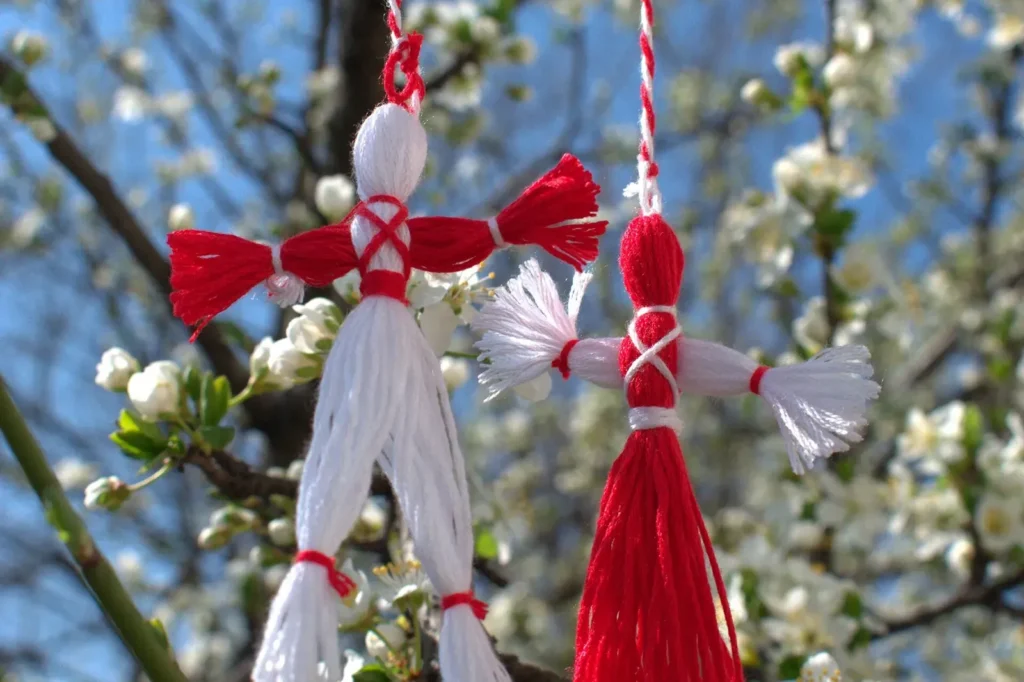
In short: The main Moldova holidays are Mărțișor on 1 March, Orthodox Easter and Blajini (Memorial Easter), Independence Day on 27 August, Language Day on 31 August, National Wine Day in early October and two Christmases, on 25 December and 7 January. Festival dates change every year, so check them before you go.
Holidays in Moldova are more than days off on a calendar. They are 1 March, when almost everyone wears a red-and-white string on their coat. They are Easter night, when whole villages walk to church carrying baskets. They are the Monday after St Thomas Sunday, when cemeteries turn into places of family reunion. They are the first weekend of October, when Chișinău’s main square fills with winery tents. For a traveller, knowing the calendar is a way to see the country as locals see it, and to avoid running into a closed museum or a long queue at the border.
This article is an evergreen calendar: we describe holidays and events that come back every year and explain how to work out the moving dates. Where we give specific dates for a specific year, we say so. Festival and concert dates change, so always check them on the organisers’ official websites before you travel.
It is based on open sources: Moldova’s Labour Code (Article 111 on public holidays), and material from the Ministry of Culture, the National Tourism Office, Chișinău’s tourism portal and festival organisers. We do not describe personal experiences.
If you are just starting to plan, begin with our Moldova travel guide, which covers transport, money, mobile data and safety.
Moldova holidays at a glance
| Item | What to know |
|---|---|
| Official public holidays | 13 (three of them on moving dates), plus each locality’s hram |
| Moving dates | Orthodox Easter (2 days) and Blajini (Memorial Easter) |
| Christmas | twice: 25 December and 7 January (8 January is also off) |
| Mărțișor | 1 March; people wear the strings all month |
| National Wine Day | usually the first weekend of October |
| Chișinău’s hram | 14 October, a day off in the capital |
| Independence Day | 27 August |
| Limba noastră (Language Day) | 31 August |
| Best season for events | March, May–June, September–October |
| What to check before you go | festival dates, museum hours, border queues |
Public holidays: the full list
Under Article 111 of Moldova’s Labour Code, the following are non-working public holidays:
| Date | Holiday | Notes |
|---|---|---|
| 1 January | New Year’s Day | New Year’s Eve is the main night of celebration |
| 7 and 8 January | Christmas (Old Style, Julian calendar) | both days off |
| 8 March | International Women’s Day | flowers, gifts, concerts |
| Moving date (Sunday and Monday) | Orthodox Easter | usually April or early May |
| Monday eight days after Easter | Blajini (Paștele Blajinilor, Memorial Easter) | day of remembrance |
| 1 May | Labour Day | start of the picnic season |
| 9 May | Victory Day and Europe Day | two holidays on one day |
| 1 June | Children’s Day | official day off |
| 27 August | Independence Day | state ceremonies |
| 31 August | Limba noastră, National Language Day | concerts and events |
| 25 December | Christmas (New Style) | official day off |
| Hram day | Patron saint’s day of the town or village | each locality has its own date, set by the local council |
If a holiday falls on a weekend, a replacement day off is not automatic: the government sometimes moves working days to create long weekends. These decisions are made separately each year, so check the current calendar.
How to work out the moving dates
Orthodox Easter is calculated using the Julian calendar, so it almost never falls on the same day as Western Easter. Blajini is the Monday eight days after Easter, that is, the day after St Thomas Sunday.
| Year | Orthodox Easter | Blajini (Memorial Easter) |
|---|---|---|
| 2026 | 12 April | 20 April |
| 2027 | 2 May | 10 May |
| 2028 | 16 April | 24 April |
| 2029 | 8 April | 16 April |
| 2030 | 28 April | 6 May |
Easter dates follow the Orthodox paschal tables; the Blajini dates are calculated with the “Monday eight days later” rule. Note that in 2027 Easter falls on 2 May, so together with 1 and 9 May the whole period becomes a string of days off.
A few other feasts depend on Easter: Palm Sunday (Florii) is a week before, Ascension is 40 days after, and Pentecost or Trinity (Rusalii) is 50 days after. They are not public holidays, but churches and villages mark them.
January: New Year, Christmas and carol singing
New Year
New Year’s Eve in Chișinău means a Christmas tree and fair on the central square, concerts and fireworks. Many families see in the New Year at home or in restaurants. For New Year’s Eve, restaurants often sell places in special packages, and you need to book well ahead.
Christmas on 7 January
A large share of believers celebrate Christmas according to the Old Style calendar, on 7 January. Both 7 and 8 January are official days off. On Christmas Eve people go carol singing, and churches hold night services.
Old New Year and Sfântul Vasile
On the night of 13–14 January people celebrate the Old New Year, linked to St Basil’s Day. In villages, groups go from house to house with Plugușorul, a ritual New Year wish for a good harvest, and in the morning children “sow” houses with grain, wishing the hosts prosperity. In some places masked processions with the Goat and the Bear still take place.
Epiphany
Epiphany according to the Old Style falls on 19 January. Water is blessed on this day, and in some places services are held by rivers and lakes. It is not a public holiday.
What travellers should know
- the first half of January is a festive period, and some offices keep special hours;
- the Christmas fair in central Chișinău usually runs from December to mid-January;
- winters can be frosty and snowy, and village roads can be difficult.
February: Dragobete and waiting for spring
Dragobete on 24 February
Dragobete is a folk festival of love that Romanian cultural tradition associates with nature waking up and the start of spring. In recent years it has been promoted as a local alternative to Valentine’s Day, and Chișinău hosts concerts and themed evenings. It is not a day off.
The last weeks of winter
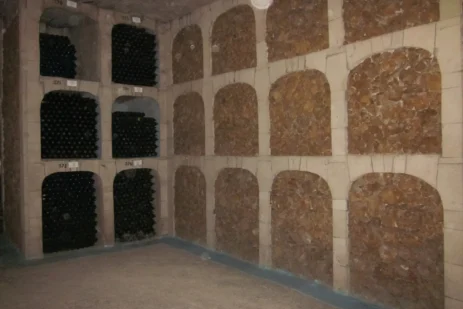
February is a quiet month for tourism: fewer visitors, lower accommodation prices, and museums and wine cellars open as usual. If you don’t mind the cold, it is a good time to visit the underground winery galleries, where the cool temperature stays the same all year round. Read more in our review of Moldova’s wineries.
By late February, mărțișor charms start appearing in shops and on street stalls, a sign that spring is near.
March: Mărțișor and the start of spring
Mărțișor on 1 March
Mărțișor is probably Moldova’s best-known holiday. On 1 March people give each other small charms on a red-and-white string, which are themselves called mărțișori. They are pinned to clothing near the heart and worn throughout March; according to one tradition, until you see the first blossoming tree, on which the string is then hung. Red is associated with life and warmth and white with purity, but there are many interpretations and no single “correct” one.
The custom is found in Moldova and Romania and, in similar forms, in Bulgaria and North Macedonia. In 2017 UNESCO inscribed the cultural practices associated with 1 March on the Representative List of the Intangible Cultural Heritage of Humanity, following a joint nomination by the four countries.
For travellers it is the perfect excuse to buy a souvenir: mărțișori are sold on the streets, at markets and in shops, from simple strings to designer jewellery. Giving one to people you have just met is a kind gesture that will be understood and appreciated.
The Mărțișor International Music Festival
From 1 March, the Mărțișor International Music Festival takes place in Chișinău and around the country. It is one of Moldova’s oldest music festivals. According to the Ministry of Culture, its 60th anniversary edition was held in 2026, roughly from 1 to 12 March, with symphonic and chamber concerts, opera, ballet and programmes in the regions. The programme is published in advance each year.
8 March
International Women’s Day is an official day off. Expect flowers, gifts and concerts, and full restaurants in the evening. If you plan to eat out on 8 March, book a table in advance.
Great Lent
Depending on the date of Easter, March usually falls during Great Lent. Many restaurants add a Lenten menu, and in villages the fast is kept more strictly than in the capital.
April and May: Easter, Blajini and the May holidays
Palm Sunday (Florii)
A week before Easter, churches bless willow branches. People take the sprigs home and keep them until the following year.
Orthodox Easter
Easter is the country’s most important religious holiday. The Easter service takes place on the night from Saturday to Sunday. People come to church with baskets holding Easter bread (pască), dyed eggs, cheese, meat and wine. The baskets are blessed, and after the service families break the fast together. The greeting on these days is “Hristos a înviat!” (“Christ is risen!”), and the reply is “Adevărat a înviat!” (“He is risen indeed!”).
The Sunday and Monday of Easter are official days off. If you attend an Easter service, dress modestly: women should ideally cover their heads and wear a skirt, and men should remove hats and avoid shorts. Flash photography during the service is frowned upon.
Blajini (Paștele Blajinilor)
A week after Easter, on the Monday after St Thomas Sunday, Moldovans celebrate Blajini, or Memorial Easter, a day of remembrance for the dead. Families go to cemeteries with food, wine and candles and share them with each other and with passers-by in memory of the departed. To a visitor it may look unusual, almost like a family picnic in a cemetery, but for locals it is an important and bright day. If someone offers you food, take it and say “Bodaproste” (a thank-you meaning “may God forgive”).
In Moldova, Blajini is an official day off. Expect noticeably heavier traffic towards villages and cemeteries.
1 May and 9 May
1 May is Labour Day, which for many people opens the season of barbecues and trips to the countryside. 9 May combines two holidays: Victory Day and Europe Day. Chișinău holds different events on this day, from commemorations at the war memorial to European-themed events in the city centre. In recent years the capital has also hosted related Europe events during May.
Spring wine events
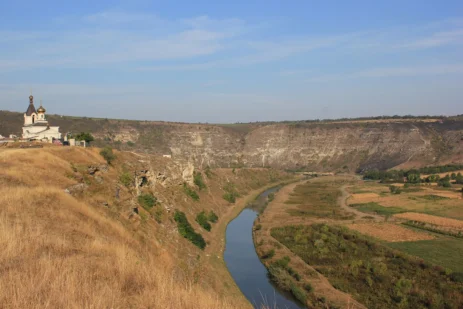
In spring, wineries present their young wines. For example, according to Chișinău’s tourism portal, the Vernisajul Vinului de Primăvară (Spring Wine Vernissage) took place on 1 May 2026. Such events do not necessarily return on the same dates, so keep an eye on announcements. Spring is also a good time to visit Orheiul Vechi: the Răut valley turns green and the summer heat has not yet arrived.
Museum Night
In mid or late May, many museums take part in the European Night of Museums: they stay open late, often with free entry and special programmes. According to Chișinău’s portal, the 2026 edition was held on 23 May.
June: Children’s Day and open-air festivals
1 June
Children’s Day is an official day off in Moldova. Chișinău’s parks host children’s parties and concerts, and many cafés and restaurants put on special family programmes.
DescOperă
The DescOperă open-air classical music festival takes place in Butuceni, in the Orheiul Vechi complex. According to the Ministry of Culture, the 2026 edition ran from 18 to 21 June. Opera and symphonic music against the cliffs above the Răut river make it one of the most atmospheric events of the summer. Accommodation in Butuceni and nearby sells out quickly at this time.
Sânziene on 24 June
The folk festival of Sânziene (Sânzienele) coincides with the Nativity of St John the Baptist. According to folk belief, on this night girls weave flower wreaths and herbs gain special powers. 24 June is also celebrated as the Universal Day of the Ia, the traditional embroidered blouse. Festivals and parades in national costume take place in Chișinău and across the country around this date.
Trinity and hram days
Trinity Sunday (50 days after Easter) often falls in June, and many villages hold their hram at this time. A hram is the feast of the local church’s patron saint; more on this below.
July: summer festivals and village celebrations
Ia Mania
The Ia Mania festival, dedicated to the traditional embroidered blouse, the ia, takes place in the village of Holercani in Dubăsari district. According to the National Tourism Office, the 2026 edition was held on 5 July. There are embroidery workshops, a crafts fair, folk ensembles and national food, which makes it a good reason to get out of the capital.
City festivals in Chișinău
In summer Chișinău hosts city festivals and open-air concerts. For example, according to the city’s tourism portal, the “Te salut, Chișinău!” festival took place in July 2026, and the Green Theatre (Teatrul Verde) opened its summer season in late June. Programmes change from year to year, so check the listings.
Heat and planning
July and August are the hottest months, with temperatures often above 30 °C. Plan walks for the morning and evening, and spend the middle of the day in museums, cafés or the cool underground winery galleries.
August: Gustar, Independence Day and Language Day
Gustar
Gustar, one of the country’s best-known summer music festivals, takes place in the Orheiul Vechi area. According to the moldova.travel tourism portal, the 2026 edition was held on 17–18 August. Expect folk, ethno and rock music, crafts and food. If you are going, sort out accommodation and transport in advance; for details about the area, see our Orheiul Vechi guide.
The plăcinte festival
Plăcinte, Moldova’s traditional filled pastries, deserve a festival of their own. According to Chișinău’s portal, the La Plăcinte festival took place on 8–9 August 2026. Similar food events are held in other towns, but their dates are not fixed.
27 August: Independence Day
On 27 August 1991, parliament adopted the Declaration of Independence of the Republic of Moldova. Independence Day is the main state holiday, with official ceremonies on Great National Assembly Square, concerts and sometimes parades and fireworks. Parts of central Chișinău may be closed to traffic.
31 August: Limba noastră
National Language Day, Limba noastră (“Our Language”), is celebrated on 31 August, in memory of 31 August 1989, when the laws on the state language and on the return to the Latin script were adopted. Chișinău hosts concerts, flowers are laid at the writers’ monuments on the Alley of Classics, and other events take place. It is an official day off.
Because 27 and 31 August are holidays just a few days apart, the end of August often becomes a period of long weekends and trips, including to Romania. Border queues are likely at this time, so read our Moldova–Romania border guide before you travel.
September: harvest and the cultural season
The start of the grape harvest
The grape harvest begins in September, the best time for winery visits. Many wineries offer special programmes during the season. For more on the wineries, see our review of Moldova’s wineries.
The Festival of Author’s Wine
Small wineries present their wines at festivals. According to Chișinău’s portal, the Festivalul Vinului de Autor (Festival of Author’s Wine) took place on 5–6 September 2026. It is a good chance to taste wines from wineries that are hard to reach.
The Maria Bieșu opera festival
The Maria Bieșu International Opera and Ballet Festival is one of the main cultural events of the autumn, held at the National Opera and Ballet Theatre. It usually takes place in September; according to Chișinău’s portal, the 2026 edition opened on 10 September. Tickets for popular performances sell fast.
Ethno Jazz
The Ethno Jazz festival brings together jazz and ethnic music from different countries. According to Chișinău’s portal, the 2026 edition was held on 23–24 September. The programme usually includes concerts in Chișinău and sometimes in other towns.
Chișinău Marathon
The Chișinău International Marathon usually takes place in September (12–13 September in 2026, according to the city portal). On race day the centre is closed to traffic, and hotels can be full of runners.
October: National Wine Day and Chișinău’s hram
National Wine Day
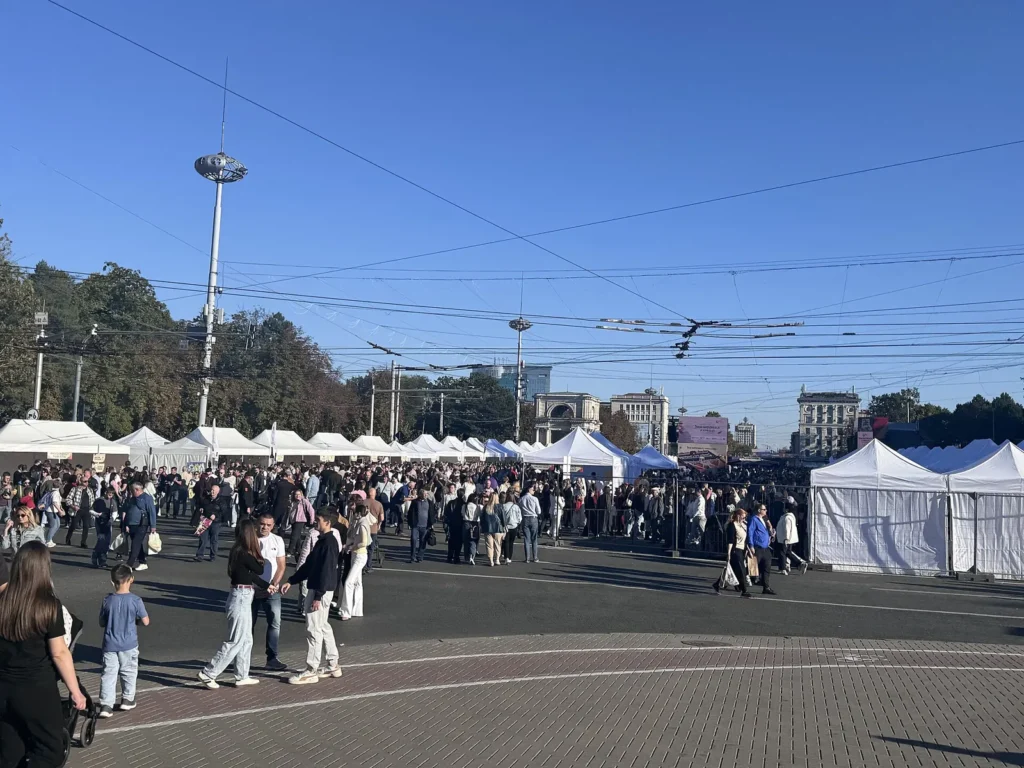
National Wine Day (Ziua Națională a Vinului) is the country’s main wine celebration. It is usually held on the first weekend of October on Great National Assembly Square in Chișinău. In 2026, according to the organisers (the Wine of Moldova programme), it took place on 3–4 October.
The format is usually as follows:
- dozens of wineries set up tents in the city centre;
- visitors buy a glass or a set of tasting coupons and try wines from different producers;
- there are masterclasses, concerts and folk programmes;
- many wineries offer special tours over these days.
Tips:
- come during the day, as the square gets very crowded in the evening;
- eat before tasting; food courts usually operate nearby;
- book accommodation in Chișinău early, as demand is high that weekend;
- don’t drive after tasting.
Chișinău’s hram on 14 October
On 14 October, the feast of St Paraskeva, Chișinău celebrates its hram, which is also City Day. It is a day off in the capital. The centre hosts concerts, fairs and festive events.
Autumn in the villages
October is harvest month: villagers make wine, dry fruit and prepare preserves for the winter. Many villages hold weddings and hram celebrations in the autumn.
November: the quiet season
November is one of the calmest months. There are no public holidays, the weather is cool and often overcast, and there are few tourists. On the other hand:
- accommodation is cheaper than in October;
- wineries are open, and the weather doesn’t matter in the underground galleries;
- the Nativity Fast begins on 15 November, and Lenten dishes return to restaurant menus;
- theatres and the philharmonic are in full season.
If you like quiet trips without crowds, November is a good choice for Chișinău and the wineries.
Other things to do in November:
- visit Chișinău’s museums, such as the National Museum of History, the National Museum of Ethnography and Natural History and the National Museum of Art, without the summer crowds;
- go for a tasting at a winery, where in autumn you can try the young wine;
- see a performance at the National Opera and Ballet Theatre or a concert at the philharmonic;
- plan a trip to Orheiul Vechi on a sunny day: the autumn colours of the Răut valley often last into early November.
November also suits business travel: working days run without interruption and offices keep normal hours.
December: Christmas on 25 December and carol singing
Christmas on 25 December
Since 2013, 25 December has been an official day off in Moldova. Some believers celebrate Christmas according to the New Style calendar and others according to the Old Style, on 7 January, and many families celebrate both. This is because two Orthodox metropolises with different approaches to the calendar operate in Moldova; in everyday life it means two Christmas days and a long festive season.
Carol singing
Carol singing (colinde) is one of the liveliest traditions. On Christmas Eve and over Christmas, children and adults go from house to house singing, and they are rewarded with sweets, fruit and money. In villages, carollers go in groups, sometimes with folk instruments. In Chișinău you can hear carols at concerts and at the Christmas fair.
The Christmas fair
Before the holidays, a Christmas fair usually opens in central Chișinău, with a tree, wooden stalls, mulled wine and souvenirs. The dates are announced each year.
The festive table
The Christmas table features sarmale (cabbage rolls), răcituri (meat jelly), homemade sausages, pies and wine. If you are invited to someone’s home, bring wine, sweets or flowers.
Hram: the village and town feast
A hram is the feast day of the church’s patron saint. For every village or town it is the main local celebration. Under the Labour Code, the hram is a non-working day in that locality, and the date is set by the local council. In Chișinău it is 14 October.
How a hram unfolds:
- in the morning, a church service;
- during the day, feasting in every home, with relatives arriving from other villages and from abroad;
- in the evening, a concert or dancing on the main square;
- sometimes a fair and sports competitions.
For a traveller, a hram is a chance to see real village life. If you are invited, don’t refuse without a good reason: hospitality matters especially on this day. You can find out the date of a hram from locals, at the primărie (town hall) or on the district website.
Wedding season
Moldovan weddings are famous for their scale: hundreds of guests, live music and dancing until dawn. The wedding season runs from late spring to autumn, especially September and October. On Saturdays, restaurants and banquet halls host weddings, so:
- popular restaurants outside the city may be closed to regular guests;
- part of some wineries and country estates may be taken up by an event;
- book tables in advance at weekends.
If you see a wedding convoy honking its way down the road, that is perfectly normal.
A traditional wedding has several stages: the matchmaking, the “buying” of the bride, the church ceremony, a feast with dancing and the removal of the veil at the end of the evening, when the bride becomes a wife. There are many guests: relatives, neighbours, friends and colleagues. Gifts are most often money in an envelope. If you happen to be invited to a wedding during your trip, it is a rare chance to see the traditions, and it is not customary to decline without a reason; just be aware that the feast may last until morning.
Traditions worth knowing
The hora
The hora is a traditional circle dance. At celebrations, weddings and hram days everyone joins the hora, and guests are often invited in. Don’t be shy: the steps are simple, and taking part is valued more than technique.
Food given “for the souls”
On days of remembrance (Blajini and the memorial Saturdays), people hand out food and sweets in memory of the dead. If you are offered some, accept it politely and say thank you.
Wearing a mărțișor
The mărțișor is worn throughout March. If someone gives you one, it is customary to wear it, not to put it in your pocket.
Dyeing eggs
At Easter people dye eggs, most often red. At the table they “knock” eggs together: the person whose egg stays intact will, according to the belief, be healthy all year.
Events by month: summary table
| Month | Main events | Type | Day off? |
|---|---|---|---|
| January | New Year, Christmas on 7 January, Old New Year, Epiphany (19 January) | religious, folk | 1, 7 and 8 January are days off |
| February | Dragobete (24 February) | folk | working day |
| March | Mărțișor (1 March), Mărțișor festival, 8 March | folk, cultural | 8 March is a day off |
| April–May | Palm Sunday, Easter, Blajini, 1 May, 9 May, Museum Night | religious, state | Easter (2 days), Blajini, 1 and 9 May are days off |
| June | 1 June, DescOperă, Sânziene and Ia Day (24 June) | cultural | 1 June is a day off |
| July | Ia Mania, city festivals | cultural | working days |
| August | Gustar, plăcinte festival, 27 and 31 August | state, cultural | 27 and 31 August are days off |
| September | harvest, Festival of Author’s Wine, Maria Bieșu festival, Ethno Jazz, marathon | wine, cultural | working days |
| October | National Wine Day, Chișinău’s hram (14 October) | wine, city | 14 October is a day off in Chișinău |
| November | start of the Nativity Fast | religious | working days |
| December | Christmas on 25 December, carol singing, Christmas fair | religious | 25 December is a day off |
Festival entries in the table describe the type of event; the organisers publish exact dates each year.
What is open and closed on holidays
| Place | Usually on a public holiday |
|---|---|
| Supermarkets and large shops | open, sometimes with shorter hours |
| Markets | open, but may close early on the main holidays (Easter, Christmas) |
| Restaurants and cafés | open; book for festive evenings |
| Government offices, banks | closed |
| Museums | some open, some closed; check in advance |
| Wineries | usually open by reservation, sometimes with a holiday surcharge |
| Intercity buses | running, but timetables may change |
| Border crossings | open, queues are often longer |
| Pharmacies | duty pharmacies are open |
These are general rules, not guarantees. Check specific opening hours on each venue’s website or social media.
Transport and the border on holidays
Before major holidays, many Moldovans travel to see relatives in the villages, and those living abroad come home. This means:
- packed intercity buses and minibuses on the eve of holidays, so buy tickets in advance;
- traffic jams leaving Chișinău on Friday evening and on the last day of the holidays;
- queues at the border with Romania, especially before Easter, Christmas, at the end of August and at the start of the summer holidays.
If you plan to cross the border during the holidays, set off early in the morning and check border crossing traffic online. For details on crossing points, documents and queues, see our Moldova–Romania border guide.
Prices and booking
During major events (National Wine Day, the May holidays, New Year’s Eve), accommodation prices in Chișinău rise and availability drops. Our advice:
- Book accommodation early, several weeks before Wine Day and New Year.
- Choose refundable rates: festival dates sometimes shift.
- Check for holiday surcharges at wineries and restaurants.
- Buy concert and festival tickets online, as popular events sell out.
- Make sure the place you want to visit is open on the holiday, especially museums and sights in villages.
Weather by season
| Season | Weather (in general) | What matters for events |
|---|---|---|
| Winter (December–February) | cold, with frost and snow at times | Christmas traditions, the fair, short days |
| Spring (March–May) | from cool to warm, changeable | Mărțișor, Easter, start of the outdoor season |
| Summer (June–August) | hot, often above 30 °C | open-air festivals, midday heat |
| Autumn (September–November) | warm in September, cooler towards November | harvest, Wine Day, cultural season |
This is a general picture of the climate, not a forecast. Check the weather forecast before you go.
How to plan a trip around events
For wine
The best time is September and October: harvest and National Wine Day. Combine the celebration in Chișinău with trips to Cricova, Mileștii Mici, Castel Mimi and Purcari. All the details are in our winery review.
For traditions
Choose Easter (with Blajini a week later), Christmas or a village hram. If you want to see village life, stay at a rural guesthouse (agropensiune), for example in Butuceni near Orheiul Vechi.
For music and culture
March (the Mărțișor festival), June (DescOperă), August (Gustar) and September (the Maria Bieșu festival, Ethno Jazz). Dates change, so check each year’s programme.
For nature
April to June and September: green landscapes, moderate temperatures and little heat. This combines well with Orheiul Vechi and a trip on into Romania, for example along our Chișinău – Iași – Bukovina itinerary.
The quiet budget option
November, February and early March: fewer tourists and lower prices, while museums and wineries stay open.
Sample trips by season
A spring weekend: Mărțișor and wine
- Day 1. 1 March in Chișinău: a walk around the centre, buying mărțișori, a Mărțișor festival concert.
- Day 2. A trip to the underground galleries of Cricova or Mileștii Mici.
- Day 3. Orheiul Vechi, weather permitting.
Easter week
- Saturday night. The Easter service in a church in Chișinău or in a village.
- Sunday. A quiet day; many places are closed or open for short hours.
- Monday to Friday. Trips around the country and to wineries.
- The following Monday. Blajini: if you are in a village, you will see the remembrance tradition.
An October wine weekend
- Friday. Arrive in Chișinău, dinner at a wine bar.
- Saturday. National Wine Day on the square.
- Sunday. A tour of Castel Mimi or Purcari.
The winter holidays
- 25 December. Christmas and the fair in the centre.
- 31 December – 1 January. New Year’s Eve.
- 7–8 January. The second Christmas, carol singing.
- 13–14 January. Old New Year, Plugușorul.
More about Mărțișor and Baba Dochia
The start of March is also linked to the legend of Baba Dochia, an old woman who drove her sheep up into the mountains in early spring, shedding one sheepskin coat after another until she froze. This gave rise to a folk custom: the first days of March are called “Baba Dochia’s days”, and according to one tradition everyone picks a day between 1 and 9 March, and the weather on that day is said to show what their year will be like. There are many versions of the legend, and different villages tell it differently.
How to choose a mărțișor:
- Classic: a simple red-and-white string with tassels.
- With a pendant: a flower, heart, swallow, horseshoe or butterfly.
- Designer: ceramics, wood, embroidery or silver, sold by craftspeople at fairs and in craft shops.
Where to buy: at street stalls in central Chișinău in the last days of February and the first days of March, at markets, and in bookshops and souvenir shops. Mărțișori are traditionally given to women, but in Moldova they are also given to men, children and colleagues.
Easter traditions and food
Holy Week
The week before Easter is a time of preparation. On Holy Thursday (Joia Mare), many families dye eggs and bake the Easter bread. Good Friday is a day of strict fasting and church services. On Saturday the cleaning is finished and the baskets are prepared for blessing.
On the Easter table
- Pască: a round Easter bread, often filled with sweet curd cheese;
- cozonac: a sweet yeast loaf with walnuts, raisins or cocoa;
- dyed eggs: usually red;
- meat dishes: after the long fast, often lamb;
- homemade wine.
If you are invited to someone’s home at Easter, bring sweets, wine or flowers, and greet your hosts with the Easter greeting; it will be appreciated.
Other Orthodox feasts
Besides the public holidays, Moldovans widely celebrate other church feasts. Many believers and churches follow the Old Style (Julian) calendar, so the dates below are Old Style; some parishes celebrate according to the New Style, 13 days earlier.
| Feast | Date (Old Style) | How it is marked |
|---|---|---|
| Epiphany (Boboteaza) | 19 January | blessing of water |
| Annunciation | 7 April | festive service |
| Ascension | 40 days after Easter | service, a hram in some villages |
| Trinity / Pentecost (Rusalii) | 50 days after Easter | homes decorated with greenery, hram days |
| Transfiguration | 19 August | blessing of fruit, especially apples and grapes |
| Dormition of the Mother of God | 28 August | one of the main summer church feasts, hram in many villages |
| Protection of the Mother of God | 14 October | on the same day, Chișinău’s hram (St Paraskeva’s day) |
| St Nicholas | 19 December | presents for children |
These are not public holidays (except for hram days in specific localities), but in the villages you will notice them.
Holidays of communities and regions
Moldova is multi-ethnic, and different regions have their own traditions. In the south, in Gagauzia and around Taraclia, Gagauz and Bulgarian customs survive; in the north, some villages are home to Ukrainian communities with their own winter rituals. The autonomous territorial unit of Gagauzia and Transnistria also have their own holidays that differ from the national ones. If you are travelling to these regions, check the local calendar in advance; this article covers the national holidays.
How to behave in church
- Clothing. Modest: shoulders and knees covered. Women should ideally cover their heads with a scarf, and men should take off their hats.
- Behaviour. Don’t talk loudly, don’t stand with your back to the altar during the service, and don’t disturb people praying.
- Photos and video. During a service, only with permission and without flash; some monasteries ban photography altogether.
- Candles. Candles are sold at the entrance; those for the living are placed in one spot and those for the dead in another, and you can ask the church staff.
- Donations. Voluntary; the donation box is usually by the entrance.
Photography during holidays
Holidays make for vivid photos, but remember the people in them:
- ask permission before taking close-up photos of people, especially elderly people and children;
- in cemeteries on Blajini, photograph discreetly or not at all;
- at weddings, don’t photograph guests unless invited;
- at festivals and on squares you can shoot freely, but respect personal space.
Useful Romanian phrases
| English | Romanian | Pronunciation (approximate) |
|---|---|---|
| Happy holidays! / Many happy returns! | La mulți ani! | lah MOOLTS ahn |
| Merry Christmas! | Crăciun fericit! | kruh-CHOON feh-ree-CHEET |
| Happy New Year! | La mulți ani! / An nou fericit! | lah MOOLTS ahn / ahn NOH-oo feh-ree-CHEET |
| Christ is risen! | Hristos a înviat! | hree-STOS ah un-vee-AHT |
| He is risen indeed! | Adevărat a înviat! | ah-deh-vuh-RAHT ah un-vee-AHT |
| Cheers! | Noroc! | noh-ROCK |
| Thank you | Mulțumesc | mool-tsoo-MESK |
| Welcome | Bine ați venit | BEE-neh ahts veh-NEET |
Holidays with children
- 1 June: children’s events in Chișinău’s parks.
- Mărțișor: children love choosing and giving the strings.
- Christmas: the fair, the tree and carol singing.
- Summer festivals: there are often children’s areas, but bring water, hats and sunscreen.
- Wine Day: many families come during the day, but tasting is for adults only.
Why Moldova has two Christmases
Visitors from other countries often find this puzzling. The explanation is simple: some Orthodox parishes in Moldova follow the Old Style (Julian) calendar and others the New Style (Revised Julian) calendar. For a long time only 7 January was a public holiday; 25 December later became a day off too, and now the state recognises both dates. In practice, many families celebrate both: 25 December as a more “European” family holiday with presents, and 7 January as a more traditional one, with a church service and carols.
Easter, however, is the same for everyone: Old Style and New Style parishes alike celebrate it on the same day, following the Orthodox paschal tables.
9 May: two holidays on one day
9 May is an official day off in Moldova, linked to Victory Day and the memory of those who died in the Second World War. In recent years the day has also been celebrated as Europe Day. In Chișinău, flowers are laid at the Eternity memorial and Europe-related events take place. The atmosphere can vary depending on the year and the political context; keep away from political rallies and respect the commemorations.
Seasonal festive food
| Season | What to try | Where to find it |
|---|---|---|
| Winter | sarmale, răcituri (meat jelly), homemade sausages, mămăligă | national-cuisine restaurants, village homes |
| Spring | pască, cozonac, Lenten plăcinte, fresh greens | bakeries, markets, the Easter table |
| Summer | plăcinte with brânză cheese, fresh vegetables, cherries, apricots, grilled fish | markets, festivals, roadside cafés |
| Autumn | young wine (tulburel), grapes, pumpkin, walnuts, zeamă (chicken soup) | wineries, Wine Day, markets |
Many restaurants in Chișinău offer seasonal and festive menus. If you are at a village celebration, you will almost certainly be offered homemade wine and plăcinte; it is part of the hospitality.
The music of the holidays
Festive music in Moldova means, above all, the lăutari, folk musicians who play at weddings, hram days and celebrations. A typical band includes violin, cimbalom, accordion and double bass, sometimes with the nai (pan flute) and clarinet. The tunes are fast and danceable, made for the hora and the sârba.
Where to hear it:
- at folk and ethnic music festivals;
- at weddings (if you are invited);
- in national-cuisine restaurants with live music;
- at concerts by the National Philharmonic and folk ensembles.
Holiday-related souvenirs
- Mărțișori: especially designer ones in ceramics or wood.
- Embroidered blouses (ii): an expensive but treasured gift; buy them from the craftspeople.
- Painted Easter eggs: wooden or real, decorated with the wax-resist technique.
- Wine: especially bottles released for National Wine Day.
- Carpets and woven textiles: traditional Moldovan carpets are known for their patterns; they are more of a keepsake than a cheap souvenir.
Prices depend on the maker and the material; check current prices before you buy.
If you are invited to someone’s home for a holiday
Moldovans are hospitable, and an invitation to someone’s home on a holiday is common. What to bring:
- a bottle of wine or a box of chocolates;
- flowers for the hostess, in an odd number (even numbers are for funerals);
- a small present for the children.
How to behave:
- be ready for a lavish table and for hosts who insist you eat more;
- you can decline wine, but politely explain why;
- toasts are an important part of the meal, so listen and join in;
- take off your shoes at the door if your hosts do.
How to work out dates for future years
Not all holidays fall on the same dates every year.
- Fixed dates. 1 January, 7–8 January, 8 March, 1 May, 9 May, 1 June, 27 and 31 August and 25 December are the same every year.
- Easter. Calculated using the Orthodox paschal tables; the dates for 2026–2030 are in the table above. For other years, search for “Orthodox Easter” and the year.
- Blajini is the Monday eight days after Easter (the second Monday after Easter).
- Trinity is 50 days after Easter (the seventh Sunday after Easter).
- Festivals. Organisers announce the dates, usually several months ahead. National Wine Day is traditionally held on the first weekend of October, but double-check.
- Moved working days. The government sometimes moves working days to create long weekends. These changes are announced in advance.
July and August: coping with the heat at festivals
Summer festivals in Moldova are often held outdoors, and temperatures in July and August regularly exceed 30 °C. A few practical tips:
- arrive at the festival towards the evening, when the heat eases; the main programme often starts then;
- bring a reusable water bottle; many festivals have drinking-water points, but not all;
- wear light-coloured clothes in natural fabrics and a hat;
- in villages the only shade may be under trees and awnings, so claim a spot early;
- if you are camping at a festival, check the camping rules and whether there are showers;
- at the hottest time of day, choose cool places: underground wine galleries, museums and churches.
Where to escape the heat in Chișinău
In Chișinău itself, the parks are a lifesaver in summer: Ștefan cel Mare Park, the Valley of Roses and Valea Morilor Park with its lake. In the evening, when the heat eases, residents come out for a walk and the city centre comes alive. Many summer concerts and open-air film screenings start after sunset.
Pros and cons of each month
| Month | Pros | Cons |
|---|---|---|
| January | Christmas traditions, carol singing, low prices | cold, short days, some places closed on holidays |
| February | few tourists, cheap accommodation | grey weather, few events |
| March | Mărțișor, the Mărțișor festival, first warm days | changeable weather, slush at times |
| April | blossom, Easter (in some years) | many places close at Easter |
| May | greenery, May holidays, Museum Night | long weekends, busy roads and border |
| June | open-air festivals, long days | the heat begins |
| July | summer festivals, holiday season | heat, hard to walk around the city at midday |
| August | Gustar, Independence Day, fruit | heat, busy border at the end of the month |
| September | harvest, mild weather, cultural season | wedding weekends, restaurants booked up |
| October | Wine Day, Chișinău’s hram, autumn colours | high demand for accommodation on Wine Day weekend |
| November | quiet, inexpensive, theatre season | overcast and cool |
| December | Christmas, the fair, New Year | cold, expensive New Year’s Eve dinners |
How Moldova’s calendar differs from its neighbours’
Visitors from neighbouring countries will find a lot that is familiar, but there are differences.
- Romania. A shared language and many customs (Mărțișor, carol singing, the ia), but in Romania Christmas is celebrated only on 25 December, and the set of public holidays is different. Easter is Orthodox, as in Moldova.
- Ukraine. Many shared Orthodox traditions; in recent years Ukraine has switched to the New Style calendar for many church feasts, so dates may differ from Moldova’s. Ukraine’s rules on days off have also changed, so check the current situation.
- Western Europe. Catholic and Protestant Easter often falls on a different date, and Blajini is a uniquely Moldovan tradition.
If you are planning a trip through several countries, check the holidays in each of them: different offices close on different days.
Name days: the celebration that’s easy to forget
Name days (ziua numelui), the feast of the saint a person is named after, are widely celebrated in Moldova. For many people they matter as much as birthdays. The most widely celebrated name days are:
- John (Ion): 20 January Old Style; all the Ions and Ioanas are congratulated.
- George (Gheorghe): 6 May Old Style.
- Constantine and Helen: 3 June Old Style.
- Peter and Paul: 12 July Old Style.
- Mary (Maria): the Nativity of the Mother of God (21 September Old Style) and the Dormition (28 August).
- Michael and Gabriel: 21 November Old Style.
- Nicholas: 19 December Old Style.
If a friend, your guide or your guesthouse host is celebrating a name day, wish them “La mulți ani!” It is always appreciated. On these days people often lay on a small spread at the office or at home.
Holidays and business trips
If you are travelling to Moldova for work, keep in mind:
- business slows down before major holidays (Easter, Christmas, New Year), and many people take time off;
- between 25 December and 8 January many offices work reduced hours;
- the end of August, around 27 and 31 August, can turn into a long holiday period;
- the government sometimes moves working days to create long weekends, so check the current decisions;
- avoid scheduling meetings on a town’s hram day.
Celebrating in Chișinău or in a village
| Criterion | Chișinău | Village |
|---|---|---|
| Atmosphere | concerts, the square, crowds | family feasts, church, traditions |
| Infrastructure | hotels, restaurants, taxis | rural guesthouses, limited transport |
| Language | many people speak Russian and English | mostly Romanian; many understand Russian |
| What to see | festivals, fairs, Wine Day | hram, carol singing, Blajini, the hora |
| Difficulty | easy | arrange accommodation and transport in advance |
The best option is to combine the two: a few days in the capital and a day or two in a village. Many villages are an hour or an hour and a half from Chișinău, so you can also visit one as a day trip.
Safety at large events
Moldova is generally a calm country, but the usual rules apply at big celebrations:
- watch your wallet and phone in crowds;
- agree on a meeting point with your companions in case you get separated;
- drink in moderation at wine festivals, and drink water too;
- don’t drive after tastings; take a taxi or an organised transfer;
- in summer, bring a hat and water, as many festivals are held in full sun;
- the emergency number in Moldova is 112.
Approximate budget for events
| Item | Approximate cost | Notes |
|---|---|---|
| Entry to Wine Day | often free; a tasting glass or tokens cost extra | the terms change every year |
| Ticket to an open-air festival | from free to a few hundred lei | depends on the event |
| Philharmonic or opera concert | a few hundred lei | depends on the seat |
| Mărțișor | from a few lei to hundreds of lei for a designer piece | depends on the material |
| Accommodation in Chișinău during major events | higher than usual | book early |
All prices are approximate; check current prices on the organisers’ websites before you go.
Where to follow announcements
- Moldova’s official tourism portal (moldova.travel) and the Ministry of Culture website (mc.gov.md): major festivals.
- Chișinău’s tourism portal (visit.chisinau.md): city events.
- Wine of Moldova (wineofmoldova.com): National Wine Day and other wine events.
- Festival pages on social media: dates and programmes often appear there first.
- Ticketing services: for concerts and paid events.
Common mistakes
- Not checking the date of Easter. Orthodox Easter often differs from Western Easter, and much is closed on these days.
- Planning visits to government offices on a holiday. Banks and offices are closed.
- Forgetting about the hram. On a town’s or village’s hram day it is a holiday there, not a working day.
- Not booking accommodation for Wine Day. Demand in Chișinău is high that weekend.
- Crossing the border at peak times. Queues are longer before major holidays.
- Relying on old festival dates. Dates change every year.
- Photographing services and memorial rites without permission.
- Driving after tastings.
- Forgetting warm clothes for winery cellars. It is cool down there even in summer.
- Expecting everything to be in English. In villages, learn at least a few phrases in Romanian.
Pre-trip checklist
- Checked the dates of public holidays and Easter for the year of travel.
- Confirmed festival dates on official websites.
- Booked accommodation, especially for Wine Day and New Year.
- Found out the hram date of the village I’m visiting.
- Packed church-appropriate clothing: covered shoulders and knees, a headscarf.
- Noted down a few festive phrases in Romanian.
- Checked border queues if travelling via Romania.
- Planned a transfer after tastings.
- Packed water and a hat for summer festivals.
- Prepared a small gift if visiting someone’s home.
Winter rituals in more detail
Moldova’s New Year rituals have pre-Christian roots and are still alive, especially in villages.
Plugușorul
Plugușorul (“the little plough”) is a ritual wish for a good harvest. Groups of young men and adults go from house to house with whips, bells and the buhai (a friction drum), reciting a long verse about ploughing, sowing and bread. The hosts treat them to food and give them money. Plugușorul is most often heard on New Year’s Eve, on 31 December or on 13 January according to the Old Style.
Sorcova
The sorcova is a stick decorated with paper flowers. On the morning of 1 January (or 14 January Old Style), children lightly tap adults with it while reciting wishes for health and a long life. It is one of the sweetest traditions, and you can see it in the city too.
The Goat and the Bear
The masked rituals of the Capra (Goat) and the Ursul (Bear) are costumed dances with music. The performers play animals that “die” and “come back to life”, symbolising the turn of the year. Some districts also keep processions of masked mummers. These rituals are best seen in villages and at winter folk festivals.
Monasteries on holidays
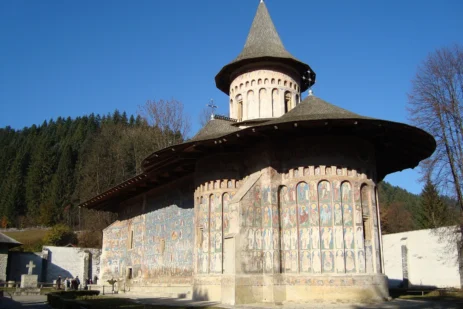
Monasteries are special places on feast days. At Easter, at Trinity and on hram days, pilgrims come from all over the country. Well-known monasteries include Căpriana, Curchi, Hâncu, Saharna, Țipova and the cave monastery at Orheiul Vechi.
What to know:
- on hram days monasteries can be crowded, and the roads to them busy;
- services are long, often at night;
- entry is free, and donations are voluntary;
- some monasteries offer a night’s stay in a pilgrims’ guesthouse, but this must be arranged in advance;
- follow the dress code more strictly than in city churches.
If you want to see the monasteries in peace, come on an ordinary weekday.
What to wear in each season
- Winter: a warm coat, a hat and waterproof shoes, as streets can be slippery.
- Spring: layers, a light jacket and an umbrella; the weather changes quickly.
- Summer: light clothes, a hat and sunscreen; for church, a scarf and clothes that cover shoulders and knees.
- Autumn: a jumper and a jacket for the evening; for winery cellars, a warm top even on a warm day.
For active travellers
Besides the Chișinău Marathon, there are cycling events, trail runs and hikes in the nature reserves throughout the year. The outdoor season runs from April to October. Popular destinations include the Codrii reserve, the Dniester valley, the area around Saharna and Țipova, and Orheiul Vechi. Organisers announce the dates of competitions; look for them on sports portals and club social media pages.
Summary
Moldova’s calendar blends Orthodox feasts, state holidays and young festivals. The brightest moments of the year are Mărțișor in early March, Easter and Blajini in spring, the DescOperă and Gustar festivals in summer, National Wine Day in early October and the double Christmas in winter. The fixed dates are easy to remember, but Easter, hram days and festivals need checking for each specific year.
If you are planning a trip, start with our general Moldova guide, then pick the events that suit you. For the latest news on events and travel, see our News section.
Sources
- Labour Code of the Republic of Moldova, Article 111 (public holidays).
- Ministry of Culture of the Republic of Moldova (mc.gov.md): the Mărțișor festival, DescOperă.
- Official tourism portal moldova.travel: Gustar.
- turism.gov.md: Ia Mania.
- visit.chisinau.md: city events calendar for 2026.
- wineday.wineofmoldova.com: National Wine Day 2026.
- UNESCO: “Cultural practices associated to the 1st of March”, Representative List of the Intangible Cultural Heritage of Humanity, 2017.
Festival dates are given as of 2026 and may change. Check the information on official websites before you travel.
Frequently asked questions
What are the public holidays in Moldova?
Under Moldova's Labour Code, the non-working holidays are 1 January, 7 and 8 January, 8 March, the first and second day of Orthodox Easter, Blajini (Memorial Easter), 1 May, 9 May, 1 June, 27 and 31 August and 25 December. Each town or village also gets a day off for its hram (patron saint's day), for example 14 October in Chișinău.
When is Christmas celebrated in Moldova?
Twice: on 25 December and on 7 January. Both are official days off, and 8 January is a non-working day too. Many families celebrate both, and the festive season with carol singing runs from late December to mid-January.
When is National Wine Day?
Usually on the first weekend of October in Chișinău, on Great National Assembly Square. In 2026 it took place on 3–4 October. The organisers publish the exact dates each year, so check them in advance.
What is Blajini (Memorial Easter)?
It is a day of remembrance for the dead, held on the Monday eight days after Orthodox Easter. Families go to cemeteries, bring food and share it with each other and with passers-by. In Moldova it is an official day off.
Are museums and shops open on public holidays?
Large shops and supermarkets usually open, while government offices, banks and some museums close or keep shorter hours. Buses run, but timetables may change. Check opening hours in advance.
When is the best time to visit Moldova for events?
The busiest periods are early March (Mărțișor), Easter, the summer open-air festival season and early October with Wine Day and Chișinău's hram. In winter, Christmas traditions and carol singing are the highlight.
Should I book accommodation early for holidays?
Yes, especially for Wine Day, the May holidays and the winter holidays, when Chișinău is busy. Queues at the border with Romania are often long on holidays and weekends.
Image credits:
- Mărțișor charms on red-and-white strings against blossoming branches — Photo: Endangered Snowdrop / Wikimedia Commons, CC BY-SA 4.0
- Crowds and white winery tents on Great National Assembly Square in Chișinău during Wine Day 2026 — Photo: Tolea93 / Wikimedia Commons, CC BY 4.0