


In short: Moldova's must-see wineries are the underground wine cities of Mileștii Mici and Cricova near Chișinău, the Castel Mimi château in Bulboaca and historic Purcari in the south. Basic tours cost roughly 300–450 lei, tastings more. Book ahead, never drive after a tasting and check prices before you go.
Moldova is one of Europe’s most wine-soaked countries. Vineyards roll past the window of almost every intercity bus, wine is poured at family tables, weddings and village feasts, and beneath the hills around Chișinău run dozens of kilometres of former quarries turned into underground wine cities. For travellers, wineries are more than a tasting: they are the clearest way to understand the country — its history, food, hospitality and the image it wants to project today.
In this review we cover the main wineries that welcome visitors: the underground galleries of Mileștii Mici and Cricova, the Castel Mimi château, historic Purcari, Château Vartely near Orhei, and family-run Asconi and Et Cetera. For each one we have gathered what matters before you go: what you will see, the kinds of programmes on offer, roughly what they cost, how to get there and who the place suits best. At the end you will find ready-made itineraries for one, two and three days, advice on buying wine and answers to common questions.
An important note. This review is based on public information: the wineries’ official websites, Moldova’s National Tourism Office, industry sources and press coverage. We do not describe personal experiences or invent details. Prices are approximate, taken from the wineries’ websites in October 2026; they change, so always check them before you go.
If this is your first trip to the country, start with our Moldova travel guide, which covers transport, money, mobile data and safety. Here we focus on wine.
Moldovan wine in numbers
| Item | What to know |
|---|---|
| Wine regions (PGI) | Codru, Ștefan Vodă, Valul lui Traian; a separate PGI “Divin” covers aged wine brandy |
| Best-known wineries for visitors | Mileștii Mici, Cricova, Castel Mimi, Purcari |
| Mileștii Mici galleries | over 200 km, about 55 km used for wine |
| Guinness record | 2005, Mileștii Mici collection of 1.5 million bottles |
| Cricova galleries | about 120 km, up to 80 m deep |
| Underground temperature | about 12–14 °C all year |
| Approximate basic tour price | roughly 250–450 lei |
| National Wine Day | first weekend of October, Chișinău |
| Booking | required in advance almost everywhere |
| Our wine tourism score | 90 out of 100 |
How we compiled this review and what the score means
The 90/100 score is our editorial rating of wine tourism in Moldova as a whole, not a ranking of an individual winery. We considered:
- Uniqueness. The underground cities of Mileștii Mici and Cricova have no direct equivalent in the region in terms of scale, while Castel Mimi and Purcari are historic estates with a character of their own.
- Accessibility. The main wineries are 15–110 km from Chișinău and can each be visited in a day.
- Choice of programmes. From short tours without wine to multi-hour dinners with tastings.
- Prices. For European visitors the basic programmes are inexpensive, though top tastings and dinners approach EU prices.
- Drawbacks. Almost everything works by reservation, many places are awkward to reach without a car, and website information is sometimes outdated or differs between language versions.
Those last points are why we do not give 100: the infrastructure is good, but the trip needs planning.
Moldova’s wine regions
To understand what is in your glass, it helps to know where it comes from. Moldova has protected geographical indications (PGI):
Codru
The centre of the country around Chișinău, with hills and forests. Mileștii Mici, Cricova, Asconi and many other wineries are here. Codru is known for white and sparkling wines, though reds are made too. It is the most convenient region for visitors because everything is close to the capital.
Ștefan Vodă
The south-east, between the Dniester River and the Ukrainian border, closer to the Black Sea. A mild climate and the nearby river make this a region known for red wines. Purcari and Et Cetera are here, about two hours’ drive from Chișinău.
Valul lui Traian
The south and south-west, including areas around Cahul and Gagauzia. It is the largest wine region by area, warm and sunny, with many red varieties. There are fewer visitor-oriented wineries here than in Codru, but it is interesting for a southern wine route.
Divin
A separate indication for Moldovan aged wine brandy, often loosely called cognac. It is not tied to a single region.
Grape varieties worth trying
International varieties such as Cabernet Sauvignon, Merlot, Chardonnay, Sauvignon Blanc and Pinot have long been widely grown in Moldova. The local and regional varieties are more interesting:
| Variety | Type | Why it is interesting |
|---|---|---|
| Fetească Albă | white | one of the oldest varieties in the region, soft floral wines |
| Fetească Regală | white | brighter and more aromatic, often used in sparkling wine |
| Fetească Neagră | red | the region’s signature red, with berry and spice notes |
| Rară Neagră | red | light and delicate, often in rosé and blends |
| Viorica | white | a Moldovan variety with a vivid aroma |
| Saperavi | red | a Georgian variety that gives dense wines in Moldova |
Ask for at least one wine from a local variety at every tasting — it is something you will not find back home.
Winery comparison table
| Winery | Where | Distance from Chișinău (approx.) | Highlight | Basic tour (approx.) |
|---|---|---|---|---|
| Mileștii Mici | Ialoveni district | about 20 km | largest wine collection, galleries | from 350 lei |
| Cricova | town of Cricova | about 15 km | underground “city” with streets | from 400 lei (morning tour 250) |
| Castel Mimi | Bulboaca, Anenii Noi district | about 35–40 km | 1893 château, garden, hotel | from 400 lei |
| Purcari | Ștefan Vodă district | about 110 km | history since 1827, red wines | from 300 lei (tour without wine) |
| Château Vartely | Orhei | about 50 km | modern winery, hotel | tastings from about €10 |
| Asconi | Puhoi, Ialoveni district | about 30–35 km | family winery, restaurant | inexpensive tastings |
| Et Cetera | Crocmaz, Ștefan Vodă | about 120 km | family winery in the south | from 450 lei (groups of 4+) |
Prices come from the wineries’ and tour operators’ websites in October 2026, excluding evening, weekend and holiday surcharges. Check current prices before you go.
Mileștii Mici: the world’s largest wine collection
What it is
Mileștii Mici is a village in Ialoveni district, about 20 km south of central Chișinău, and the state-owned winery of the same name. Beneath it lie the galleries of former limestone quarries: according to the winery, they total more than 200 km, of which about 55 km are used for producing and storing wine. Public sources citing the UNESCO nomination file say limestone was quarried here from the late 19th century and that a store for fine wines was created in the worked-out galleries in the late 1960s.
Its pride is the “Golden Collection”. In 2005 Guinness World Records recognised it as the largest wine collection by number of bottles, at around 1.5 million bottles at the time. Today the winery itself speaks of more than two million bottles; that is the winery’s claim, not a new Guinness record.
What you will see
The tour is above all about underground scale. The galleries are so long that visitors ride through them: on a tourist electric train, by bicycle, or in their own car accompanied by a guide. If you come by car, note the vehicle height limit — no more than 2.7 m, according to the rules on the winery’s website.
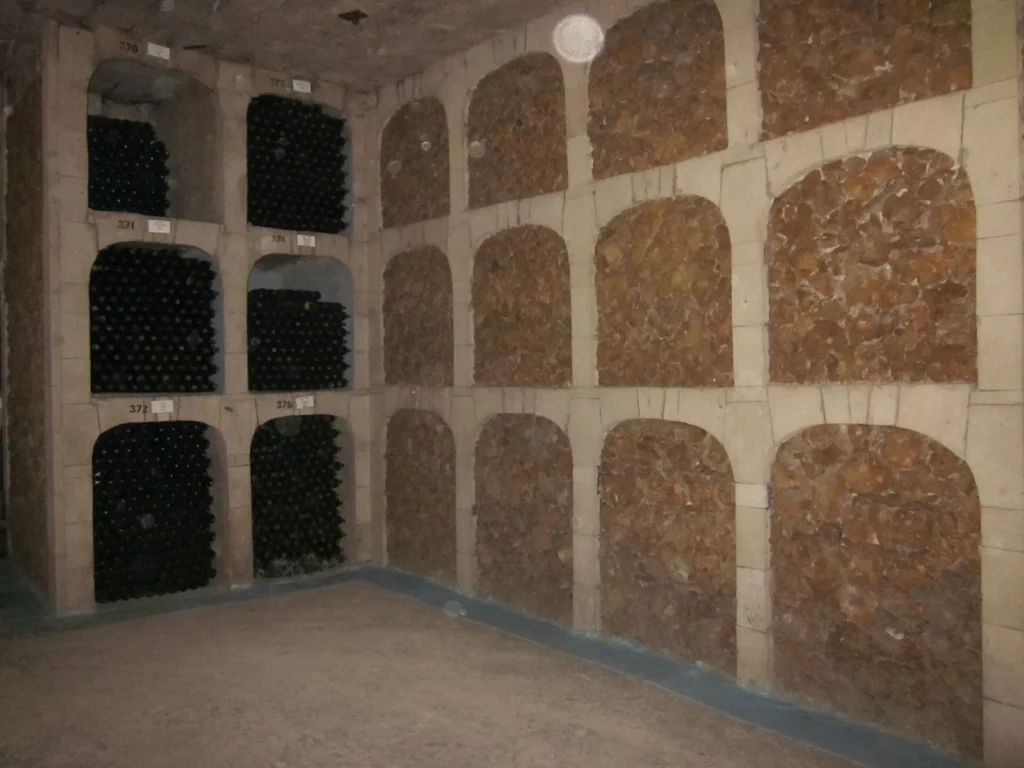
The standard route covers the underground streets, the Golden Collection with niches of old bottles (like those in the main photo of this review), and a tasting complex with halls decorated in folk and “palace” styles. Tours usually end at the winery shop.
It is around 12–14 °C underground all year, with high humidity. Even in summer, bring a sweater or light jacket: it can be 35 °C on the surface, and half an hour into the galleries you will feel chilly.
Programmes and approximate prices
According to the winery’s website in October 2026:
| Programme | Duration | Includes | From, lei |
|---|---|---|---|
| Winery visit | 50 min | galleries, Golden Collection, tasting complex, bottle of sparkling wine as a gift | 350 |
| “Hai, Noroc!” menu | 1 h 30 min | tour, 3 wines, snacks, bottle of wine | 800 |
| “Univers” menu | 2 h | 5 wines, hot dish, dessert | 1,200 |
| “Moldova” menu | 2 h | 5 wines, zeamă soup, mămăligă, dessert | 1,300 |
| “Codru” menu | 2 h | 7 wines, Moldovan platters, main course | 1,600 |
| “Boieresc” menu | 2 h 30 min | 7 wines, sarmale, main course of your choice | 2,200 |
Additional rules set by the winery:
- a surcharge of about 100 lei per person for visits from 17:00, at weekends and on holidays;
- children under 10 go free (one version of the rules on the website says under 12, so check);
- tours run in Romanian, Russian and English.
Prices and menus change; check them on the official site, milestii-mici.md, before you go.
Getting there
By car or taxi it takes about half an hour from central Chișinău. Suburban minibuses run towards Mileștii Mici, but they drop you in the village, and you still have to walk to the complex entrance; inside, the winery’s transport carries you through the galleries, so without a car you depend on the group. The simplest option is a return taxi or a tour with transfer from Chișinău.
If you book a programme with tasting, the driver does not drink. Moldova takes drink-driving very seriously, and the fines and consequences are severe.
Pros and cons
Pros:
- impressive scale and a Guinness record;
- close to Chișinău;
- wide choice of menus with food;
- you can drive through the galleries in your own car.
Cons:
- it is a state enterprise, so the service can feel more formal than at private wineries;
- it is popular, and there can be many groups at weekends;
- getting around without a car is inconvenient.
Who it suits
Those who want to see “the” underground cellar and the record, travellers with one free day in Chișinău, and fans of long Moldovan feasts.
Cricova: an underground city with streets
What it is
Cricova is a small town about 15 km north of central Chișinău and one of the country’s best-known wineries. According to the winery, its underground “wine city” covers 53 hectares, and its galleries, about 120 km long in total, reach depths of up to 80 m. As at Mileștii Mici, these are former quarries where limestone was mined for construction.
What makes Cricova special is that the galleries are laid out like a real city. The underground “streets” are named after wines — “Cabernet”, “Fetească”, “Aligote”, “Sauvignon” — and there are road signs and even traffic lights. Wines are made and stored underground, including traditional-method sparkling wine aged in bottle.
The National Collection
Another source of pride is the wine collection (the “Oenotheque”), started in 1954. According to the winery, it holds almost 1.3 million bottles. The best-known part is what remains of Hermann Göring’s collection: wines from the 1940s — Mosel, Bordeaux, Port, Tokaji and others — taken as war trophies after the Second World War. According to the winery, the jewel of the collection is the dessert wine “Ierusalim de Paști” from 1902, the only surviving bottle from a batch of 400. These stories come from the winery and the press, including the BBC; details are retold in different ways, so treat them as local legends rather than verified history.
What you will see
According to the website, the basic “Underground City” tour includes:
- a drive through the underground streets;
- the wine-ageing section;
- the traditional-method sparkling wine section;
- the National Collection and tasting complex;
- a cinema with a film about the winery.
Visitors ride the galleries in the winery’s electric vehicles. According to the website, it is around 10–14 °C inside (different pages give different figures) with very high humidity, so dress warmly.
Programmes and approximate prices
According to cricova.md in October 2026:
| Programme | Duration | Includes | Price, lei |
|---|---|---|---|
| “Matinal” (weekdays, 10:00) | 1 h 10 min | basic tour | 250 |
| “Underground City” | 1 h 10 min | basic tour | 400 |
| “Business” | 1 h 30 min | tour, 4 wines, nuts, biscuits | 700 |
| “Expert” | 2 h | tour, 7 wines, cheese platter | 950 |
| “Național” (4+ people) | 3 h | 7 wines, traditional lunch | 1,300 |
| “Premium” (4+ people) | 3 h 20 min | 8 wines, multi-course menu | 2,000 |
| “V.I.P” (4+ people) | 4 h | 9 wines, extended menu | 3,100 |
Rules worth knowing in advance:
- from 16:00 and at weekends, about 100 lei per person is added to the price;
- on public holidays the “Matinal” tour is not available and other packages carry a surcharge;
- children aged 2 and over pay a separate tour rate of 200 lei;
- according to the website, late arrivals have their booking cancelled;
- pets are not allowed on tours;
- tours run in several languages, including Romanian, Russian, English and French.
Getting there
A taxi from central Chișinău takes about 20–30 minutes depending on traffic. Suburban minibuses run to Cricova, but, as at Mileștii Mici, you can only ride the galleries in the winery’s transport, so arriving on time for your tour matters. If you are running late, call ahead.
Pros and cons
Pros:
- a “city” with streets is the most spectacular underground format;
- many languages;
- a cheap morning tour;
- a collection with headline stories;
- traditional-method sparkling wine.
Cons:
- strictly on schedule, with no leeway for lateness;
- the most interesting food programmes are only for groups of four or more;
- weekends cost more.
Who it suits
Those who want the most “cinematic” underground tour, fans of sparkling wine and history, and budget travellers (the weekday morning tour).
Mileștii Mici or Cricova?
This is the most common question. The short answer:
- Mileștii Mici if scale, the record and driving through in your own car matter, as well as a long underground feast.
- Cricova if you want a more “urban” show with streets and traffic lights, sparkling wine and a collection full of stories.
If you have time, you can visit both in one day: one is north of Chișinău, the other south, and the drive between them takes about an hour. But two tours with tastings back to back is a lot of wine; it makes more sense to combine one tasting with one tour without wine.
Castel Mimi: the country’s only château-winery
History
Castel Mimi stands in the village of Bulboaca in Anenii Noi district, about 35–40 km south-east of Chișinău. It was founded by Constantin Mimi, a Bessarabian winemaker and politician whom the winery and the national tourism agency call the last governor of Bessarabia. According to the winery, he studied winemaking in Montpellier, France, and in 1893 began building a French-style château in Bulboaca. Italian craftsmen built it, and according to the winery it was one of the first reinforced-concrete buildings in Bessarabia.
What followed is typical of the region: nationalisation, a Soviet winery, years of decline and the blow of the 1985 anti-alcohol campaign. In Soviet times the facade was covered with cladding and the architecture disappeared from view. According to the winery and the press, during repairs around 2010–2011 the cladding began to fall away, revealing the original walls, and the owners decided to restore the château. Restoration took several years; on 17 September 2016, according to the Moldpres news agency, the château officially opened to visitors. In 2023, according to the National Tourism Office, a five-star hotel opened here.
What you will see
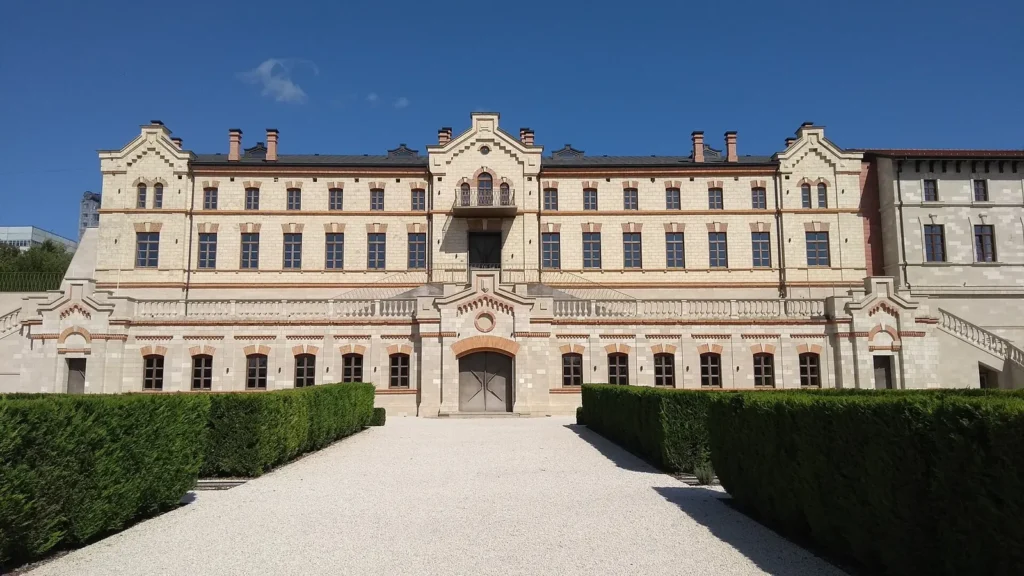
The photo above shows the facade of light stone with brick trim and a central gable, approached by a path between trimmed hedges. That is Mimi’s signature view, but the tour goes beyond it. According to the winery’s description, the programme includes:
- historic cellars built in Constantin Mimi’s time;
- the story of the château and the family;
- one of Moldova’s oldest wine collections (as the winery describes it);
- a garden, a kitchen garden supplying the restaurant, and a living green maze.
Unlike Mileștii Mici and Cricova, this is not kilometres of galleries but an estate: architecture, landscape and food matter most here. Many visitors make a full day of it, with lunch and a walk.
Programmes and approximate prices
According to castelmimi.md in October 2026:
| Programme | Duration | Includes | From, lei |
|---|---|---|---|
| Family Tour | 1 h 10 min | cellars, history, garden; “baba neagră” cake, tea or coffee; tasting of 3 wines for about 200 lei extra | 400 (450 on weekend mornings) |
| Simbol Tour | 1 h 10 min | tour and tasting | 400 |
| Iconic Tour | 1 h 30 min | 5 wines and snacks | 850 (950 at weekends) |
| Authentic Tour (lunch / dinner) | 2 h | 4 wines and a meal | 1,100 / 1,200 |
| Tour Fusion | 2 h 30 min | 5 wines, Moldovan and French dishes | 1,350 (1,450 at weekends) |
| The Governor | 3 h | extended programme | 3,000 |
Rules for children differ between pages of the website (some say free entry for ages 5–12, others list a fixed child rate of about 180–280 lei with a kids’ menu). Check when booking. According to the winery’s rules, all visits are by appointment only; if you are late, the visit may be shortened or cancelled.
Getting there
By car or taxi from Chișinău it takes about 40–50 minutes along the road towards Bender. You can reach Bulboaca by suburban minibus, but the timetable is inconvenient, especially in the evening. If you stay for dinner, either book a return taxi in advance or spend the night at the château hotel.
Pros and cons
Pros:
- the most photogenic winery in the country;
- strong food offering;
- a garden and maze, good for families;
- you can stay overnight.
Cons:
- more expensive than most wineries per programme;
- a popular venue for weddings and events, so parts of the grounds may be closed on some days (check);
- according to the website, online booking is not yet available — book by phone or email.
Who it suits
Couples, families, fans of architecture and good food, and anyone looking for “beautiful” Moldova to photograph. Also those heading to Transnistria or the south via Bender: Bulboaca is on the way.
Purcari: a historic estate since 1827
History
Purcari is a village in Ștefan Vodă district on the right bank of the Dniester, about 110 km south-east of Chișinău and about 50 km from the Black Sea. According to the winery, in 1827 a special decree of Russian Emperor Nicholas I established the first specialised wine estate in Bessarabia here. Its most famous wine is the red blend Negru de Purcari: according to the winery, it won a gold medal at the 1878 World Exhibition in Paris and became the first Moldovan wine to win an international award.
The winery also says that Purcari wines were served at the tables of Queen Victoria, King George V and Tsar Nicholas II. This is part of the brand’s official story; we have not independently verified every detail.
Today Purcari is one of the largest private wine groups in the region. Its wines regularly win awards at international competitions, including Decanter.
What you will see
Château Purcari is an estate with vineyards, a lake with water lilies, a hotel and a restaurant. According to the winery, the tour passes through the production area and the historic section with old cellars that hold the Purcari wine collection. Tasting packages cover different ranges, from young whites to Negru de Purcari and ice wine.
Programmes and approximate prices
According to chateau-purcari.com in October 2026:
| Programme | Wines | Min. group | Price, lei |
|---|---|---|---|
| Chateau Tour (no tasting) | — | — | 300 |
| Classic | Chardonnay, rosé, Rară Neagră, brut | 1 | 450 |
| Reserve Exclusive | Alb, Roșu and Negru de Purcari, Grand Cuvée | 2 | 600 |
| Parcela | 6 wines from the Parcela range | 3 | 700 |
| Nocturne | 6 wines from the Nocturne range | 4 | 700 (800 with ice wine) |
| Special Academia | 5 wines including Fetească Neagră and Saperavi | — | 950 (1,000 with ice wine) |
According to the winery, a standard tour with tasting lasts about 90 minutes, and tours run in Romanian, English and Russian. Children are welcome on the grounds, but only guests aged 18 and over may take part in tastings.
Getting there
Only by car, taxi or on a tour: it is about two hours’ drive from Chișinău via Căușeni and Ștefan Vodă. Buses run to the district centre of Ștefan Vodă, but the estate is still about 20 km further. Given the distance, it makes sense to plan Purcari as a full-day trip or an overnight stay — for example, together with Et Cetera in nearby Crocmaz.
Pros and cons
Pros:
- a historic name;
- some of the country’s most decorated red wines;
- a peaceful estate by the Dniester;
- you can stay overnight;
- other wineries of the region are nearby.
Cons:
- far from Chișinău;
- difficult without a car;
- book early for high season and weekends.
Who it suits
Those more interested in the wine itself than in underground scale, lovers of red wine, and anyone who wants a weekend in the countryside.
Château Vartely: a modern winery near Orhei
What it is
Château Vartely is on the outskirts of Orhei, about 50 km north of Chișinău on the road towards Bălți. It is a modern winery with a visitor complex: tasting rooms, a restaurant and a hotel. Unlike Mileștii Mici and Cricova, there are no kilometres of galleries here; the focus is on production, wine and service.
Vartely’s main advantage for travellers is its location. It is a short drive from Orheiul Vechi, Moldova’s best-known natural and historical site, with its cave monastery above the Răut valley. That is why Vartely is often included in a day trip combining “Orheiul Vechi plus a winery”. We explain how to plan a visit to Orheiul Vechi in detail in our Orheiul Vechi guide.
Programmes and approximate prices
According to the tour operator winetours.md in October 2026, Vartely’s tour-and-tasting programmes cost roughly:
| Programme | Number of wines | From, euros |
|---|---|---|
| Inspiro | 2 | about 10 |
| Totem | 3 | about 17.5 |
| Individo | 4 | about 20 |
| Bubbles | 4 sparkling | about 22.4 |
| Taraboste | 6 | about 32.4 |
According to the same source, a minimum group of two is usually required. Payment on site is normally in lei; euro prices are given by the tour operator as a guide. Check current prices and conditions on the winery’s website or with the tour operator.
Pros and cons
Pros:
- easy to combine with Orheiul Vechi;
- modern service;
- restaurant and hotel on site.
Cons:
- no “wow factor” of underground galleries;
- prices from the tour operator and the winery itself may differ.
Who it suits
Those heading to Orheiul Vechi who want to add a tasting and lunch, and anyone who prefers modern wineries to historic ones.
Asconi: a family winery in Puhoi
What it is
Asconi is a private family winery in the village of Puhoi in Ialoveni district, about 30–35 km south of Chișinău. For visitors it is above all a restaurant with a terrace among the vineyards and relaxed tastings in a more intimate setting than at giants like Cricova.
Programmes and approximate prices
According to the winery’s website, tastings here are among the most affordable at well-known wineries: from a few hundred lei for 3 wines up to about 1,000 lei for a premium package. Prices on the website may be out of date, so be sure to confirm them when booking. The winery asks for bookings at least a day in advance.
Pros and cons
Pros:
- intimate;
- inexpensive;
- good for lunch;
- easy to combine with Mileștii Mici, as both are south of the capital.
Cons:
- no large galleries;
- awkward to reach without a car;
- at weekends the restaurant may be busy with events.
Who it suits
Those who want to taste wine away from the “conveyor belt”, and anyone planning lunch after Mileștii Mici.
Et Cetera: a family winery in the south
What it is
Et Cetera is a family winery in the village of Crocmaz in Ștefan Vodă district, near Purcari and the Dniester, about 120 km from Chișinău. It is a small estate with a restaurant and guest rooms, considered one of the symbols of the “new wave” of Moldovan winemaking: small volumes, signature wines and an emphasis on hospitality.
Programmes and approximate prices
According to the dragde.md directory, an express tour with a tasting of 3 wines costs about 450 lei per person for groups of four or more; other programmes are available on request from the winery. Check current conditions directly.
Pros and cons
Pros:
- the atmosphere of a small family winery;
- easy to combine with Purcari;
- you can stay overnight.
Cons:
- far from Chișinău;
- a minimum group for some programmes;
- price information is best confirmed directly.
Who it suits
Those travelling south for the weekend who want to see how a small estate works.
Other wineries worth knowing
Besides those listed, Moldova has many small and medium-sized wineries that welcome guests by appointment. Well-known names that often appear on wine tours and at competitions include Fautor, Gitana, Carpe Diem, Lion-Gri, Domeniile Cuza and others. We do not give details or prices for them because we have not checked their programmes as thoroughly as those of the main wineries in this review. If you want to extend your route, look up their official websites or ask tour operators specialising in wine tourism.
It is also worth knowing about the “Wine of Moldova” brand, the national programme promoting Moldovan wine. Its website brings together wine regions, wineries and events, and the programme is linked to National Wine Day.
Ready-made itineraries
One day from Chișinău: the underground classics
- Morning. Cricova, the weekday “Matinal” tour or “Underground City”. About 1 h 10 min underground.
- Lunch. Back to Chișinău or lunch in town.
- Afternoon. Mileștii Mici, a programme with tasting and food — the “Hai, Noroc!” or “Moldova” menu.
- Evening. Taxi back to Chișinău.
This route shows both underground wineries but makes for a full day. If you want less wine, book only a tour at one of them.
One day: the château and the south of the capital
- Morning. Mileștii Mici, a short tour.
- Lunch. Asconi in Puhoi.
- Afternoon or evening. Castel Mimi in Bulboaca with dinner or an evening programme.
Logistics: Puhoi and Mileștii Mici are south of Chișinău and Bulboaca is south-east, so it is best to travel with a driver or by taxi at a price agreed in advance.
One day: Orheiul Vechi and Vartely
- Morning. Orheiul Vechi: the cave monastery, viewpoints and museum.
- Lunch and tasting. Château Vartely.
- Evening. Return to Chișinău, about an hour’s drive.
Two days: the south and the Dniester
- Day 1. Chișinău → Castel Mimi (morning tour) → Purcari (tasting, dinner, overnight).
- Day 2. Et Cetera in Crocmaz → return to Chișinău or continue onwards.
If you plan to go on to Romania after the south, read our Moldova–Romania border guide first: it covers crossing points, queues and how much wine you can bring into the EU.
Three days: wine Moldova plus Romania
- Day 1. Chișinău and Cricova.
- Day 2. Orheiul Vechi and Vartely.
- Day 3. Leave for Iași. From there you can continue through Romania, for example following our Chișinău–Iași–Bukovina itinerary.
Transport: getting around the wineries legally
Car
The most flexible option, with one big “but”: the driver does not drink. If nobody in your group is willing to stay sober all day, don’t take a car. Tasting pours are small, but they add up over a day. Drink-driving is strictly punished in Moldova; check the exact limits and fines in the current rules before your trip, but the simplest principle is not a drop behind the wheel.
Taxi
For Cricova, Mileștii Mici and Puhoi, a taxi is the best solution. Agree the price in advance or use one of the ride-hailing apps that operate in Chișinău. Book your return car from the villages in advance, as there are fewer drivers available there.
Car with driver
For the south (Purcari, Et Cetera), hiring a car with a driver for the whole day is the most convenient option. Discuss the price in advance, including waiting time.
Tours
Tour operators in Chișinău offer group and private wine tours with transfers. They cost more than going independently, but they take care of bookings, logistics and the drink-driving problem. Before buying, check exactly what is included: entry, tasting, lunch and transport.
Public transport
Suburban minibuses run to Cricova, Mileștii Mici and Bulboaca, but they are designed for locals, not tourists: the timetables are inconvenient and the stops are not at the entrance. You can use them if you travel light and have time to spare.
When to go
By season
| Season | What to expect | Tip |
|---|---|---|
| Spring (April–May) | green vineyards, few tourists | a good time for Purcari and Castel Mimi with its garden |
| Summer (June–August) | heat on the surface, cool underground | the galleries are a refuge from the heat; bring a sweater |
| Autumn (September–October) | harvest, festivals, peak season | book ahead, especially for weekends |
| Winter (November–March) | fewer people, short days | the galleries are open all year; check holiday schedules |
National Wine Day
The country’s main wine event is National Wine Day (Ziua Națională a Vinului), held on the first weekend of October in Chișinău. Wineries set up tents on the central square, with tastings, concerts and fairs. Many wineries hold open days at this time. It is an easy way to taste wines from dozens of producers in one day, but the city and the wineries are especially busy that weekend. For other festivals, see our Moldova events calendar.
Time of day and day of the week
- Weekdays are cheaper: Cricova, Mileștii Mici and Castel Mimi add surcharges at weekends and in the evening.
- Morning tours are quieter, with fewer groups.
- Evening programmes with dinner work well if you are staying on site or travelling by taxi.
How to book
- Choose a programme on the winery’s official website. Compare what is included: just a tour, a tasting or a meal.
- Book online, by phone, email or messaging app. Mileștii Mici offers online booking with card payment; according to its website, Castel Mimi currently takes bookings by phone and email; according to the press, Cricova takes bookings by phone.
- Confirm the tour language. Romanian, Russian and English are available almost everywhere.
- Ask about weekend, evening and holiday surcharges.
- Check the cancellation policy. According to public sources, at Mileștii Mici you can reschedule or get a full refund if you cancel at least 24 hours ahead.
- Arrive early. Being late can cost you your booking.
How a tasting works and how to behave
If you have never been to a professional tasting, here are a few simple rules:
- You don’t have to finish everything. Tasting pours are usually small, around 100 ml or less, but there are many of them. Leaving wine in the glass is fine.
- You can spit. Serious tastings provide spittoons for this. It is not rude.
- Drink water and eat the snacks. Especially underground, where it is cool and time flies.
- Ask questions. Guides are usually happy to talk about varieties and ageing.
- Don’t touch the bottles in the collection. Old bottles and niches are exhibits, not selfie props.
- No smoking underground. Mileștii Mici, for example, explicitly calls itself a non-smoking area.
What you will eat at a winery
Many programmes include Moldovan food. Useful names:
| Dish | What it is |
|---|---|
| Mămăligă | thick maize porridge, served with brânză cheese, sour cream and cracklings |
| Zeamă | chicken soup with homemade noodles and a sour bran ferment |
| Sarmale | stuffed vine or cabbage leaves |
| Plăcintă | flaky pie with cheese, potato, cabbage or pumpkin |
| Baba neagră | a tall dark kefir cake, a traditional dessert |
| Brânză | salty sheep’s or cow’s milk cheese |
If you are vegetarian or have allergies, say so when booking: many menus are fixed.
Buying wine
Where to buy
- At the winery shop. Convenient, especially if you liked something at the tasting. Prices are usually comparable to Chișinău.
- At wine shops in Chișinău. A wider choice of producers.
- In duty-free and supermarkets. For mass-market labels.
How much it costs
Prices for Moldovan wine in shops vary widely, from inexpensive table wines to collectable bottles that cost as much as a good dinner. We don’t give exact figures: check on the spot.
Taking it home
- EU allowances. The EU has duty-free allowances: 4 litres of still wine per adult, plus either 1 litre of spirits or 2 litres of drinks up to 22% (such as sparkling or fortified wine), plus 16 litres of beer. Anything above that must be declared.
- Other countries. If you are not flying to the EU, check your own country’s rules.
- Packing. Many winery shops sell special packaging. In checked luggage, wrap bottles in clothes and place them in the middle of the case.
- Hand luggage. Liquids over 100 ml are generally not allowed in hand luggage on flights, except for duty-free purchases in sealed bags.
For more on customs at the border, see our Moldova–Romania border guide.
Budget for a winery trip
Approximate cost per person, excluding accommodation. Prices are rough; check before you go:
| Item | Budget option | Comfortable option |
|---|---|---|
| Tour | 250–400 lei (basic tour) | 800–1,600 lei (tasting with food) |
| Transport from Chișinău | minibus or shared taxi | car with driver or a tour |
| Wine to take home | 1–2 bottles | several bottles from collection ranges |
| Tips | optional | about 10% in restaurants is common |
Accessibility and travelling with children
- Mobility. You ride through the Mileștii Mici and Cricova galleries, so there is not much walking, but floors can be uneven and some halls have steps. If you use a wheelchair, check the route when booking.
- Children. Children are welcome almost everywhere, often free or at a discount; tastings are for adults only. Castel Mimi has a kids’ menu and a maze, and Purcari has a lake and grounds to walk in.
- Pets. Pets are not allowed on tours, at least at Cricova.
Common mistakes
- Turning up without a booking. Especially at weekends, you may miss out on a tour.
- Being late. Cricova and Castel Mimi explicitly warn that lateness can lead to cancellation or a shortened visit.
- Taking a car and drinking. The most dangerous mistake; use a taxi or a driver instead.
- Dressing too lightly. It is around 12 °C underground all year.
- Booking three tastings in one day. That is too much; one or two are plenty.
- Relying on old prices from blogs. Prices change; use the official websites.
- Buying too much wine. EU allowances are smaller than you might think.
A little history: why Moldova has so much wine
Grapes have been grown on the territory of today’s Moldova for a very long time, and for centuries winemaking was part of peasant life: almost every village house has its own small vineyard and cellar. In the 19th century, under the Russian Empire, large estates such as Purcari appeared in Bessarabia, and local winemakers began studying in France and bringing in European varieties.
In Soviet times Moldova became one of the main suppliers of wine and brandy to the whole USSR. That was when the giant wine plants and underground stores that visitors see today were created. The 1985 anti-alcohol campaign hit the industry hard: some vineyards were uprooted and many enterprises cut production, as the story of Castel Mimi shows.
After independence the industry long depended on the Russian market. Russian bans on Moldovan wine imports, introduced in 2006 and again in 2013, pushed winemakers to look for new markets and to invest in quality and European standards. That is a large part of why Moldova now has so many small private wineries focused on bottled wine and tourism. This is a simplified summary; if the subject interests you, start with the materials of the Wine of Moldova programme.
Where the underground galleries came from
Beneath Chișinău lies a layer of shell limestone, a soft stone that is easy to cut into blocks. Houses in Chișinău and the surrounding villages were built from it. The quarries gradually went deeper into the hills, leaving long tunnels behind. In the second half of the 20th century they were adapted as wine stores: a stable temperature of about 12–14 °C and high humidity all year are ideal for ageing wine and sparkling wine.
That is why the galleries at Mileștii Mici and Cricova are so long and branching: they are not purpose-built cellars but entire underground networks where stone was quarried for decades. According to public sources, in 2025 the “Underground Wineries of Moldova” were added to UNESCO’s Tentative List of World Heritage sites; that is not yet inscription on the main list, and the status is worth checking.
How to read a Moldovan wine label
On the bottle you will usually see:
- The variety or blend name. For example, Fetească Neagră or a brand name such as Negru de Purcari.
- The sweetness level. Sec means dry, demisec off-dry, demidulce medium-sweet, dulce sweet.
- The vintage.
- The PGI. For example “Ștefan Vodă” or “Codru”, meaning the grapes come from that region and the wine meets its rules.
- The words “vin de colecție”. This is what Moldova calls collection wines with long ageing.
- For sparkling wine. “Metoda clasică” means the traditional method, with secondary fermentation in the bottle.
If in doubt, ask in the winery shop: staff will usually help you choose a wine for your budget and taste.
Choosing a winery: a quick test
- I want scale and the underground → Mileștii Mici or Cricova.
- I want underground streets with traffic lights and sparkling wine → Cricova.
- I want beautiful architecture, a garden and dinner → Castel Mimi.
- I want history and red wines → Purcari.
- I’m going to Orheiul Vechi → Château Vartely.
- I want something intimate and inexpensive → Asconi.
- I want a small family estate in the south → Et Cetera.
- I’m here on the first weekend of October → National Wine Day in Chișinău plus one winery.
Photos and video
At most wineries you can take photos for personal use, but the rules vary: photography may be restricted in some halls or in production areas, and a professional photo shoot is a paid service (at Cricova, according to public sources, it is a separate programme). Flash bounces off bottles in the dark galleries, so it is better to shoot at high ISO. Don’t fly drones on the grounds without permission.
Staying at a winery
If you want to take your time and not worry about getting back after dinner, consider staying at a winery. According to official websites and the National Tourism Office, accommodation is offered by:
- Castel Mimi — a five-star hotel opened in 2023;
- Château Purcari — a hotel on the estate by the Dniester;
- Château Vartely — a hotel at the winery near Orhei;
- Et Cetera — guest rooms at the family winery.
The advantages are obvious: you can book an evening programme with dinner, walk among the vines in the morning and move on the next day. The downside is that accommodation prices at weekends and in high season are noticeably higher than in Chișinău, and there may be no rooms if a wedding or corporate event is taking place. Book ahead and check cancellation terms.
Wine tourism and Transnistria
On the left bank of the Dniester, in Transnistria, there are also well-known wine and brandy producers, such as the Kvint plant in Tiraspol. But Transnistria is a region with a special status, not controlled by the Moldovan authorities, and it has its own entry rules, currency, mobile networks and insurance issues. If you plan a trip there, separately check your own foreign ministry’s current advice and the entry rules. In this review we deliberately limit ourselves to wineries on the right bank, on territory controlled by Moldova. For more on the region, see our Moldova travel guide.
Health and safety
- Know your limits. Tasting pours are small, but long programmes can include seven to nine of them. Alternate wine with water and food.
- Don’t mix wine and heat. In summer, after the cool galleries, it can be very hot on the surface; drink water and avoid standing in the sun for long.
- Damp and cold underground. Humidity in the galleries is close to 100%. People with breathing or joint problems should bring warm clothes and not stay longer than the programme.
- Footwear. Gallery floors can be damp and uneven, so wear comfortable closed shoes.
- Insurance. Check that your travel insurance covers Moldova.
- Documents. Bring your passport or ID card: some wineries may check your age before a tasting.
Seasonal and special programmes
Beyond the regular tours, many wineries hold seasonal events: open days on National Wine Day, harvest festivals in September and October, blending workshops, concerts and gastronomic dinners. For example, Castel Mimi offers a programme in which guests blend their own wine from three varieties and paint the label, as well as in-depth tasting classes. Schedules for such events change every year, so follow the wineries’ websites and social media.
Tips for different travellers
Solo travellers
Some programmes, especially those with food, are designed for groups of two or four. On your own, the easiest options are a basic tour at Cricova or Mileștii Mici, or joining a group tour from Chișinău. Ask when booking whether you can join an existing group in your language.
Couples
Castel Mimi and Purcari are the most “romantic” options: beautiful grounds, dinner and the chance to stay overnight. They are quieter on weekdays than at weekends, when weddings and events take place.
Families with children
Choose shorter programmes. Children usually enjoy the train or electric vehicle ride through the galleries, but after an hour in the cold they get tired. Castel Mimi, with its garden and maze, and Purcari, with its lake, give children space to roam while the adults taste.
Travellers on a budget
Choose weekdays and mornings. The “Matinal” morning tour at Cricova and the basic tour at Mileștii Mici are among the cheapest ways to see the underground galleries. You can replace a tasting with buying a couple of bottles in the winery shop and having dinner in Chișinău.
Serious wine lovers
Choose programmes with more wines and local varieties: Fetească Neagră, Rară Neagră, Viorica, Fetească Albă. Ask about wines from specific PGIs and about collection vintages. Small estates like Et Cetera and Asconi give you a chance to talk to the people who make the wine, not just guides.
Short stopovers
If you are passing through Chișinău with only half a day, Cricova is the closest: the drive from the centre takes about 20–30 minutes, and the basic tour lasts just over an hour. Allowing for the round trip and a buffer for your booking, plan on about three hours. Chișinău airport is not far from Mileștii Mici either, but allow plenty of time: traffic leaving the city can be unpredictable, and missing a flight after a tasting is a bad end to a trip.
Campervans and cyclists
In a campervan, remember the height limit for driving through the Mileștii Mici galleries (no more than 2.7 m under the winery’s rules) — you will probably have to leave it in the car park. Cyclists should bear in mind that roads to the southern wineries are hilly, with narrow shoulders, and very hot in summer. And, of course, don’t get on a bike after a tasting either.
Useful Romanian words
| English | Romanian | Pronunciation |
|---|---|---|
| Wine | vin | veen |
| White / red / rosé | alb / roșu / roze | alb / ROH-shoo / roh-ZEH |
| Dry / medium-sweet / sweet | sec / demidulce / dulce | sek / deh-mee-DOOL-cheh / DOOL-cheh |
| Sparkling wine | spumant | spoo-MANT |
| Tasting | degustare | deh-goos-TAH-reh |
| Winery | vinărie / cramă | vee-nuh-REE-eh / KRAH-muh |
| Cellar | beci / pivniță | bech / PEEV-nee-tsuh |
| Cheers! | Noroc! | noh-ROK |
| How much is it? | Cât costă? | kut KOS-tuh |
| The bill, please | Nota, vă rog | NOH-tah, vuh rog |
In Chișinău and at the big wineries, Russian and English are spoken almost everywhere, but a couple of phrases in Romanian always please your hosts.
Pre-trip checklist
- Winery and programme chosen, prices compared.
- Booking confirmed: date, time, language.
- Weekend and evening surcharges checked.
- Designated driver decided, or a taxi, driver or tour booked.
- A warm sweater for the underground.
- Water and comfortable shoes.
- Lei in cash or a card (check accepted payment methods).
- If taking wine into the EU, allowances checked.
- If travelling with children, child rates and menus confirmed.
- The winery’s phone number and map location saved in case you are delayed on the road.
Sources
- Mileștii Mici official website (milestii-mici.md): galleries, programmes, rules.
- Guinness World Records: “largest wine cellar by number of bottles” (2005).
- Cricova official website (cricova.md): galleries, National Collection, programmes and prices.
- BBC News: feature on the Cricova galleries and the Göring collection.
- Castel Mimi official website (castelmimi.md), Moldpres (opening on 17 September 2016), Moldova’s National Tourism Office (turism.gov.md).
- Château Purcari official website, Purcari Wineries website, the “Ștefan Vodă” PGI website.
- Tour operator winetours.md (Château Vartely programmes), Asconi website, dragde.md directory (Et Cetera).
- Wine of Moldova (wineofmoldova.com): wine regions.
- Moldova’s Customs Service (customs.gov.md): duty-free allowances for the EU.
All data was checked against these sources in October 2026. Prices and conditions change, so check them before you go.
The bottom line
Moldova’s wineries are one of the best reasons to visit the country and the easiest way to understand it. If you have one day, choose between the underground cities of Cricova and Mileștii Mici. If you want beauty and good food, go to Castel Mimi. If the wine itself and its history matter most, head south to Purcari and neighbouring Et Cetera. And if you are going to Orheiul Vechi anyway, add Château Vartely to the trip. Remember that even the shortest winery trip tells you more about Moldova than a day in the city: here wine is inseparable from history, food and people.
The main rules are simple: book ahead, arrive on time, never drive after a tasting and check prices before you go. You will find more reviews of places, wineries and services for travellers in our Reviews section.
Frequently asked questions
Which Moldovan winery should I choose if I only have one day?
If you are based in Chișinău for a day, Mileștii Mici or Cricova are the easiest: both are about 15–20 km from the centre and show vast underground galleries. If you prefer architecture and gardens, choose Castel Mimi in Bulboaca, about 35–40 km from the capital.
How much does a winery tour in Moldova cost?
According to the wineries' websites in October 2026, basic tours cost roughly 300–450 lei per person, while programmes with tastings and food range from 700 to 3,000 lei and more. Evening, weekend and holiday surcharges are common. Prices change, so check before you go.
Do I need to book a winery tour in advance?
Yes. The big wineries work by reservation, and many tours have fixed start times. If you are late, the booking may be cancelled. Book through the official website, by phone or through a reputable tour operator.
Can I visit a winery with children?
Usually yes: children can join tours, often free or at a reduced price, but tastings are for adults only. Rules vary: Mileștii Mici lets children under 10 in for free, while Cricova has a separate child rate. Check when booking.
How do I get to a winery without a car?
The easiest way is by taxi or on a tour from Chișinău. Suburban minibuses run to Mileștii Mici and Cricova, but you still have to walk from the stop, and inside the galleries you ride the winery's own transport. Purcari and Et Cetera are best reached by car with a driver.
Are there hotels at the wineries?
Yes. According to their official websites, Castel Mimi, Château Purcari, Château Vartely and Et Cetera offer rooms. This is handy if you book an evening programme with dinner. Book early for weekends and high season.
How much wine can I take from Moldova into the EU?
An adult can bring 4 litres of still wine into the EU from Moldova duty-free, plus either 1 litre of spirits or 2 litres of drinks up to 22%, such as sparkling wine. Anything above that must be declared. See our Moldova–Romania border guide for details.
Image credits:
- Underground gallery at Mileștii Mici winery: arched niches holding thousands of dusty bottles — Photo: Sietske / Wikimedia Commons, CC BY-SA 3.0
- Light stone facade of Castel Mimi in Bulboaca with a path between trimmed hedges — Photo: Helgie12 / Wikimedia Commons, CC BY-SA 4.0