


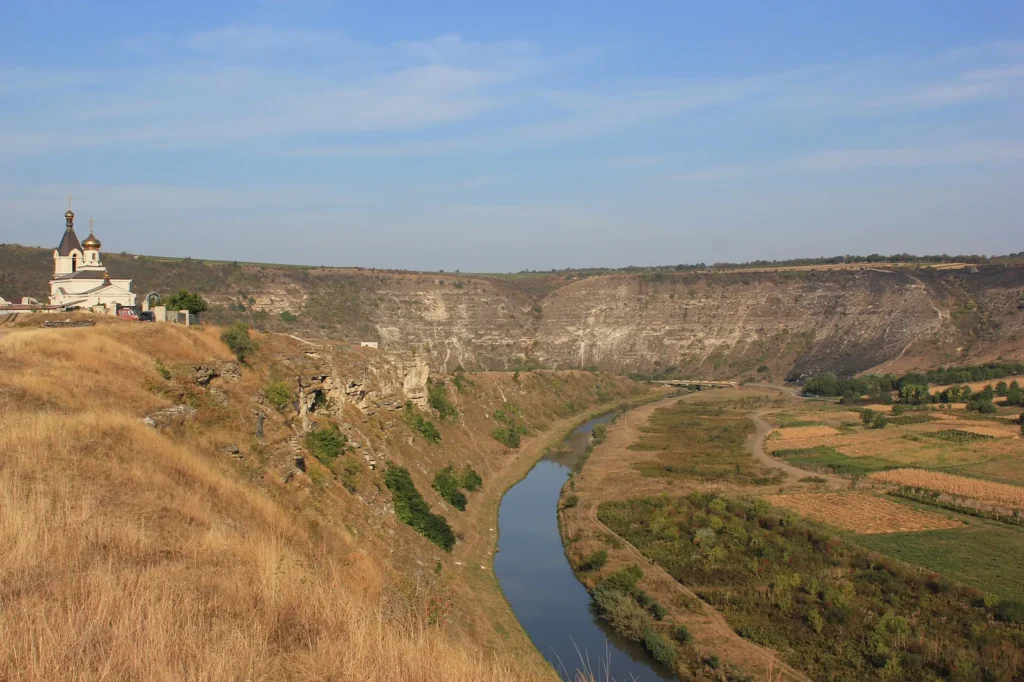
In short: Orheiul Vechi is a historic and natural reserve 60 km north of Chișinău where the Răut loops through a limestone gorge. It has a cave monastery in the cliff, a church on the bluff, traces of a Getic fortress and a Golden Horde town. Plan a full day, ideally staying overnight in Butuceni; check prices before you go.
If you only have one day outside Chișinău, most Moldovans will give you the same advice: go to Orheiul Vechi. Here the Răut river has carved a deep, winding gorge into the limestone plateau, and people have lived on its rocky promontories for thousands of years. A Getic fortress stood here, then a Golden Horde town with a mosque and bathhouses, then a medieval Moldavian town, while monks lived for centuries in caves cut into the cliffs above the river. Today it is a protected reserve, two small villages and arguably Moldova’s most recognisable view — a white church on the edge of a cliff above a loop in the river.
The beauty of Old Orhei is that it works on several levels. You can come for a couple of hours, walk down into the cave monastery, stand at the viewpoint and leave. Or you can spend a day or two: walk the trails along the gorge, climb the neighbouring promontory, visit the museums, have dinner at a family guesthouse and watch the sun rise over the valley. This guide covers both approaches — history, practical tips, transport, places to stay and the mistakes that are easy to avoid.
One caveat up front: prices, bus timetables and opening hours change. All amounts and times in this guide are indicative at the time of writing; please check them before you travel.
Orheiul Vechi at a glance
| Item | What you need to know |
|---|---|
| Location | Orhei district, Trebujeni commune, about 60 km north of Chișinău |
| What it is | a cultural and natural reserve in the gorge of the Răut river |
| Main villages | Butuceni and Trebujeni, with Morovaia nearby |
| Main sights | cave monastery, clifftop church, Getic fortress, Golden Horde town ruins, village museum |
| Age of the remains | from Cucuteni-era settlements (5th–4th millennium BC) to the 20th century |
| UNESCO status | Tentative List since 2017 (“Orheiul Vechi Archaeological Landscape”) |
| Time needed | half a day to two days |
| Getting there | car, suburban minibus, taxi, organised tour |
| Best season | May–June and September–October |
| Language | Romanian; Russian is widely understood; English mostly among younger people and guesthouse staff |
Where it is and how the reserve is laid out
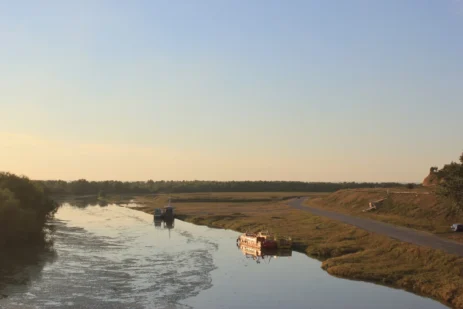
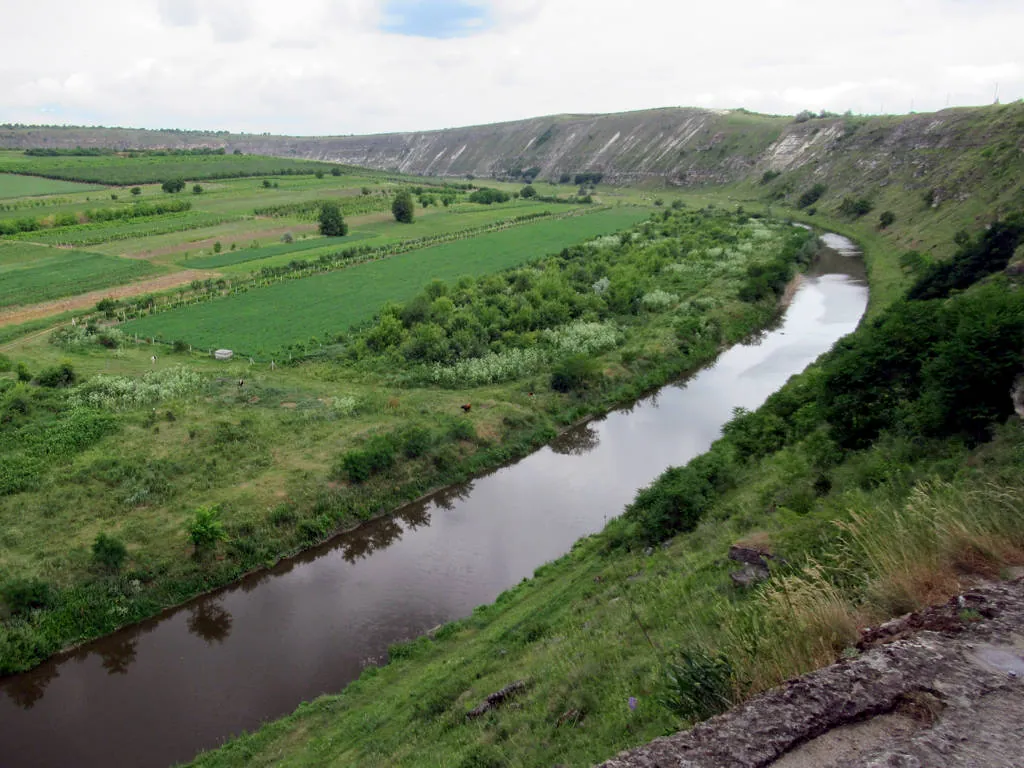
Orheiul Vechi is not a single monument but a whole landscape. The Răut, a tributary of the Dniester, makes several sharp bends here and cuts through a limestone plateau. Between the loops of the river, narrow rocky promontories remain — natural fortresses in themselves, with cliffs and water on three sides and a narrow neck on the fourth that could easily be blocked with a ditch and a rampart.
There are two main promontories:
- The Butuceni promontory — long and narrow, with the church, the bell tower and the cave monastery. This is the one you see in most photographs. The Getic fortress stood here too.
- The Peștera promontory — opposite, on the other side of the river near Trebujeni. This was the site of the Golden Horde town and later the Moldavian town of Orhei, and it holds the remains of the fortress, bathhouses and other buildings.
Down by the river and on the slopes lie the villages of Butuceni and Trebujeni, with fields, orchards and pastures. The area is protected as a cultural and natural reserve, but village life goes on: cows graze, hay is dried and vegetable gardens are tended. It is not an open-air museum in the strict sense but a living landscape.
History: several eras on one hill
It helps to keep the main layers in mind.
The earliest settlements
Archaeologists have found traces of the Cucuteni-Trypillia culture (5th–4th millennium BC) on the Butuceni promontory, as well as settlements of the Thracian Cozia-Saharna culture (around the 9th–8th centuries BC). People valued this bend in the river long before written history.
The Getic fortress
Around the 5th–3rd centuries BC, the Butuceni promontory was turned into a powerful fortified settlement of the Getae. According to the UNESCO Tentative List entry, it was one of the largest fortified settlements of the Getic world at the time, stretching for kilometres along the promontory. It was protected by steep slopes and several lines of ditches and ramparts, cut into the rock and built of stone, timber and earth. A circular sanctuary — one of the earliest of its kind among the Getae — was excavated here, along with many Greek amphorae from the Black Sea coast, evidence of lively trade.
The Golden Horde town
In the first half of the 14th century, Golden Horde rulers founded a town on the Peștera promontory known as Şehr al-Cedid or Yangı Şeher, “New Town”. It was a major administrative, commercial and religious centre for the region: coins were minted here, and it had a palace, a mosque, a caravanserai, a mausoleum and at least three bathhouses. Around 1368–1369, under pressure from Lithuanian and Moldavian forces, the Horde left and the town emptied.
The Moldavian town of Orhei
After the Horde’s departure, the Moldavian town of Orhei grew up on the same site, with a stone fortress. In the 15th and 16th centuries it was an important centre in the east of the principality. Later, life gradually moved to a new site — where the modern town of Orhei stands today, some 15–20 km away. That is why this place is called “Old” Orhei.
Old Orhei and new Orhei
The name confuses many visitors. Modern Orhei is a district town on the main road north of Chișinău. Orheiul Vechi is where the medieval town stood, by the bends of the Răut near Trebujeni and Butuceni. When you enter the destination into your navigation app, type “Orheiul Vechi”, “Butuceni” or “Trebujeni” rather than just “Orhei” — otherwise you will end up in the centre of the modern town, 20 km from the gorge.
The origin of the name “Orhei” is debated; a common theory links it to a Hungarian word for a watch post or fortress. Treat this as a hypothesis rather than an established fact.
Monks in the cliffs
Around two hundred caves have been cut into the limestone cliffs of the Răut. According to researchers, the earliest date from the 15th century. Most served as cells for hermit monks, some as churches and places of prayer. Inscriptions and symbols survive on the walls, the oldest of them medieval. The main cave monastery in the Butuceni promontory is still active today.
The 20th century
In the early 20th century the people of Butuceni built a church on the edge of the cliff — sources give 1904 or 1905. In 1944 the Soviet authorities closed it, and it stood abandoned for decades. Services resumed in 1996, when monks returned to the cave monastery. Today both the church and the monastery are active.
Timeline
| Period | What happened |
|---|---|
| 5th–4th millennium BC | Cucuteni-Trypillia settlements on the Butuceni promontory |
| c. 9th–8th century BC | Thracian Cozia-Saharna settlements |
| 5th–3rd century BC | Getic fortress on the Butuceni promontory, circular sanctuary |
| 12th–13th century | fortified rural settlement on the Peștera promontory |
| c. 1241 | Mongol conquest |
| first half of 14th century – c. 1369 | Golden Horde town of Şehr al-Cedid / Yangı Şeher |
| 15th–16th century | Moldavian town of Orhei with a stone fortress; first cave cells |
| 17th–18th century | life gradually moves to the site of modern Orhei |
| 1904–1905 | Butuceni villagers build the clifftop church |
| 1944 | church closed by the Soviet authorities |
| 1996 | services resume, monks return |
| 2017 | added to the UNESCO Tentative List |
Dates for the early periods follow archaeologists and the UNESCO Tentative List entry; many are approximate.
What we know about the Golden Horde town
The Golden Horde town is the most surprising chapter in Old Orhei’s story. Most visitors do not expect a Central Asian–style town in the middle of Moldova. Archaeologists have uncovered the remains of a defensive system, houses, a palace, a mosque, a caravanserai, a mausoleum and three bathhouses built of local limestone and brick. Finds of coins suggest a mint operated here, and the town was an important point on trade routes between the steppe, the Black Sea and Central Europe.
The town lasted only a few decades. As the Horde’s influence in the region weakened and Lithuania and the young Principality of Moldavia grew stronger, the Horde administration withdrew and the town gradually emptied. The Christian Moldavian town of Orhei, with its stone fortress, later rose in its place. Some finds are on display in the museum complex at the entrance to the reserve and in the National Museum of History in Chișinău.
UNESCO: why it is still not on the list
Moldova has tried more than once to have Old Orhei inscribed as a World Heritage Site. A first nomination was submitted in 2008 and soon withdrawn; another followed in 2015 and was also withdrawn after evaluation by ICOMOS experts. Since 2017 the “Orheiul Vechi Archaeological Landscape” has been on UNESCO’s Tentative List. Researchers cite new construction and changes to the landscape that reduce its authenticity among the problems. That is one more reason for visitors to treat the place with care.
Getting there from Chișinău and elsewhere
By car
This is the most convenient option. Leave Chișinău heading north on the road towards Orhei, then turn off onto the road through Peresecina and Trebujeni (navigation apps usually suggest this route on their own). The distance is about 60 km and the drive takes a little over an hour, depending on traffic leaving the city. The last stretch runs through villages, so slow down: people and animals often walk along the road.
There is parking by the bridge over the Răut between Trebujeni and Butuceni, at the museum complex and up by the church. At weekends and on holidays in season, the spaces fill up by midday, so arrive early. If you are in a rental car, do not leave valuables in sight.
Driving tips
- Moldova has very strict drink-driving rules — do not drive after a wine tasting.
- The village roads to Trebujeni and Butuceni are narrow and potholed in places; overtake with care.
- Expect pedestrians, horse carts, cows and geese on the road, especially in the morning and evening.
- Foreign-registered cars need an electronic vignette in Moldova; sort it out in advance.
- Fill up in Chișinău or Orhei — there are no petrol stations in the villages.
- Do not park on pastures or in front of private gates.
By minibus
Suburban minibuses (rutiere) run from Chișinău towards Trebujeni and Butuceni. They usually leave from the Central Bus Station, but the departure point and timetable sometimes change, so check the day before at the bus station or with your guesthouse hosts. The journey takes 1.5–2 hours. There are not many services and the last ones back leave relatively early; if you miss it, you will have to find a lift or call a taxi.
Another option is to take one of the frequent buses to the town of Orhei and a taxi from there to Butuceni (about 20 km).
By taxi
A return taxi from Chișinău with waiting time is a good option for a group of three or four. Agree on the price, waiting time and route in advance (for example, with a stop at Curchi Monastery). Ride-hailing apps work in Chișinău, but finding a car back from the village is harder, so it is best to arrange the return with the same driver.
On a tour
Many agencies in Chișinău run group and private trips to Old Orhei, often combined with Curchi Monastery or a winery. This is convenient if you do not want to deal with transport and would like to hear the history from a guide. The downside is less free time on the trails.
From other cities
From Bălți. Moldova’s second city lies to the north-west; the drive to Old Orhei via Orhei takes around 1.5–2 hours. By public transport, it is easiest to change in Orhei.
From Iași and Romania. If you enter Moldova via Sculeni or Ungheni, Old Orhei can be your first stop — the route from the border crosses the centre of the country, and you do not need to go into Chișinău first. Allow time for border checks. See our guide to the Moldova–Romania border for details on the crossings.
From the south and Gagauzia. It is easiest to go via Chișinău, using the main roads and stopping for fuel and lunch on the way.
From Chișinău airport. If you land in the morning, you can head straight to Old Orhei by taxi or rental car: the drive, bypassing the city centre, takes around an hour and a half. Many travellers do this to spend their first night in a guesthouse rather than in the city, starting their trip with Moldova’s signature landscape.
| Option | Travel time | Pros | Cons |
|---|---|---|---|
| Car | about 1 hour | freedom, easy to combine with Curchi and Orhei | parking fills up at peak times |
| Minibus | 1.5–2 hours | cheap | few services, early last return |
| Taxi | about 1 hour | comfort, waiting time can be agreed | expensive for one person |
| Tour | about 1 hour | guide, logistics handled | fixed schedule |
When to go
Spring (April–June). The best time for scenery: the slopes of the gorge are green, the fields are in flower and the air is clear. May and June are comfortable for walking. April can be rainy, and the trails on the slopes get slippery.
Summer (July–August). Hot, with almost no shade on the open promontories. If you come in summer, arrive early in the morning or towards evening and bring water and a hat. On the plus side, all guesthouses are open and village celebrations take place.
Autumn (September–October). The slopes turn yellow, the heat fades and the villages are busy with the grape and fruit harvest. This is probably the most photogenic time. In early October Moldova celebrates its wine festivals — see our Moldova events calendar.
Winter (November–March). Quiet and almost deserted. The landscape looks graphic, especially under snow. Some guesthouses open only by arrangement and trails can be icy. The cave monastery is open, but it is cold inside.
Weather by month
| Months | Weather | Keep in mind |
|---|---|---|
| December–February | cold, possible snow and ice | short days, some guesthouses by arrangement only |
| March–April | cool and changeable, some rain | slippery trails, Easter crowds |
| May–June | warm and green | the best time for walking; book weekends ahead |
| July–August | hot, often above 30 °C | come in the morning or evening, bring water |
| September–October | warm days, cool mornings | golden slopes, harvest, wine festivals |
| November | damp and foggy | quiet, few visitors |
This is a general description of the climate, not a forecast — check the weather before you go.
The best times of day are early morning and the last two hours before sunset: soft light on the limestone, the valley in mist or warm tones, and few groups.
What to see
The cave monastery
The main attraction is the cave monastery, cut into the limestone cliff of the Butuceni promontory high above the river. You enter through a narrow passage that leads down from the upper platform by the bell tower. Inside there is a small cave church and cells linked by corridors, and at the end an opening onto a balcony gallery right above the drop, with a view of the loop of the Răut. The monastery is active: monks live here and services are held.
The rules are simple and strict: modest dress (shoulders and knees covered, a headscarf for women — sometimes wraps are handed out at the entrance), silence, and no walking around the church during services. Take photos inside only with permission. Donations are voluntary. The passage is tight and low in places, so tall visitors should mind their heads.
How a visit to the cave monastery works
It helps to know what to expect.
- The approach. From the car park by the church, walk to the bell tower. The descent to the cave entrance starts here, down steps and through a narrow passage in the rock.
- The entrance. There is usually a sign with the rules. If you are wearing shorts or have bare shoulders, you may be asked to put on a wrap — sometimes provided on the spot.
- The cave church. A small room with icons, candles and a low ceiling. If a service is under way, stop at the entrance and do not walk further in.
- Cells and corridors. Narrow passages where you sometimes have to stoop. It is cool here even in summer.
- The balcony over the river. An opening in the rock straight onto the cliff face. The view from here is one of the main reasons to come. The railing is minimal, so stand still and do not lean over the edge.
- The way back. The same way you came. At weekends there can be a queue in the narrow passages — let people coming the other way pass.
The visit itself takes 20–40 minutes, but do not rush: sitting for a few minutes in silence on the balcony above the Răut is the best part. The best times are right after opening in the morning or in the last hours before closing, when there are fewer groups.
The clifftop church and bell tower
Above the cave monastery, on the edge of the cliff, stands a white church with a dome and bell tower built by the people of Butuceni in the early 20th century. Its silhouette above the river has become the symbol of Old Orhei and one of Moldova’s best-known images. Nearby is a large stone cross on the tip of the promontory, another popular photo spot.
Viewpoints
- By the cross and the church — the classic view of the Răut’s bend and the gorge.
- The ridge of the Butuceni promontory — walk from the church along the promontory for views on both sides: the river and the opposite Peștera promontory.
- The Peștera promontory on the Trebujeni side — from here you see the whole composition: church, cliff, caves and river loop. The best place to photograph the church at sunset.
- The slopes above Morovaia — wilder, quieter views of the gorge.
The Getic fortress
Traces of the ditches and ramparts of the Getic fortress survive on the Butuceni promontory. To the untrained eye they look like earthen folds and trenches along the ridge, so an information panel or a guide helps. But you can sense the scale: the fortress covered almost the entire promontory.
The ruins of the Golden Horde town and Moldavian fortress
On the Peștera promontory and at its foot you can see excavated foundations: remains of the Moldavian-era fortress walls, Horde-period bathhouses and houses. They survive only in fragments, and some areas are conserved or closed to visitors, but the very idea that a town with a mosque and a caravanserai once stood in the valley of this small river is striking.
The museum complex and village museum
At the entrance to the reserve there is a museum complex with an archaeological display: finds from the Getic, Horde and Moldavian layers, coins, pottery and models. In Butuceni there is an ethnographic museum in an old peasant farmstead — a stone house with traditional furnishings, woven rugs, a stove and outbuildings. Check opening hours and ticket prices locally, as they change with the seasons.
The Bosie hermitage and other caves
Below Trebujeni, in the cliff above the Răut, there is another cave complex associated with the name of pârcălab (governor) Bosie. You reach it by a footpath, and access conditions can change — ask at the museum or locally. There are other cells along the gorge, but many are on steep slopes and climbing to them without experience is dangerous.
Butuceni and Trebujeni villages
Butuceni is one of the best-kept villages in Moldova: stone walls, blue and green gates, wells, orchards and houses with carved wooden details. Many families have turned their homes into guesthouses, and the village lives from tourism. Walk the main street and the lanes: it is a good place to see what a traditional Moldovan village built of local limestone looks like.
Trebujeni is larger and plainer, with access to the Peștera promontory and a view of the church from the opposite bank.
A walk around Butuceni
Butuceni deserves a separate walk of at least an hour. The village stretches along the foot of the promontory and the river and has kept its traditional look.
- Stone walls. Yards are enclosed by walls of local limestone laid dry or with clay mortar — one of the village’s trademarks.
- Gates. Wooden and metal gates are often painted blue, green or sky blue and decorated with carving or ironwork. In Moldovan villages blue is traditionally associated with protecting the home.
- Wells. By the roads stand wells with little roofs, crosses and icons, often built in memory of loved ones or as a vow.
- Houses. Single-storey, with verandas (prispă), carved wooden posts, whitewashed walls and blue window frames.
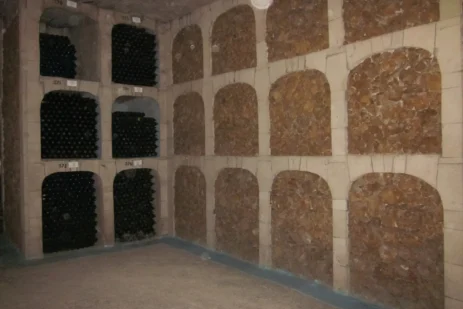
- Cellars. Under many houses are cellars cut into the limestone, where wine and preserves are kept.
As you walk, greet people — “Bună ziua” goes a long way. Many will happily tell you about their house, but it is not done to walk into a yard without an invitation.
Walking routes
Old Orhei is best explored on foot. There is no network of waymarked trails with a sign at every turn, although information boards and improved paths have appeared in recent years. Use offline maps and read the terrain: the gorge itself shows you the way.
Route 1. The classic Butuceni promontory loop (2–3 hours)
- Start at the bridge over the Răut or at the car park in Butuceni.
- Climb the road or path to the bell tower and church.
- Go down into the cave monastery and out onto the balcony above the river.
- Walk along the ridge of the promontory beside the cliff, looking out for traces of the Getic ramparts.
- At the end of the promontory, descend the gentler slope to the river and walk back along the water to the village.
The distance is about 4–5 km. The slopes are steep in places, so wear shoes with a good grip. In summer there is no shade on the ridge.
Route 2. The view from the Peștera promontory (1.5–2 hours)
Cross the bridge towards Trebujeni and climb the Peștera promontory. From here you get that famous view of the church above the cliff, with the excavations of the Horde and Moldavian towns beneath your feet. This route is lovely at sunset: the sun goes down behind you and lights up the Butuceni cliff. Return the same way.
Route 3. The gorge to Morovaia (half a day)
For those who like wilder places. From Butuceni, walk upstream along the river or along the edge of the plateau towards Morovaia village. The gorge is deeper here, there are almost no people, and you will spot cave cells on the slopes. Allow 3–4 hours there and back. Take water, food and a charged phone, and tell your guesthouse where you are going.
Tips for walkers
- The limestone on the slopes is slippery after rain, and dry grass is slippery in summer.
- Do not go right up to the edge of the cliff: the rock can break away.
- Cows and sheep graze on the pastures, sometimes with dogs — give the herds a wide berth.
- In warm weather there may be snakes in the grass; watch your step and do not put your hands into crevices.
- Mobile reception drops out in places in the gorge.
Plans for half a day, a day and two days
If you only have two hours
Sometimes Old Orhei has to be squeezed into a busy day — for example on the way to the north of the country. In that case:
- Drive straight to the clifftop church — you can get there by car.
- Go down into the cave monastery and out onto the balcony (about 30 minutes).
- Walk 10–15 minutes along the ridge from the cross to see the Răut loop from different angles.
- If there is time, drive over the bridge and climb the Peștera promontory for the classic view of the church.
- Buy some plăcinte at a café by the entrance and carry on.
It will not replace a full day, but you will see the essentials.
Half a day (4–5 hours on site)
- Arrive in the morning and park in Butuceni.
- Church, cross and cave monastery (1–1.5 hours).
- A short walk along the ridge of the promontory.
- The ethnographic museum in Butuceni.
- Lunch at a guesthouse and back to Chișinău.
A full day
| Time | Plan |
|---|---|
| 8:00–9:15 | drive from Chișinău |
| 9:30–11:00 | cave monastery and church before the groups arrive |
| 11:00–13:00 | Butuceni promontory loop |
| 13:00–14:30 | lunch in Butuceni |
| 14:30–15:30 | museum complex |
| 16:00–18:00 | Peștera promontory and the sunset view |
| 18:00–19:15 | drive back or dinner in the village |
Two days
Day 1. Arrive around lunchtime, check in at a guesthouse, visit the museum, stroll around the village, watch the sunset from the Peștera promontory and enjoy a home-cooked dinner.
Day 2. Sunrise by the church (the quietest time of all), the cave monastery right after opening, a walk along the gorge towards Morovaia, lunch, and on the way back Curchi Monastery and the town of Orhei.
An overnight stay changes the experience completely: in the evening, when the groups leave, Old Orhei becomes a quiet village above the river, with only the church bells breaking the silence.
Nearby sights
Curchi Monastery
About 20–25 km from Old Orhei is Curchi Monastery, one of Moldova’s largest and most beautiful monastic ensembles, founded in the 18th century. Several churches, well-tended grounds with flower beds and a pond, and a sense of calm. It combines easily with Old Orhei in one day.
Orhei town
Modern Orhei is a district town with a renovated centre, a park and the Church of St Demetrius, built under Prince Vasile Lupu in the 17th century. It is a handy place for lunch, fuel and an ATM.
Château Vartely
At the entrance to Orhei is the Château Vartely winery, with a tasting room, restaurant and hotel. It is an easy way to add wine to your trip. Tastings usually require advance booking. For more on the country’s wineries, see our review of Moldovan wineries.
The manor at Ivancea
In the village of Ivancea, not far from Orhei, there is an old landowners’ manor that now houses a museum. It is an example of 19th-century manor architecture, rare in Moldova. Check opening hours before you go.
Saharna and Țipova
If you want to continue the cave-monastery theme, there are two more famous places on the Dniester: Saharna Monastery with its gorge and waterfalls, and the Țipova cave monastery, the largest in Moldova. Both lie in the north-east of the country, further from Old Orhei, and need a separate day.
A day with a taste of wine
Old Orhei combines easily with a wine programme. Here is a plan by car or with a driver:
- Morning — Old Orhei. Cave monastery, church and the promontory loop.
- Lunch — Butuceni. Home cooking at a guesthouse.
- Afternoon — Curchi Monastery. 30–40 minutes by car, a walk around the ensemble.
- Evening — a tasting at Château Vartely near Orhei by prior booking, with dinner at the winery restaurant.
- Back to Chișinău — about an hour.
If you are driving, leave the tasting to your passengers: Moldova’s drink-driving rules are strict. It is easier to hire a driver for the day or stay overnight at the winery.
Seasonal events
Old Orhei has no major festival with a fixed date, but you can time your trip to coincide with celebrations:
- Easter. The night service and the blessing of Easter bread in the clifftop church and village churches. The date of Orthodox Easter changes every year.
- Village feast days (hram) in Butuceni and Trebujeni — tables are laid, relatives gather and there are sometimes concerts.
- The grape and fruit harvest — September and early October, when guesthouses make wine and preserves.
- National Wine Day — the first weekend of October in Chișinău; many visitors combine it with a trip to Old Orhei.
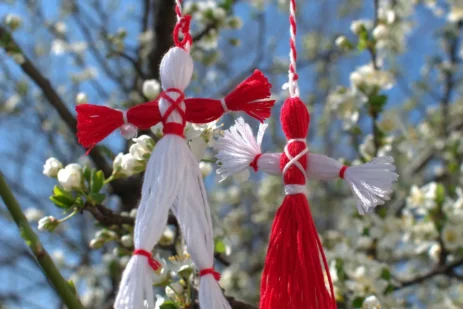
- Mărțișor — 1 March, the spring festival when people across the country give red-and-white tokens.
Ask your guesthouse hosts about the exact dates of village celebrations — they know what is happening and when.
Old Orhei for different travellers
Travelling solo. Minibuses and walking make this a simple, inexpensive trip. A guesthouse stay gives you a chance to chat with the hosts. Let them know if you are heading off on a long walk.
Couples. Stay the night: sunset on the Peștera promontory, dinner with homemade wine and sunrise by the church make one of the most atmospheric combinations in Moldova.
Groups of friends. A taxi or rental car works out cheap per person. You can book a big dinner or a workshop at a guesthouse.
On a budget. Minibus, lunch at a simple café and free viewpoints — the trip can cost very little.
By bike. It is about 60 km from Chișinău with some climbs — feasible for a fit cyclist, but the road out of the city is busy. It is easier to bring your bike by car and ride the village roads around the gorge.
Autumn in Old Orhei: harvest time
September and October are a special time in the villages around the gorge. Grapes, apples, quinces and walnuts are harvested on the slopes and in the orchards, peppers and corn dry in the yards, and the cellars smell of young wine. Many guesthouses invite guests to join the grape harvest or help make homemade wine or jam — ask in advance.
Autumn light is softer than summer light, and the colours of the slopes change almost week by week: from green and yellow in early September to rust and brown by the end of October. It is the best time for photos and long walks — the heat has gone and the rains have not yet started. The only downside is the first weekends of October, when wine festivals take place around the country and many people head to the countryside; book your room and lunch in advance.
Old Orhei in winter
Few people come in winter, and that has its own charm. Under snow the gorge looks graphic, the church stands out white against a grey sky and the village smells of wood smoke. The cave monastery is open, although it is cold and damp inside. Some guesthouses only open by arrangement, the trails are slippery and the days are short — finish your walks by four or five in the afternoon. Bring boots with a good tread and warm clothes. At Christmas and Epiphany there are services in the village churches, and you may hear carollers in the streets.
Food and where to stay
Where to eat
There are several cafés and restaurants at the entrance to the reserve and in Butuceni, but the best experience is lunch or dinner at a family guesthouse. Typical dishes:
- zeamă — a sour chicken soup with homemade noodles and lovage;
- mămăligă — cornmeal porridge served with brânză (sheep’s cheese), sour cream and pork crackling;
- sarmale — stuffed vine or cabbage leaves;
- plăcinte — flat pies with cheese, potato, cabbage or pumpkin;
- pârjoale — meat patties;
- homemade wine and fruit compote.
Prices are indicative: a filling home-cooked lunch at a guesthouse usually costs a few hundred lei per person. Please check current prices locally.
Where to stay
Most accommodation in Butuceni and Trebujeni is in guesthouses (pensiune agroturistică) in restored village houses with stone walls, inner courtyards and gardens. Many offer full board, wine tastings and workshops (plăcinte-making, weaving, pottery). At weekends in season, rooms sell out, so book ahead.
| Type | What to expect | Indicative price per night |
|---|---|---|
| Guesthouse in Butuceni | room in a renovated village house, breakfast, home cooking | from about €40 to €100 |
| Simple rooms in Trebujeni | modest, in a family home | cheaper |
| Hotel or winery near Orhei | more comfort, restaurant | depends on the season |
| Chișinău | wide choice, day trip from the city | depends on the area |
Price ranges are rough; check the current rate when you book.
Budget for the trip
Here is an indicative budget for a day trip from Chișinău per person. All numbers are approximate; check them before you go.
| Item | Budget option | Comfortable option |
|---|---|---|
| Transport | minibus there and back | taxi or rental car shared between 2–4 people |
| Entrance and museums | a small fee for the museum complex, monastery by donation | the same plus a guided tour |
| Lunch | plăcinte and tea at a café | a full lunch at a guesthouse |
| Accommodation | not needed | guesthouse with breakfast and dinner |
| Extras | — | tasting at a winery near Orhei |
Bring cash in Moldovan lei: in the villages cards are not accepted everywhere, and the nearest ATMs are in Orhei.
Crowds and quiet
Old Orhei is Moldova’s most popular natural site, so on May and September weekends, Easter and public holidays it gets busy. Tour buses usually arrive between 10:00 and 15:00. If you want quiet, come early or late, or visit on a weekday. In winter and in late autumn on weekdays you might have the place almost to yourself.
Practical details
- Toilets — at the museum complex and in cafés; there are almost none on the trails.
- Water — buy it in advance or in the shops in the villages; do not drink from springs unless you know they are safe.
- Shoes — trainers or hiking shoes with good grip. Sandals and heels are a bad idea on the limestone slopes.
- Sun — there is almost no shade on the promontories. Bring a hat and sunscreen.
- Clothes for the monastery — a scarf or shawl and long trousers or a skirt.
- Drones — permission is needed in Moldova, and flying over the monastery during services is inappropriate.
Old Orhei, Saharna or Țipova?
Many people choose between Moldova’s three famous cave monasteries. Briefly:
| Old Orhei | Saharna | Țipova | |
|---|---|---|---|
| Distance from Chișinău | about 60 km | about 110 km | about 100 km |
| Highlights | gorge, river loop, archaeological layers | monastery complex, waterfalls, sacred site | the largest cave monastery in Moldova above the Dniester |
| Difficulty | easy, plus optional hikes | easy to moderate | steep descents and climbs |
| Infrastructure | museums, guesthouses, cafés | monastery, a few cafés | minimal |
| Best for | first acquaintance with Moldova | pilgrims and nature lovers | hikers |
Distances are approximate and depend on the route. If you are in Moldova for the first time, start with Old Orhei; if you have time and a car, add Saharna and Țipova on another day.
Life in a guesthouse
A night in Butuceni is a big part of the experience. A typical guesthouse is a renovated village house with stone walls, a courtyard covered by a vine, a garden and a cellar. Rooms are simple but neat, often with woven rugs and handmade furniture. Breakfast usually includes eggs, cheese, vegetables from the garden, homemade jam and plăcinte; dinner might include zeamă, mămăligă, sarmale and homemade wine.
Many guesthouses offer workshops: you can learn to make plăcinte, try weaving or pottery, or join in the grape harvest. Book these in advance, especially for a group. In the evening, after dinner, it is worth stepping out into the yard: there is almost no artificial light, and on a clear night the stars are excellent.
Keep in mind that guesthouses are family businesses. Hosts run the house, the farm and the guests at the same time, so warn them in advance if you will be late, and respect the quiet in the evening.
For pilgrims
The cave monastery and the clifftop church are Orthodox churches with an active monastic life. If you are coming for prayer and services:
- Ask about the service schedule in advance — it can change with feast days.
- Liturgy is held in Romanian or in Church Slavonic, depending on the service.
- You can light candles and leave prayer notes; donations are voluntary.
- On major feasts — Easter, the feast of the church — many believers come, so allow time.
- If you want to stay in a monastic atmosphere, talk to the brothers about it; there is no standard hotel at the monastery.
Why Old Orhei matters for Moldova
For Moldovans, Old Orhei is not just a beautiful view. It is the place where the country’s history is visible in one landscape: ancient settlements, the Getic world, the Golden Horde, the Principality of Moldavia, monastic life and the Soviet period of decline and revival. It also shows what a traditional limestone village looks like. That is why it appears on postcards, in school textbooks and on almost every first visitor’s itinerary.
Time of day
- Sunrise. The gentlest light, mist over the river, almost no people. The best time to photograph the church from the Butuceni promontory.
- Morning (9:00–11:00). Quiet in the monastery, comfortable temperatures for walking.
- Midday. The most groups and the harshest light — a good time for lunch and the museum.
- Evening. Warm light on the cliff, a view of the church from the Peștera promontory, the bells of the evening service.
What to read before your trip
- The UNESCO Tentative List entry “Orheiul Vechi Archaeological Landscape” — a short description of the main layers and values of the site.
- Books and articles by Moldovan archaeologists about the Golden Horde town and the Getic fortress (many are in Romanian or Russian).
- Our Moldova travel guide — for general information about the country, transport, money and safety.
Nature in the gorge
The Răut gorge is a protected natural area as well as a historic site. Steppe grasses, wild thyme and rare limestone-loving plants grow on the slopes, birds of prey circle over the cliffs and swallows nest in the rock. In spring the slopes are covered in flowers, in summer they are scorched, and in autumn they turn golden-brown. Do not pick plants, leave the trails or make campfires: the slopes catch fire easily in dry weather.
Monks and hermits
The tradition of hermit life in the Răut cliffs goes back centuries. Monks dug cells in the limestone, living in silence and prayer. Some cells were linked by passages, and others were reached only by rope or ladder. After the Soviet period the tradition was revived, and today the cave monastery is home to a small brotherhood. For visitors this means one simple thing: you are a guest in someone’s home and place of prayer.
Photography tips
- The classic view of the church is taken from the Peștera promontory towards Butuceni. At sunset the cliff is lit by the sun.
- For the river loop, shoot from the end of the Butuceni promontory beside the cross.
- A wide-angle lens helps on the balcony of the cave monastery, but ask permission before shooting inside.
- In the village, the gates, wells and stone walls are great details — but do not photograph people without asking.
- Drones need permission in Moldova; check the rules and do not fly over the monastery.
With children
Old Orhei is good for children: open space, animals, caves and a sense of adventure. But keep a close eye on them near the cliff edges and on the balcony of the cave monastery, where the railings are minimal. Bring water, a hat and snacks, and plan short walks. The ethnographic museum and the farmyard animals at guesthouses are usually a hit with children.
Accessibility
Unfortunately, Old Orhei is difficult for people with limited mobility. You can drive up to the church, but the descent to the cave monastery has narrow steps and low passages. The trails on the slopes are steep and uneven. The village and some viewpoints are accessible by car. If you have mobility issues, plan a route with the guesthouse hosts or a guide.
Reserve rules
- Stay on the paths, especially near the excavations.
- Do not climb onto ruins or take stones and finds.
- No campfires or litter.
- Respect private property: fields, gardens and yards belong to villagers.
- Behave quietly near the monastery and church.
Safety
Old Orhei is a calm place. The main risks are natural: cliff edges, slippery slopes, heat and sun. The emergency number in Moldova is 112. In the gorge, mobile reception can be weak in places, so tell someone your route and carry a charged phone.
Connectivity, money and language
- Mobile internet. Coverage in the villages is usually decent, weaker in the gorge. Since 1 January 2026 Moldova has been part of the EU “Roam Like at Home” area for SIM cards from EU countries, but check your own operator’s terms.
- Money. The currency is the Moldovan leu (MDL). Cards are accepted in Chișinău and Orhei, but in the villages it is better to have cash.
- Language. Romanian is spoken; most people also understand Russian. Younger people and guesthouse hosts often speak some English.
Useful phrases
| English | Romanian | Pronunciation |
|---|---|---|
| Hello | Bună ziua | BOO-nuh ZEE-wah |
| Thank you | Mulțumesc | mool-tsoo-MESK |
| How much? | Cât costă? | kut KOS-tuh |
| Where is the monastery? | Unde este mănăstirea? | OON-deh YES-teh muh-nuh-STEE-reh-ah |
| Delicious | Foarte gustos | FWAR-teh goos-TOS |
Souvenirs
- Homemade wine and brandy from the guesthouse hosts.
- Woven rugs, embroidered shirts and ceramics from local craftspeople.
- Honey, walnuts and dried fruit.
- Icons and candles from the monastery shop.
Buy directly from the makers — it supports the villages.
Common mistakes
- Driving to modern Orhei instead of Butuceni or Trebujeni.
- Coming at midday in summer without water or a hat.
- Wearing shorts to the cave monastery.
- Missing the last minibus back to Chișinău.
- Going right up to the cliff edge for a photo.
- Thinking two hours is enough — you will see the main sights, but not the soul of the place.
Who will love Old Orhei
Anyone visiting Moldova for the first time, history buffs, photographers, walkers, people who enjoy village life and slow travel, and pilgrims. It may disappoint those who expect a museum with a full exhibition and signs everywhere: Old Orhei is about landscape, layers of history and quiet, not displays.
Responsible travel
The reserve and villages depend on visitors, but they are also fragile. Leave no litter, keep to the paths, buy from local producers, stay overnight in guesthouses rather than just dropping in for an hour, and respect monastic life. Every one of these choices helps preserve the place.
Old Orhei in a Moldova itinerary
Old Orhei fits easily into any trip around the country:
- as a day trip from Chișinău, as part of our Moldova guide;
- as the first or last stop on the route Chișinău – Iași – Bukovina;
- in combination with Moldova’s wineries;
- on the dates of the main festivals from the events calendar;
- if you are travelling from Romania, read about the Moldova–Romania border first.
Checklist before you go
- Address in your navigation app: Butuceni or Trebujeni, not just “Orhei”.
- Cash in lei.
- Water, a hat, sunscreen.
- Comfortable shoes with good grip.
- Clothes for the monastery (shoulders and knees covered, a headscarf for women).
- The return minibus time or a taxi contact.
- A booked guesthouse if you plan to stay overnight.
- Offline maps and a charged phone.
Conclusion
Orheiul Vechi is Moldova in miniature: river, limestone, layers of history, a living village, a monastery and hospitality. You can see it in two hours, but it is worth giving it at least a day — and ideally staying the night to see the valley at dawn, when the only sounds are the bells and the river. Check timetables and prices before you go, dress respectfully for the monastery and take care near the cliff edge, and Old Orhei will be one of the most memorable places of your trip.
More ideas for your trip are in our Places and Routes categories.
Frequently asked questions
How long does it take to get from Chișinău to Orheiul Vechi?
It is about 60 km, usually a little over an hour by car via Peresecina and Trebujeni. By minibus it takes longer, around 1.5–2 hours with stops. Check the suburban timetable at the bus station before you travel.
How much time do I need at Orheiul Vechi?
At least half a day for the cave monastery, the clifftop church, the viewpoints and Butuceni village. A full day with lunch at a guesthouse is more comfortable. Stay overnight if you want to walk the gorge trails and see sunrise over the Răut.
Is there an entrance fee at Orheiul Vechi?
The landscape and villages are open, but the museums and some reserve sites may charge a small fee. The cave monastery is active and donations are voluntary. Amounts change, so carry some Moldovan lei in cash.
Is there a dress code at the cave monastery?
Yes. It is a working monastery: cover shoulders and knees, women are expected to cover their hair and men to remove hats. Keep quiet inside and ask before taking photos.
Can I get to Orheiul Vechi without a car?
Yes. Suburban minibuses run from Chișinău towards Trebujeni and Butuceni, or you can take a taxi or join a tour. The last return services can leave fairly early, so check times in advance.
Is Orheiul Vechi a UNESCO World Heritage Site?
Not yet. The Orheiul Vechi Archaeological Landscape has been on UNESCO's Tentative List since 2017 but has not been inscribed. Moldova has prepared and withdrawn nominations more than once.
Image credits:
- Church with a bell tower on the cliff above a bend of the Răut river at Orheiul Vechi — Photo: Julian Nyča / Wikimedia Commons, CC BY-SA 4.0
- Green Răut river valley below limestone slopes at Orheiul Vechi in summer — Photo: D-Stanley / Wikimedia Commons, CC BY 2.0