


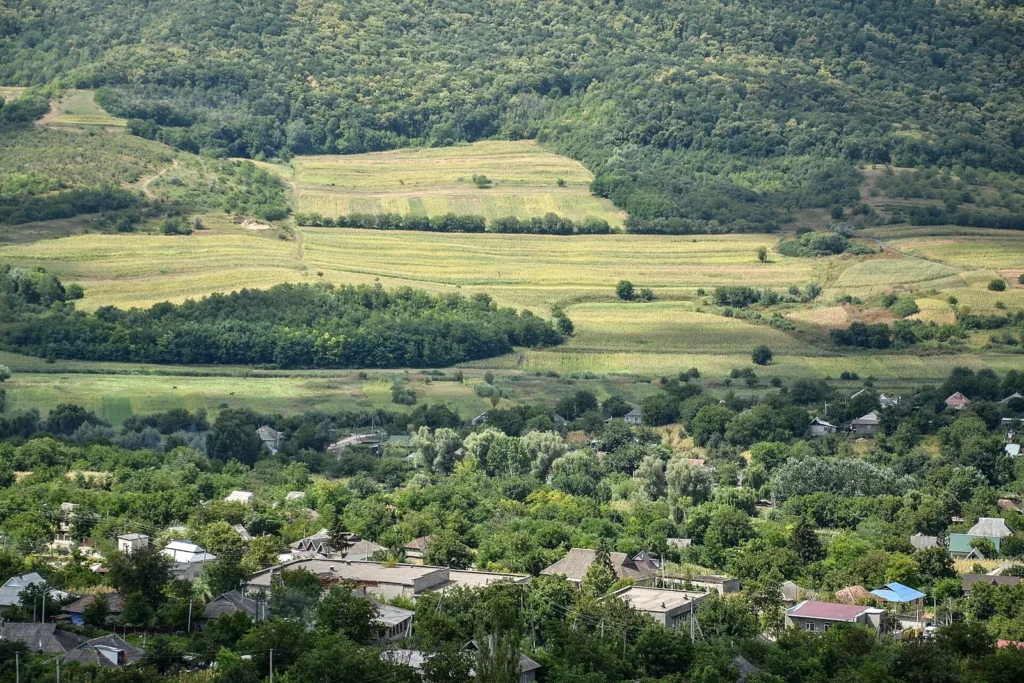
In short: Moldova is a small country between Romania and Ukraine, visited for its wine, monasteries, rural landscapes and relaxed capital, Chișinău. The best months are May–June and September–October. You can fly into Chișinău or travel overland via Iași. Prices and entry rules change, so always check official sources before you go.
For a long time Moldova was a blank spot on Europe’s travel map. Many people know it only for its wine, some from the news, others from friends who have been to Chișinău. Yet a country smaller than Belgium packs in a surprising amount: cave monasteries above the Răut River, underground wine cities, a fortress from the age of Stephen the Great on the Dniester, neat rows of vines on the southern hills, Gagauz villages with their own traditions, and a green capital where chestnut trees line the main boulevard.
This guide is for anyone planning a first trip, or wanting to see the country in more depth than a weekend allows. We cover when to go, how to get there from Iași, Bucharest and other European cities, which documents to check, how to get around, how much money to bring and what to see. At the end you will find ready-made itineraries for three, five and seven days.
One rule applies throughout: prices, timetables and entry requirements change. Where we mention amounts or times, treat them as a rough guide at the time of writing. Always double-check official websites before you travel — we point out where to look.
Moldova at a glance: key facts
Before getting into the details, it helps to have the basics in front of you. They are useful both for budgeting and for getting by on the ground.
| Item | What you need to know |
|---|---|
| Official name | Republic of Moldova |
| Capital | Chișinău |
| Area | about 33,800 km² |
| Population | about 2.4 million (preliminary 2024 census results) |
| Official language | Romanian; Russian widely understood |
| Currency | Moldovan leu (MDL) |
| Time zone | UTC+2, UTC+3 in summer |
| Country calling code | +373 |
| Emergency number | 112 |
| Plugs and voltage | types C and F, 230 V |
| Driving | on the right |
| Neighbours | Romania to the west, Ukraine to the north, east and south |
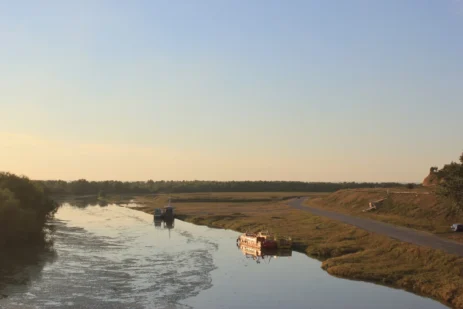
Moldova is landlocked, but it has a tiny stretch of the Danube near the village of Giurgiulești, home to the country’s only port. The main rivers are the Dniester in the east and the Prut in the west. The Prut also forms the border with Romania, so almost every trip from Iași or Bucharest begins with a bridge across it.
The terrain is mostly hilly. Elevations are modest, but roads rise and fall constantly, and every crest reveals another valley. The centre of the country is covered by the Codri forests, the north is flatter and agricultural, and the south is steppe — and the heart of wine country.
Moldova’s regions: how the country fits together
The country is small, but its regions differ noticeably in landscape, food and even the language a shopkeeper will address you in. Understanding these differences helps you plan a route without unnecessary backtracking.
Chișinău and the centre
Chișinău is the main transport hub and the most convenient base. From here, most of the well-known sights are an hour or an hour and a half away: Orheiul Vechi, the wine cellars of Cricova and Mileștii Mici, the monasteries of Căpriana, Hîncu and Curchi, and Castel Mimi in Bulboaca.
The centre of the country is the Codri, a hilly forest zone of oak, hornbeam and beech. Here you will find the Codri Nature Reserve near the village of Lozova, one of the oldest protected natural areas in the country. Most of the old monasteries, hidden in the woods for centuries, are in the same area.
The north
Northern Moldova is quieter and flatter. The highlights are Soroca, with its 15th–16th-century fortress on the Dniester and the Candle of Gratitude monument, and the scenic stretches of the Dniester canyon around Saharna, Țipova and Rudi. Bălți, the country’s second-largest city, is a handy overnight stop if you are heading further north.
The south and Gagauzia
The south is steppe, vineyards and the best-known wineries. The historic Purcari estate is in Ștefan Vodă district; in the south-west lies Cahul, near lakes and the Prut. Gagauzia is a world of its own: an autonomous territorial unit centred on Comrat. The Gagauz are a Turkic-speaking Orthodox Christian people with their own cuisine, festivals and museums.
Transnistria
East of the Dniester lies Transnistria, a region that the Republic of Moldova does not control and that no UN member state recognises. It has its own “border” posts, its own currency and its own rules. Many governments advise against travel there or urge particular caution, and travel insurance may not cover the territory. This guide does not include routes through Transnistria; if you are considering a visit, start with your own foreign ministry’s advice.
When to go: seasons and climate
Moldova has a moderately continental climate: warm or hot summers, a long mild autumn, fairly cold winters and a short but vivid spring. The season you choose will shape your impressions of the trip.
Spring: March to May
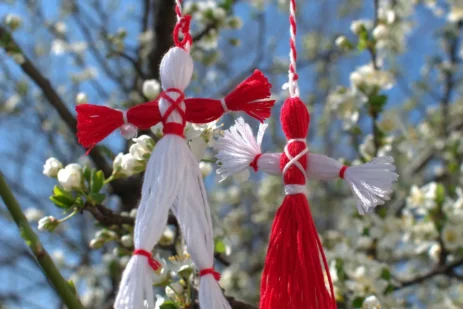
At the start of March the country celebrates Mărțișor, the festival of spring, when people give each other small red-and-white ornaments on a string. Orchards blossom in April and the hills turn bright green. The weather is unpredictable: a warm sunny day can give way to cold rain. May is one of the best months to visit — warm but not yet hot, the trees in full leaf and few tourists.
Keep Orthodox Easter in mind: the date changes every year, and many institutions keep special hours over the holiday. On the plus side, it is a good time to see church services and family traditions.
Summer: June to August
June is pleasant, with long days. In July and August temperatures often climb above 30 °C, and the southern steppe can be hotter still. Summer is good for combining Chișinău with trips to rivers and lakes, but plan visits to exposed sites such as Orheiul Vechi for the morning or evening.
Open-air festivals take place in summer, and popular places get busy at weekends. If you prefer peace and quiet, go on weekdays.
Autumn: September to November
For many, autumn is Moldova’s main season. The grape harvest runs through September and early October, markets overflow with fruit and vegetables, and the weather stays warm and dry. National Wine Day is usually held in Chișinău on the first weekend of October — a big festival with wineries from all over the country. The organisers publish the exact dates and programme each year, so check in advance.
In the second half of October and in November it gets cooler, but the colours of the Codri forests are at their best. From November the days are shorter and some seasonal attractions switch to reduced hours.
Winter: December to February
Winters are cold, with snow and sub-zero temperatures, though mild winters happen too. There are few tourists, accommodation is cheaper, and wine cellars and museums stay open. Winter is a good time for Chișinău’s Christmas markets and for carol singing in the villages — these traditions are very much alive. Note that some people celebrate Christmas on 25 December and others on 7 January.
| Season | Pros | Cons | Best for |
|---|---|---|---|
| Spring | blossom, few tourists, Mărțișor | changeable weather | nature lovers and photographers |
| Summer | long days, festivals | heat, especially in the south | combining sightseeing with rivers and lakes |
| Autumn | grape harvest, National Wine Day | high demand for rooms on festival weekends | wine travellers and food lovers |
| Winter | low prices, festive traditions | cold, short days | city breaks and wine tourism |
Entry requirements, documents and insurance
Entry rules are the one part of your preparation you should not leave to the last minute. Below is the general picture, but make your final decision only after checking official sources.
Do you need a visa?
Citizens of the European Union, the UK, the US, Canada, Japan, Ukraine and a number of other countries can enter Moldova visa-free for short stays — usually up to 90 days within any 180-day period. Citizens of many other countries must obtain a visa in advance; some of them can apply for an e-visa.
Where to check: the website of Moldova’s Ministry of Foreign Affairs and European Integration (mfa.gov.md) and the e-visa portal (evisa.gov.md). Country lists and conditions are reviewed from time to time.
What documents you need
For most travellers the key document is a passport valid for the whole trip (ideally with a few months to spare). Citizens of some neighbouring countries may enter with a national identity card under bilateral agreements, so check your own case separately.
If you are travelling with a child without the other parent, bring a notarised letter of consent and, if needed, a translation. Border officials take these documents seriously.
Medical insurance
Even if insurance is not compulsory for your nationality, it is strongly recommended. Medical care is not free for foreigners, and serious treatment or evacuation can be very expensive. When buying a policy, make sure it covers Moldova and read the exclusions — some policies do not apply in Transnistria.
Travelling by car
You will need the vehicle registration certificate, a driving licence and a Green Card insurance certificate valid for Moldova. If you do not have one, local compulsory insurance can usually be bought at the border. Vehicles registered outside Moldova must have a road vignette, which you can buy online or at border crossings. Check prices and how to pay on the official road administration website and on the Border Police website (border.gov.md) before you set off.
If the car is rented or belongs to someone else, you will need a power of attorney authorising you to drive it and take it abroad. Ask the rental company whether it allows travel to Moldova at all.
Customs rules
Cash above a set threshold must be declared on entry and exit. There are limits on alcohol and cigarettes, and the limits are especially strict when entering Romania — that is, the European Union. If you buy wine at a cellar, keep the receipts and find out in advance how many bottles you can bring duty-free into your destination country.
How to get to Moldova
Moldova is not the most obvious destination on airline maps, but getting there is easy enough. The main options are a direct flight to Chișinău, a flight to Iași or Bucharest in Romania followed by an overland trip, or a train or bus from neighbouring countries.
Flying into Chișinău
Chișinău International Airport (KIV) is the country’s only major passenger airport. It lies about 13 kilometres south-east of the city centre. Both low-cost and full-service airlines fly here from many European cities, as well as from Turkey and the Middle East. The network changes from season to season, so check the current schedule on the airport website (airport.md) and on flight search engines.
From the airport you can reach the centre by public transport — trolleybus or minibus — or by taxi. Route numbers, frequencies and payment methods change from time to time; the airport and the city transport authority publish up-to-date information. Taxis are best booked through an app or at the official desk in the arrivals hall rather than with drivers who approach you.
Via Iași
For many travellers, especially from Western Europe, flying into Iași (IAS) is a convenient option. Iași is a large university city in north-eastern Romania; its airport is served by low-cost carriers from a number of European cities, and the city itself deserves at least a day.
Iași to Chișinău is roughly 130–170 kilometres, depending on which border crossing you use. The main options by car or bus are:
- Sculeni — Sculeni. The crossing closest to Iași, about 20–25 kilometres from the city centre. On the Moldovan side the road continues via Ungheni or Bălți.
- Albița — Leușeni. The main road corridor between Romania and Moldova. It is a longer drive from Iași, but on the Moldovan side the road to Chișinău via Hîncești is short and direct.
Scheduled buses and minibuses run between Iași and Chișinău; the journey usually takes around three to four hours including the border. Operators and bus stations publish timetables, but queues at the border are impossible to predict, especially during holidays and in summer.
We cover crossing points, documents and queues in detail in our guide to crossing the Moldova–Romania border, and a full route through Iași and Bukovina in our Chișinău — Iași — Bukovina itinerary.
Via Bucharest
Bucharest is the region’s largest air hub, with plenty of flights. By road it is about 450 kilometres to Chișinău. You can go by bus (usually a full day or an overnight trip), by car via Albița — Leușeni, or by train. The Bucharest — Chișinău passenger rail service is periodically resumed or rerouted, so check its status shortly before your trip on the websites of Romania’s CFR Călători and Moldova’s Calea Ferată din Moldova.
From Ukraine
Before 2022 the most popular overland route was from Odesa, about 180 kilometres from Chișinău. Passenger services between the two countries continue, but the situation depends on events in Ukraine and on border rules. If you travel this way, check both countries’ border services and your foreign ministry’s advice on the day.
By train and bus from elsewhere in Europe
Besides the Romanian route, international buses link Chișinău with dozens of European cities, from Warsaw and Prague to Rome and Madrid. Tickets are sold at bus stations and online by the operators. These journeys are long, but for those who prefer not to fly they are a workable option.
| From | Distance to Chișinău (approx.) | Main options |
|---|---|---|
| Iași (Romania) | 130–170 km | bus, minibus, car |
| Bucharest (Romania) | about 450 km | bus, car, train (check status) |
| Odesa (Ukraine) | about 180 km | bus, car — depending on the current situation |
| Suceava (Romania) | about 250–300 km | car, bus with a change |
| Galați (Romania) | about 220 km | car via Giurgiulești, bus |
Distances are by road and rounded; actual travel times depend on the border and roadworks.
Getting around the country
Distances in Moldova are short: from Chișinău you can usually reach any point in the country within three to four hours. The real question is how much you are willing to depend on public transport timetables.
Intercity buses and minibuses
The main form of intercity transport is buses and minibuses (known locally as rutiere or marshrutki). Chișinău has several bus stations — Central, North and South — and services to different destinations leave from different stations. Check before you travel where your bus departs from; this is a classic first-timer mistake.
Tickets are usually bought at the bus station ticket office or from the driver, and some operators sell online. Services to larger towns are frequent, but small villages may get only one or two buses a day. Relying on the last bus back is risky: if it is cancelled, your only alternative is a taxi.
Trains
Moldova does have a rail network, but suburban and regional trains are infrequent and slow. For travellers, the train is more of an experience than a practical option, though it works for some routes such as Ungheni. Calea Ferată din Moldova publishes the timetable.
Chișinău: trolleybuses, buses and taxis
Chișinău has one of the most extensive trolleybus networks in the region. Trolleybuses and buses cover almost the whole city, with minibuses filling the gaps. Fares are low — a few lei — and payment systems are being modernised, so check locally whether bank cards are accepted.
Taxis in the capital are widely available and cheap by European standards. Apps or phone dispatch services are the most convenient, as you know the price in advance. The apps operating in the country change, so check reviews and current information before your trip.
Car hire
A hire car gives you total freedom, especially if you want to tour monasteries, wineries and villages over several days. International and local rental companies operate in Chișinău and at the airport.
What to know about the roads:
- The main highways between Chișinău and the larger towns have been extensively repaired in recent years, but secondary roads vary widely in quality.
- Rural roads are poorly lit at night, and you may meet horse-drawn carts, cyclists and animals on the carriageway.
- Speed limits inside and outside built-up areas are strictly enforced by cameras and police.
- The permitted blood alcohol level for drivers is very low. If you are going to a tasting, decide in advance who will drive, or take a taxi.
Organised tours
If you do not want to deal with logistics, many companies in Chișinău run day trips for groups and private guests to Orheiul Vechi, Cricova, Mileștii Mici, Castel Mimi and Purcari. This is especially convenient for wine trips: the tasting does not get in the way of the drive back.
Money, prices and budget
Moldova is still one of the most affordable countries in Europe for travellers, although prices in Chișinău are gradually catching up with neighbouring countries.
Currency and exchange
The currency is the Moldovan leu (MDL, plural lei), divided into 100 bani. Exchange offices are everywhere in Chișinău, and rates in the centre are usually similar, but compare two or three before changing a large amount. Euros and US dollars are exchanged without difficulty; Romanian lei are too, though sometimes at a less favourable rate.
Cards and cash
Visa and Mastercard are accepted in most shops, restaurants and hotels in Chișinău, as well as at the larger wineries. Contactless payment is common. You will need cash at markets, in small village shops, in guesthouses and sometimes on minibuses. There are ATMs in all towns; villages may not have one.
Approximate prices
The figures below show the order of magnitude, not an exact price list. Amounts depend heavily on location, season and inflation, so check them for your travel dates.
| Expense | Rough guide (approx., check for your dates) |
|---|---|
| Public transport ride in Chișinău | a few lei per trip |
| Lunch at an inexpensive café | roughly 150–300 lei |
| Dinner at a mid-range restaurant | roughly 300–600 lei per person |
| Coffee in central Chișinău | roughly 30–60 lei |
| Mid-range hotel room in Chișinău | roughly €50–100 per night |
| Rural guesthouse | noticeably cheaper than hotels in the capital |
| Tour and tasting at a well-known winery | from a few hundred lei, depending on the programme |
If you are planning lots of tastings, budget for them separately: programmes at the big estates vary in the number of wines, whether food is included and whether transport through the underground galleries is part of the tour.
Tipping
In cafés and restaurants it is customary to leave around 10% if you were happy with the service. Some places already include a service charge — check the bill. Taxi fares are usually rounded up, and tipping guides on private tours is at your discretion.
How to save money
- Avoid peak dates. Autumn weekends, National Wine Day and the city day noticeably push up accommodation prices in Chișinău. Weekdays and the shoulder season are cheaper.
- Have your main meal at lunchtime. Many restaurants in the capital offer a weekday set lunch (prânz) for considerably less than the evening menu.
- Shop at markets. Seasonal fruit, vegetables, brânză cheese and pastries at the Central Market and village markets cost less than in supermarkets.
- Use public transport. Trolleybuses cover almost every district of Chișinău, and intercity minibuses cost a fraction of a taxi.
- Travel as a group. A private driver for a full day of monasteries or wineries, shared by three or four people, often costs no more than a group tour.
- Buy wine from the producer. Winery shops usually have a wider selection and often lower prices than the airport.
Accessibility
Facilities for people with reduced mobility are improving in Moldova, but unevenly. New buildings and large hotels in Chișinău usually have ramps and lifts, while older buildings, pavements in the historic centre, monasteries and natural sites such as Orheiul Vechi are difficult in a wheelchair. Underground wine tours at the big estates often use vehicles inside the galleries, but check conditions in advance. If accessibility is essential for you, contact your hotel and tour company beforehand and ask for a detailed description of the route.
Connectivity and internet
Mobile coverage in Moldova is good in towns and along the main roads; the signal may drop in deep valleys and forests. The main operators are Orange, Moldcell and Unite. You can buy a local SIM card at operator shops; you will need your passport to register it. Tourist plans usually include a large data allowance for little money.
Since 1 January 2026 Moldova has been part of the EU’s “Roam Like at Home” area: customers of EU operators can call, text and use mobile data at domestic prices, subject to fair-use rules. This follows a decision by the Council of the EU, announced on consilium.europa.eu and by the European Commission. If your operator is not from the EU, check its roaming charges or buy a local SIM card or eSIM. Note that some tariffs exclude roaming altogether, and near the borders your phone may accidentally connect to a Ukrainian network.
Free Wi-Fi is available in almost all cafés and hotels and in many public places in Chișinău. Rural guesthouses often have it too, though speeds can be modest.
Safety and common sense
Moldova is generally considered a safe country for travellers. Serious crime against tourists is rare, and locals are usually friendly and willing to help even if they do not speak your language. Still, a few rules are worth keeping in mind.
- Petty theft. As in any capital, keep an eye on your phone and wallet in crowded places — markets, public transport and stations.
- Currency exchange. Change money at official exchange offices or banks, never with people on the street.
- Taxis. Use apps or official services, and agree on the price first if you hail a car on the street.
- Roads. The most real risk for travellers is on the roads. Take care at night, on rural roads and when overtaking.
- Transnistria. As mentioned above, it is a separate story with its own rules, and many governments advise against going there.
- Proximity to Ukraine. Because of the war in the neighbouring country, the regional situation remains tense. Before and during your trip, follow your foreign ministry’s advice and official news sources.
The emergency number is 112, for police, ambulance and fire services.
Health
No special vaccinations are usually required for Moldova, but make sure routine vaccinations (such as tetanus and measles) are up to date. There are pharmacies in every town and many medicines are sold without a prescription, but bring your usual first-aid kit. Locals often boil or filter tap water; travellers will find bottled water simpler. In summer, protect yourself from the sun, and from ticks when walking in the Codri forests.
What to see in Moldova
The country’s great appeal lies in the combination of short distances and varied experiences. In a week you can see the capital, ancient monasteries, wine cellars, a fortress, nature reserves and several very different villages. Here are the places to start with.
Chișinău
Chișinău is often called one of Europe’s greenest capitals. It is not overloaded with sights, but it is a pleasant place to spend two or three days: walking in the parks, sitting in cafés, browsing the market and visiting museums.
What to see:
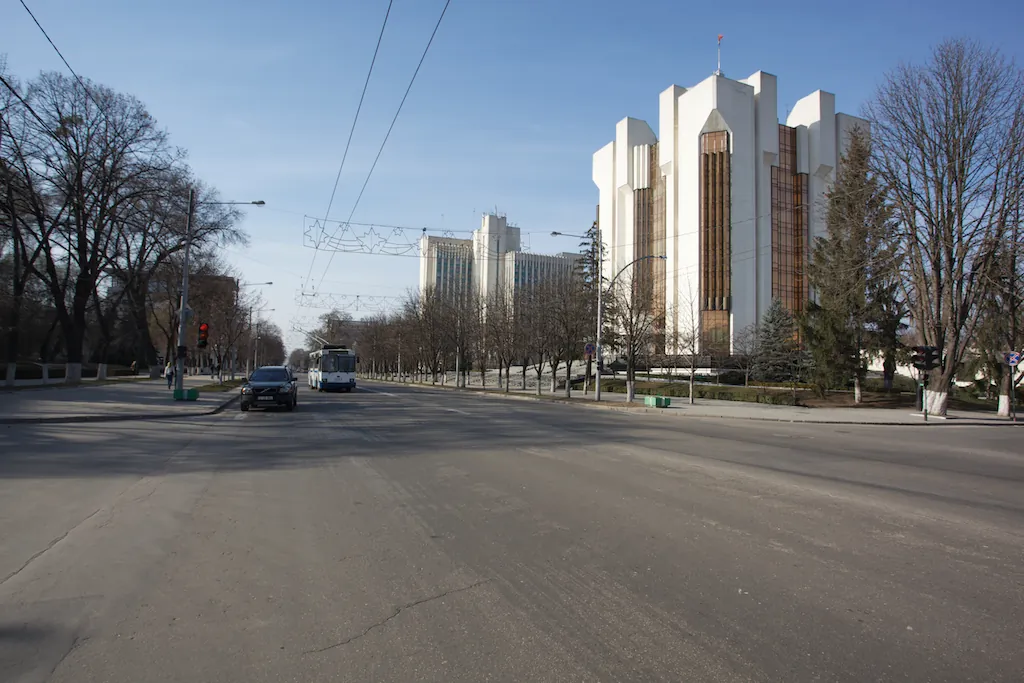
- Ștefan cel Mare Boulevard. The city’s main street, lined with government buildings, theatres, shops and cafés.
- Cathedral Park and the Nativity Cathedral. Next to it stands the Triumphal Arch, built in the 19th century to mark victory in the Russo-Turkish war.
- Ștefan cel Mare Park. The city’s oldest park, with the monument to Prince Stephen the Great at the entrance and the Alley of Classics.
- National Museum of History of Moldova and National Museum of Ethnography and Natural History. A good introduction to the country’s history and culture, especially before heading out to the villages.
- Central Market. A noisy place to try brânză cheese, seasonal fruit, pickles and local sweets.
- Valea Trandafirilor (Valley of Roses) and Valea Morilor parks. Large green spaces with lakes where locals come to relax.
Museum opening hours change, and many museums close on Mondays — check their official websites.
Orheiul Vechi
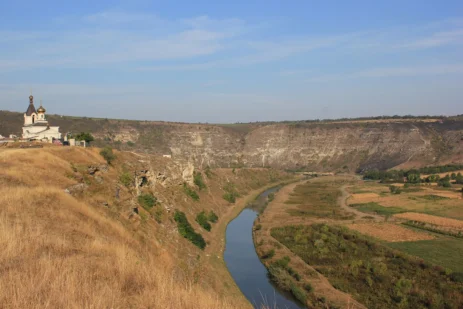
Orheiul Vechi (Old Orhei) is probably the country’s best-known site outside the capital. It is a historical and natural complex about 60 kilometres north of Chișinău, where the Răut River makes a sharp loop through a limestone canyon. There is a cave monastery in the cliffs, a church with a bell tower on the hilltop and, in the valley, the village of Butuceni with traditional houses and guesthouses. Traces of settlements from different eras have been found here, including a medieval town from the Golden Horde period.
We have a separate in-depth article on this place — our guide to Orheiul Vechi.
The wine cellars of Cricova and Mileștii Mici
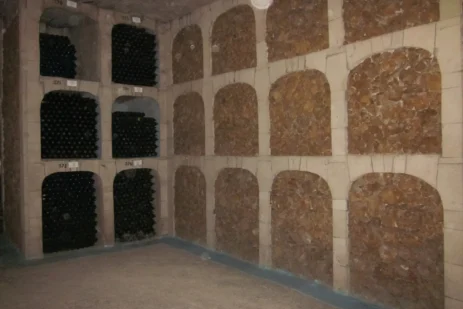
Near Chișinău lie two famous underground wine “cities” that grew out of old limestone quarries. Cricova is known for its many kilometres of galleries with streets named after wines, while Mileștii Mici is famous for its huge wine collection, recognised by Guinness World Records. Visits are usually possible only on a guided tour booked in advance.
Castel Mimi and Purcari
Castel Mimi in the village of Bulboaca is a restored late-19th-century wine estate that now operates as a wine and tourism complex. Purcari in the south-east is one of the oldest wineries in the region, founded in the first half of the 19th century. Both are popular with people who come to Moldova for the wine. We compare the best-known estates in our review of Moldova’s wineries.
The monasteries of the Codri
The forests of central Moldova hide several old monasteries that combine well into a day trip:
- Căpriana — one of the oldest monasteries in the country, documented since the 15th century.
- Hîncu — a monastery in a wooded valley with springs and a lake, a popular place of pilgrimage.
- Curchi — a large monastic ensemble near Orhei with several churches.
- Saharna — a monastery in a scenic gorge near the Dniester, with trails and small waterfalls.
- Țipova — one of the largest rock-cut monasteries in the region, carved into a sheer cliff above the Dniester.
These are working monasteries, so dress appropriately: cover shoulders and knees; women are often offered a headscarf or wrap-around skirt at the entrance.
Soroca
This northern town is known for its fortress on the bank of the Dniester. The fortification is associated with the era of Stephen the Great and his successors and is one of the most recognisable monuments of medieval Moldavia. Above the town stands the Candle of Gratitude monument, with wide views over the Dniester valley. Soroca also has its famous “Roma hill” of extravagant mansions — more a curious architectural sight than a museum.
Nature: reserves and the Dniester
If you like walking, look at the Codri reserve, the Dniester valley around Saharna and Țipova, and the Tigheci forest in the south. Trail marking is still developing in places, so carry offline maps and let someone know your route.
Gagauzia and the south
Comrat, the centre of the Gagauz autonomy, is interesting for its museums, local food and the chance to see yet another side of Moldova. The south is wine, steppe and quiet villages where life moves slowly. A good idea is to combine Comrat with one of the southern wineries.
| Place | Distance from Chișinău (approx.) | Time to allow |
|---|---|---|
| Cricova | about 15 km | half a day |
| Mileștii Mici | about 20 km | half a day |
| Castel Mimi (Bulboaca) | about 40 km | half to a full day |
| Orheiul Vechi | about 60 km | a full day |
| Căpriana and Hîncu monasteries | 40–50 km | a day for both |
| Saharna and Țipova | about 100–120 km | a full day |
| Soroca | about 160 km | a day, better with an overnight stay |
| Comrat | about 100 km | a full day |
| Purcari | about 120 km | a full day |
Distances are rounded and given as a rough road guide.
Food and wine
Moldovan cuisine is simple, hearty and seasonal. It is close to Romanian cooking, with clear Ukrainian, Russian, Balkan and Gagauz influences.
What to try
- Mămăligă — a thick cornmeal porridge served with brânză, sour cream, crackling or stewed meat.
- Plăcinte — flat pies filled with brânză, cabbage, potato, pumpkin or sour cherries.
- Zeamă — a sour chicken soup with homemade noodles and herbs.
- Sarmale — stuffed cabbage or vine leaves.
- Brânză — a salty sheep’s or cow’s milk cheese that Moldovans eat with almost everything.
- Vărzări and învârtită — pastries and rolls of thin dough with various fillings.
- Gagauz dishes — such as șorba soup or kıvırma pie; they are easiest to find in the south.
Wine
Wine is Moldova’s main cultural and economic symbol. Growers here cultivate international varieties (Cabernet Sauvignon, Merlot, Chardonnay, Sauvignon Blanc) as well as local ones: Fetească Albă, Fetească Regală, Fetească Neagră and Rară Neagră. Many estates offer tastings where you can compare different styles.
A couple of practical tips:
- Book tastings in advance, especially at weekends and in autumn.
- Find out whether food is included in the programme: on an empty stomach even a few small glasses have a stronger effect.
- If you are buying wine to take home, check the alcohol allowances of the country you are returning to.
Moldova month by month
To choose your dates, it helps to look at the whole year. Below are month-by-month pointers. Exact dates of holidays and festivals vary from year to year, so check official announcements.
January and February. Cold, often grey, sometimes snowy. A good time for Chișinău’s museums, theatres and restaurants, but not for long walks in the countryside. Many people celebrate Christmas on 7 January according to the Julian calendar, and 24 February is Dragobete, a local “lovers’ day”.
March. On 1 March people across the country give each other mărțișoare — small ornaments of red and white thread symbolising the arrival of spring. The Mărțișor music festival takes place at the beginning of the month. The weather is changeable.
April and May. Spring, orchards in bloom and Easter, which for most people is the biggest holiday of the year. Over Easter and the following days (including Radonița, the day of remembrance of the dead) many institutions close and roads are busy. In May the greenery is especially vivid — the best time for walks in the Codri and the Dniester valley.
June. Long days, warm but not yet exhausting weather. The open-air festival season begins. A good month for trips to the north.
July and August. Hot, sometimes very hot. Use mornings and evenings for walking and the middle of the day for cellars, museums and a siesta. 27 August is Independence Day and 31 August is Language Day, Limba noastră; celebrations and concerts are held in Chișinău on both days.
September and October. Grape harvest, fruit at the markets and mild weather. National Wine Day is usually held on the first weekend of October, and 14 October is Hramul Chișinăului, the city day. This is the most popular season, so book accommodation and tours well ahead.
November and December. Cool and overcast, but few tourists and good prices. In December the city is decorated for Christmas and New Year, and a Christmas market opens on the central square. 25 December, Christmas according to the Gregorian calendar, is also a public holiday.
The north and Bălți
The north of Moldova rarely makes it onto first-time itineraries, but it deserves attention. Bălți is the country’s second-largest city and an important transport hub on the way to Soroca and to the border crossings with Romania and Ukraine. The city itself is more workaday than touristic, but it is a convenient place to spend the night.
Around it you will find rolling fields, ponds and villages with wooden and stone churches. For travellers, the highlights are the Dniester valley with its rock monasteries, the Soroca fortress and the natural areas along the Prut, where the border with Romania runs. The Lipcani — Rădăuți-Prut crossing in the north-west is handy if you are heading straight to Bukovina.
Useful official resources
We try not to overload the text with links, but it is worth checking a few official sources before you go:
- Ministry of Foreign Affairs and European Integration of Moldova (mfa.gov.md) — visa rules and consular information.
- E-visa portal (evisa.gov.md) — if your nationality requires a visa.
- Moldovan Border Police (border.gov.md) — crossing point opening hours and sometimes queue information.
- Chișinău Airport (airport.md) — flight schedules and transport to the city.
- Calea Ferată din Moldova — train timetables.
- National Bank of Moldova (bnm.md) — the official leu exchange rate.
- Your own foreign ministry’s website — up-to-date safety advice.
Website names and addresses may change; if a link does not work, find the agency via a search engine.
What to bring home from Moldova
Most souvenirs from Moldova are connected to the land and to crafts. A few ideas:
- Wine and divin. Divin is Moldovan brandy (an aged grape distillate). Buy it in winery shops or specialist wine stores, keep the receipts and check your home country’s alcohol allowances.
- Mărțișoare. The red-and-white ornaments given on 1 March. Souvenir shops sell them all year round, and in spring they are everywhere.
- Embroidery and textiles. Traditional blouses (ie), embroidered towels, carpets and woven runners. Handmade pieces cost considerably more than factory-made ones — ask the seller who made the item and how.
- Ceramics. Pottery traditions are especially strong in some villages; tableware and decorative pieces are sold at fairs and in workshops.
- Honey, jam and dried fruit. Well-packaged homemade products are sold at markets. Bear in mind the rules on bringing animal products into the EU and other countries: honey, for example, may be restricted.
- Walnuts. Moldova is a notable walnut exporter; markets sell them shelled and in their shells.
Buying souvenirs from craftspeople and at village fairs supports local people directly — one of the simplest forms of responsible travel.
Where to stay
The right accommodation depends on how you travel. If you are making day trips, a single base in Chișinău is easiest. If you want a feel for rural life, spend at least one night in a guesthouse.
Chișinău
The capital has everything from hostels and short-let apartments to chain hotels and boutique properties. For a first visit the centre is most convenient — the area around Ștefan cel Mare Boulevard, Cathedral Park and Pușkin Street. From here you can walk to most restaurants and museums, and the bus stations and airport are an easy taxi ride away.
Rural tourism (agropensiuni)
In recent years many guesthouses have opened in Moldova; they are often called agropensiuni. There are particularly many in Butuceni near Orheiul Vechi, around the Codri monasteries and in the wine regions. They are typically family homes with a few rooms, home cooking and the chance to join workshops — making plăcinte, for example. Standards vary a lot, so read descriptions and recent reviews carefully.
Wineries
Several large estates have their own hotels and restaurants. This is a good choice if you want to spend the evening at a tasting without worrying about the drive back. Prices are above average, and rooms sell out early on festival weekends.
Language and etiquette
The official language of Moldova is Romanian. In 2023 parliament enshrined this name in legislation, replacing the term “Moldovan language” used previously. Russian is widely understood, especially in Chișinău, Bălți, the north, Gagauzia and among older people. Young people increasingly speak English.
A few useful Romanian phrases:
| English | Romanian | Approximate pronunciation |
|---|---|---|
| Hello / Good day | Bună ziua | BOO-nuh ZEE-wah |
| Thank you | Mulțumesc | mool-tsoo-MESK |
| Please | Vă rog | vuh ROG |
| Excuse me | Scuzați | skoo-ZAHTS |
| Goodbye | La revedere | lah reh-veh-DEH-reh |
| How much is it? | Cât costă? | kuht KOS-tuh |
| The bill, please | Nota, vă rog | NO-tah, vuh ROG |
On etiquette:
- In the countryside it is customary to greet people you pass, especially older people.
- If you are invited to someone’s home, bring a small gift: chocolates, wine or flowers (an odd number).
- Be quiet in churches and monasteries and ask before taking photos inside.
- Language is a sensitive topic in the country. Avoid starting debates about language and history — simply ask which language the person prefers.
Ready-made itineraries for Moldova
Below are three route options for trips of different lengths. They all start and end in Chișinău, but they are easy to adapt if you enter via Iași or continue to Romania.
Three days: a first look
Day 1. Chișinău. In the morning, walk along Ștefan cel Mare Boulevard, through Cathedral Park and Ștefan cel Mare Park. In the afternoon, visit the National Museum of History or the National Museum of Ethnography and Natural History. In the evening, dinner with Moldovan dishes.
Day 2. Orheiul Vechi and Curchi. Leave in the morning to explore the Orheiul Vechi complex, the cave monastery and the viewpoints over the Răut. Lunch in Butuceni, then Curchi Monastery on the way back. Evening in the capital.
Day 3. Underground wine. Morning tour of Cricova or Mileștii Mici, then Castel Mimi in Bulboaca in the afternoon. If your flight is in the evening, this day is easy to adjust: both cellars are close to the city.
Five days: the centre and the north
Day 1. Chișinău, as above.
Day 2. Căpriana and Hîncu monasteries and a walk in the Codri forests. Optionally, the Codri reserve near Lozova.
Day 3. Orheiul Vechi with an overnight stay in Butuceni. An evening at a guesthouse is the best time to try home cooking.
Day 4. Saharna and Țipova on the Dniester, then on to Soroca. Overnight in or near Soroca.
Day 5. Soroca fortress and the Candle of Gratitude, then back to Chișinău, with an optional stop in Bălți.
Seven days: the whole country
Days 1–2. Chișinău and one of the underground wine cellars.
Day 3. Orheiul Vechi and Curchi Monastery, overnight in Butuceni.
Day 4. Saharna, Țipova and Soroca, overnight in Soroca.
Day 5. Back to the centre via Bălți or Orhei, overnight in Chișinău.
Day 6. The south: Comrat and an introduction to Gagauzia, overnight in the south or at a winery.
Day 7. Purcari or another southern estate, then back to Chișinău or on to the Romanian border.
If you are continuing to Romania, take a look at our route from Chișinău to Iași and the monasteries of Bukovina — it is easy to start right after a tour of Moldova.
Combining Moldova and Romania
Moldova and Romania are closely linked by language, history and culture, so it is natural to combine them in one trip. The most popular pattern is to fly into Iași or Chișinău, spend a few days in Moldova, then cross to Iași and continue west to Bukovina, Transylvania or Bucharest.
A few practical points:
- Romania is a member of the European Union and of the Schengen area; Moldova is not. That means you go through full border control, and EU rules on bringing in goods apply when you enter Romania.
- If you are driving a hire car, make sure the rental company allows border crossings in both directions, and check the insurance.
- The two countries have different currencies: the Moldovan leu and the Romanian leu. Do not mix them up when changing money — the rates are very different.
What to pack
You do not need any special gear for Moldova, but a few things will make your trip more comfortable:
- Comfortable shoes. Many of the most interesting places — monasteries, canyons, fortresses — involve uneven paths and steps.
- A light jacket or jumper. Even in summer the underground wine cellars are cool — typically around 12–14 °C.
- Modest clothing for monasteries. Women will find a scarf useful.
- Cash. A small supply of lei for markets, village shops and minibuses.
- Offline maps. The signal in valleys and forests can be weak.
- A plug adapter — if your devices use plugs other than types C and F.
- Sunscreen and a hat — the summer sun is strong and there is little shade on the open plateaus.
Responsible travel
Tourism in Moldova is growing, but rural communities are small and vulnerable. A few simple rules will help make your trip beneficial for local people:
- Stay in family guesthouses and eat at local places.
- Buy wine, honey, textiles and souvenirs directly from producers.
- Do not leave litter on trails and at viewpoints — many places have no regular waste collection.
- Respect private property: vineyards and orchards are someone’s work, even if they look abandoned.
- Only photograph people with their consent.
Pre-trip checklist
- Check visa requirements for your nationality on the Moldovan foreign ministry’s website.
- Make sure your passport is valid for the whole trip.
- Buy medical insurance that covers Moldova.
- If driving: Green Card, vignette and vehicle documents.
- Book accommodation, especially for autumn festival weekends.
- Book your wine cellar tours.
- Ask your mobile operator about roaming charges or buy an eSIM.
- Read your foreign ministry’s safety advice for the region.
- Download offline maps.
A little history: what is useful to know before you go
To better understand what you will see in Moldova, it helps to know a few milestones of its history. This is not a textbook, just a traveller’s cheat sheet.
The medieval Principality of Moldavia
In the 14th century the Principality of Moldavia emerged between the Carpathians and the Dniester. Its best-known ruler was Stephen III the Great (Ștefan cel Mare), who reigned in the second half of the 15th and early 16th centuries. He fought the Ottoman Empire, Hungary and Poland, and built churches and monasteries after his victories. Monuments to Stephen stand in many towns in Moldova and Romania, and Chișinău’s main boulevard bears his name. The painted monasteries of Bukovina, in present-day Romania, are also linked to the era of Stephen and his descendants.
Over time the principality became a vassal of the Ottoman Empire, while keeping its own rulers and internal institutions.
Bessarabia in the Russian Empire
In 1812, under the Treaty of Bucharest, the eastern part of the Principality of Moldavia — the land between the Prut and the Dniester — passed to the Russian Empire and became known as Bessarabia. Chișinău became a provincial capital and grew rapidly: its grid of streets took shape then, and the Nativity Cathedral and the Triumphal Arch were built. Alexander Pushkin lived in exile in Chișinău; his house is now a museum.
The western part of the principality united with Wallachia in 1859, laying the foundations of the modern Romanian state.
The 20th century
After the First World War, Bessarabia became part of Romania. In 1940 the territory was annexed by the USSR, and the Moldavian SSR was created on its basis (together with part of the left bank of the Dniester). During the Second World War control changed hands several times, and the post-war years brought deportations and famine, which are documented in the capital’s museums.
In the Soviet period Moldavia became a major agricultural region and one of the main wine-producing centres of the USSR. It was then that the underground galleries of Cricova and Mileștii Mici were greatly expanded.
Independence
On 27 August 1991 Moldova declared independence. In 1992 an armed conflict broke out on the Dniester, after which Transnistria effectively slipped out of Chișinău’s control; the issue remains unresolved. In 1994 Gagauzia received special status.
In 2022 Moldova was granted EU candidate status, and in 2023 the European Union decided to open accession negotiations. Travellers can see this in the gradual upgrading of roads, border crossings and tourist infrastructure.
Key dates for a traveller’s calendar are Independence Day (27 August) and Language Day, Limba noastră (31 August). Find more holidays and events in our calendar of events in Moldova and Romania.
Common travel mistakes
Even in a country as compact as Moldova, it is easy to lose time over small things. These are the mistakes people who have been there mention most often.
Over-packed plans
Distances are short, but roads to monasteries and villages can be slow and buses are infrequent. If you plan three or four remote stops in a day, you will spend it in the car. Better to pick one or two places and leave time for a walk and a long lunch.
Turning up at cellars without a booking
The big wineries generally take visitors only by appointment, in scheduled groups. Turn up on spec and you may be told the next tour is tomorrow.
The wrong bus station
Chișinău has several bus stations, and services to the same destination sometimes leave from different ones. Check the departure point on your ticket or with the operator.
Relying on a single card
Cards are accepted almost everywhere in the city, but in villages and markets you cannot do without cash. Keep a small supply of lei.
Underestimating the border
The time it takes to cross into Romania varies hugely, from a few minutes to several hours. If you have a flight from Iași or Bucharest, allow plenty of margin.
Going to Transnistria unprepared
Many people treat Tiraspol as an ordinary day trip. In reality it is a region with its own rules and currency and limited access to consular help. If you do decide to go, study your foreign ministry’s advice and the latest information on entry procedures.
Moldova for different kinds of travellers
Food and wine lovers
Your main season is autumn, when the harvest is in and National Wine Day is held in Chișinău (usually on the first weekend of October). Build your route around two or three estates in different regions: the centre (Codri), the south-east (Ștefan Vodă) and the south (Valul lui Traian). Use a taxi or a driver so that you do not get behind the wheel after tastings.
History and architecture enthusiasts
Your route is Orheiul Vechi, Soroca fortress, the monasteries of Căpriana, Curchi and Țipova, and the museums of Chișinău. If you have time, continue to Romania: Iași and the Bukovina monasteries are a natural complement to the Moldovan part.
Families with children
Moldova is family-friendly. Children usually enjoy the cave monastery at Orheiul Vechi, the fortress at Soroca, and rural guesthouses with animals and workshops. Bear in mind that not every museum or monastery is step-free, and the underground cellars are cool. Chișinău’s parks have plenty of playgrounds.
Hikers and cyclists
Look for trails in the Codri, along the Dniester and around Tigheci. Cycle touring is growing in popularity and you may come across waymarked routes on rural roads, but infrastructure is still basic: carry a repair kit, water and offline maps. Cyclists should avoid busy main roads.
Remote workers
Chișinău works well for remote work: fast internet, plenty of cafés and coworking spaces, and a relatively low cost of living. Rules on long stays and taxation depend on your nationality — consult official sources before staying long.
Photography
Moldova is photogenic, especially at golden hour over the Răut canyon, by the walls of Soroca fortress and in the vineyards in autumn. A few rules:
- In monasteries and churches, ask permission before photographing inside; sometimes there is a fee or it is not allowed.
- Do not photograph border posts, military sites or security personnel.
- Drone use is regulated by law; check the current rules with Moldova’s civil aviation authority before flying.
- Photograph people, especially elderly villagers, only with their consent.
Final thoughts
Moldova is a country best understood slowly. It does not overwhelm you with scale, but it stays with you through its people, the taste of home cooking, the quiet of its rural valleys and the wine that has been made here for centuries. Five to seven days are enough to see the main sights and leave wanting to return. Combine it with neighbouring Romania and your trip will be especially rich.
A few final tips to remember. Check current entry rules and safety advice shortly before you travel — they can change. Book wine tours and autumn weekend accommodation early. Do not overload your route: better to see less and enjoy it, with long conversations and lunches at guesthouses. Keep some cash for villages and markets. And do not be shy about talking to locals — very often those encounters become the most vivid memory of the country.
If you have questions, or notice that some information in this guide is out of date, get in touch via the project page: we update our articles regularly and are grateful for readers’ corrections.
For more practical articles, see our Routes, Places and Tips sections.
Frequently asked questions
Do I need a visa for Moldova?
Citizens of the EU, the UK, the US, Canada, Ukraine and a number of other countries usually do not need a visa for short stays of up to 90 days within any 180-day period. The list changes, so check it on the website of Moldova's Ministry of Foreign Affairs before you travel.
What currency is used in Moldova?
The national currency is the Moldovan leu (MDL). Cards are widely accepted in Chișinău, but you will need cash in villages, at markets and in small guesthouses. Euros and US dollars are easy to exchange at currency exchange offices.
When is the best time to visit Moldova?
The most comfortable months are May, June, September and early October. Autumn brings the grape harvest and National Wine Day. July and August can be hot, while winter is cold and quiet.
How do I get from Iași to Chișinău?
Usually by bus, minibus or car via the Sculeni or Leușeni crossings (Albița on the Romanian side). The trip takes roughly three to four hours including the border. Check timetables and border waiting times on the day you travel.
Can I visit Transnistria?
Transnistria is an unrecognised breakaway region that Moldova does not control. Many governments advise their citizens against travel there or urge extra caution. Before deciding anything, read your own foreign ministry's current travel advice.
Do people in Moldova speak English?
The official language is Romanian, and Russian is widely understood. English is increasingly common among younger people and in tourist businesses in Chișinău, less so in villages. A few words of Romanian are always appreciated.
Image credits:
- Rolling countryside in Hîncești District, Moldova, with fields, orchards and a village — Photo: Pudelek / Wikimedia Commons, CC BY-SA 4.0
- Ștefan cel Mare Boulevard in Chișinău with a wide roadway lined with trees — Photo: Hans Põldoja / Wikimedia Commons, CC BY 2.0